
New Orleans
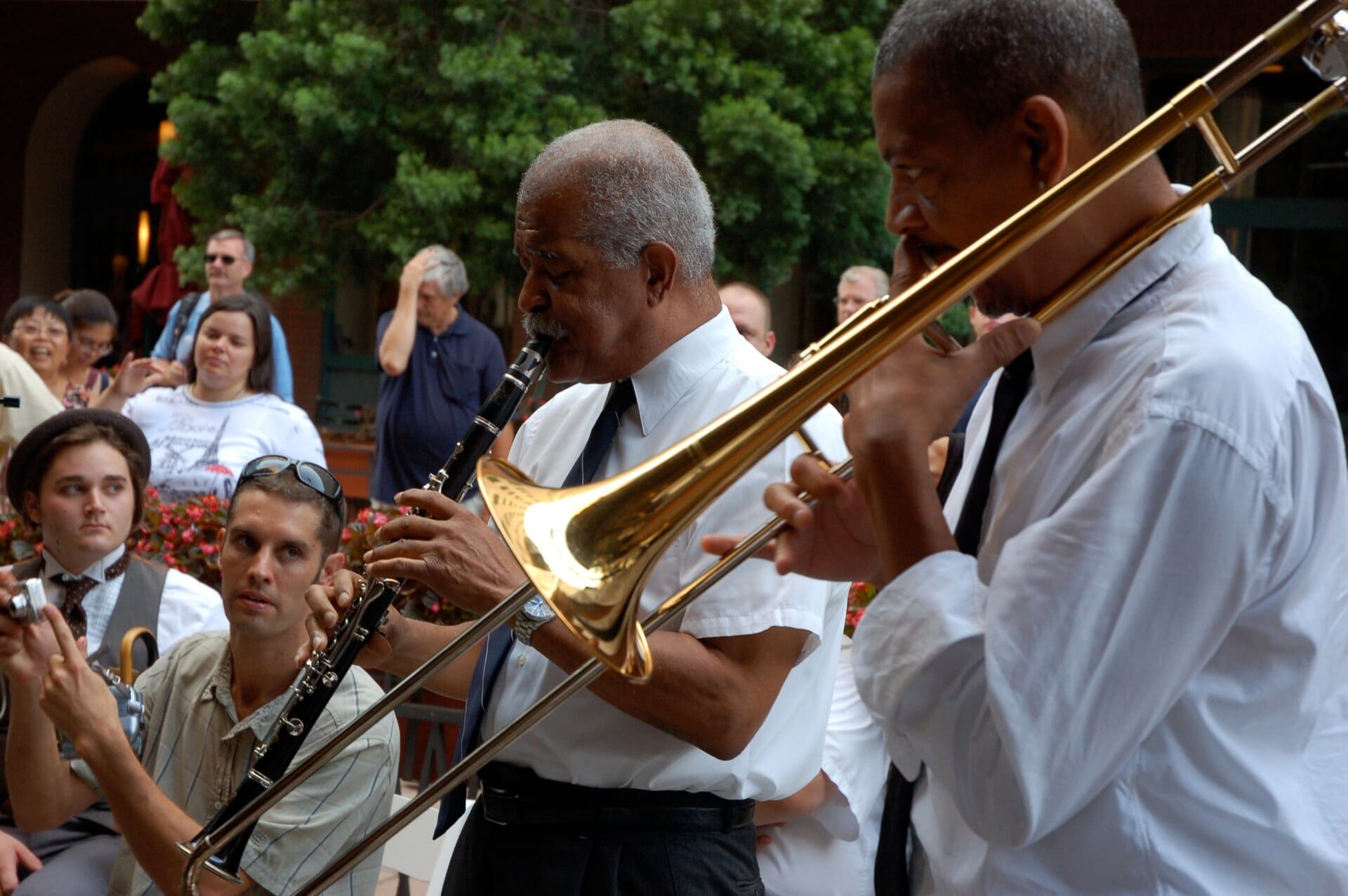
Bourbon Street is the decoy; Frenchmen Street, ten minutes' walk into the Marigny, is where the brass bands, funk outfits and jazz trios actually live, rolling from The Spotted Cat to d.b.a.
- Best forNightlife · Foodies · Culture seekers
- In June31°C · 15 rainy days
- Ideal stay3–4 nights
- Approx. flying time~3h 45m from Los Angeles
- CurrencyUSDUS dollar
- LanguageEnglish
- Local time05:146h behind the UK
- PlugsType A / BBring an adapter
- Drive on theRightOpposite to the UK
- Dialling code+1
Why go
Few American cities feel less American. Wrought-iron balconies, Creole cottages and above-ground cemeteries sit in a bowl below sea level, hemmed by the Mississippi and a great deal of water. Music is functional here rather than decorative, played at funerals, on street corners and in small rooms every night of the week. The food, a Creole and Cajun braid of French, West African and Caribbean cooking, is reason enough on its own.
Three or four nights is enough for the Quarter, the Marigny and the Garden District, with a day for the swamps or a river plantation. February and March bring Mardi Gras and the jazz festival season, with prices to match; summer is punishing heat and hurricane season. Late autumn and early spring are the comfortable months. Early sleepers should stay away from Bourbon Street entirely.
- Ideal stay
- 3–4 nights
- The vibe
- Humid, musical, gloriously unbothered
From our guides
Bourbon Street is the decoy; Frenchmen Street, ten minutes' walk into the Marigny, is where the brass bands, funk outfits and jazz trios actually live, rolling from The Spotted Cat to d.b.a. until late. Preservation Hall's short acoustic sets are worth the queue — arrive forty-five minutes early, no drinks, all reverence. On Sundays, ask around about second line parades: a moving street party with a band at its head.
Featured in Ten cities with world-class live music every night and Ten cities where the night never really ends
Things to do
-
The French Quarter
The oldest part of the city, laid out on a Spanish colonial grid around Jackson Square, with courtyards, ironwork balconies and the cathedral at its centre.
-
Frenchmen Street
A few blocks of live music venues in the Marigny where brass bands, funk and jazz play nightly, and where locals go when the Quarter gets too much.
-
St Charles Avenue streetcar
The oldest continuously operating street railway line in the world, rattling past oaks and antebellum mansions towards Audubon Park.
-
National WWII Museum
A large, unexpectedly moving museum built around the Higgins landing craft that were made here, with oral histories and restored aircraft.
-
City Park and Bayou St John
Ancient live oaks, a sculpture garden and a museum of art, plus a bayou where people paddle. A calm counterweight to the Quarter.
-
Second line parades
Sunday afternoon neighbourhood parades led by a brass band, open to anyone who wants to fall in behind. Routes are announced locally each week.
Getting there
-
Fly to
New Orleans (MSY)
Nearest airport to New Orleans, about 19km away as the crow flies.
-
Then
To New Orleans
About 25 to 35 minutes by taxi or ride-hail from Louis Armstrong (MSY) to the French Quarter, with a slower airport bus as the budget alternative.
-
On the ground
Getting around
The French Quarter and Marigny are flat and walkable, and Frenchmen Street is about ten minutes on foot from Jackson Square; the St Charles streetcar covers the Garden District.
Public transport: Fair: historic streetcar lines and buses serve the tourist areas, and ride-hail fills the late-night gaps.
Flights
Los Angeles New Orleans, Louisiana
Fly from anywhere — search 4,000+ airports worldwide.
Roughly 3h 45m in the air from Los Angeles (LAX), estimated from the distance — check for a direct route. Pick a month to see every available flight with live prices.
Check dates and prices
Pick your departure date, then your return.
Search flightsNot sure when? Compare fares across a whole month.
Flight times are estimates; prices open on Google Flights.
When to go
Daytime highs run from about 17°C in January to 32°C in August. Driest in October and November; wettest in July, with rain on about 23 days.
The year at a glance — pick a month for detail
June31° · rain 15 daysHot and often wet.
Monthly figures averaged from daily records for 2020–2024 at this location (ERA5 reanalysis). Live conditions from MET Norway, CC BY 4.0.
Where to stay
Creole guesthouses and boutique conversions in the Quarter and Marigny, big chains in the business district, and rentals in shotgun houses uptown.
-
Best base overall
French Quarter, lower end
The quieter blocks below Jackson Square put you between Frenchmen Street and Bourbon without living on top of either. Buildings are old and thin-walled, so a courtyard room matters.
Find stays in French Quarter, lower end -
Best for nightlife
Faubourg Marigny and Bywater
Frenchmen Street's clubs are on the doorstep and the guesthouses are in creole cottages. Bywater is further out and requires more thought about getting home late.
Find stays in Faubourg Marigny and Bywater -
Best with children
Garden District and Uptown
Oak-lined streets, the St Charles streetcar and space, with the zoo and parks nearby. Nights are quiet, and you are twenty minutes from the music by streetcar.
Find stays in Garden District and Uptown -
Best value
Central Business District
Chain hotels a few blocks from the Quarter, usually cheaper and with actual parking. It is dull after dark, which is a fair trade for a real night's sleep.
Find stays in Central Business District
Worth knowing before you book: Mardi Gras and Jazz Fest are booked a year ahead with multi-night minimums and non-refundable rates, and summer heat brings the lowest prices for good reason.
Search everything else in New Orleans by budget. These are indicative budget bands in GBP per night for two people, not live quotes or guarantees of hotel type. Check your dates, guests, taxes and final price on Booking.com.
Good to know
- Timing
- Late autumn and early spring are pleasant. July to September is hot, humid and within hurricane season, and many locals leave for August.
- Festivals
- Mardi Gras and the spring music festivals fill the city and multiply room rates. Book many months ahead or plan around them deliberately.
- Cash
- Carry small notes for tipping bands and for the older bars, some of which are cash only. Tipping is expected everywhere.
- Safety
- Stick to well-lit, busy streets after dark and take a ride rather than walking long distances between neighbourhoods at night.
- Etiquette
- Open containers are legal on the street in plastic cups, but not glass. Nobody minds a drink in hand; everybody minds a broken bottle.
Similar places

Further afield
Memphis
Tennessee · 577km away →
Austin
Texas · 738km away →
Nashville
Tennessee · 755km away →
Volcano Bay
Orlando, USA · 851km away →
Universal Orlando
Florida, USA · 854km away →
Key West
Florida, USA →Elsewhere in the USA
Related articles
Quick answers
When is the best time to visit New Orleans?
Daytime highs run from about 17°C in January to 32°C in August. Driest in October and November; wettest in July, with rain on about 23 days.
How long should I spend in New Orleans?
Our suggestion: 3–4 nights.
How do I get to New Orleans?
About 25 to 35 minutes by taxi or ride-hail from Louis Armstrong (MSY) to the French Quarter, with a slower airport bus as the budget alternative.
Do I need a car in New Orleans?
No. Fair: historic streetcar lines and buses serve the tourist areas, and ride-hail fills the late-night gaps.
What currency and language are used in New Orleans?
Currency: US dollar (USD). Language: English. Plugs: type A and B.
Who is New Orleans best for?
Best for nightlife, foodies and culture seekers. In a phrase: humid, musical, gloriously unbothered.