Everest Base Camp
- Best forWalkers & hikers · Adventure seekers · Photographers
- In June5°C · 20 rainy days
- Ideal stay12-14 days
- Est. flying timeChoose your city
- CurrencyNPRNepalese rupee
- LanguageNepali
- Local time04:145h 45m ahead of the UK
- PlugsType C / D / MBring an adapter
- Drive on theLeftSame as the UK
- Dialling code+977
Why go
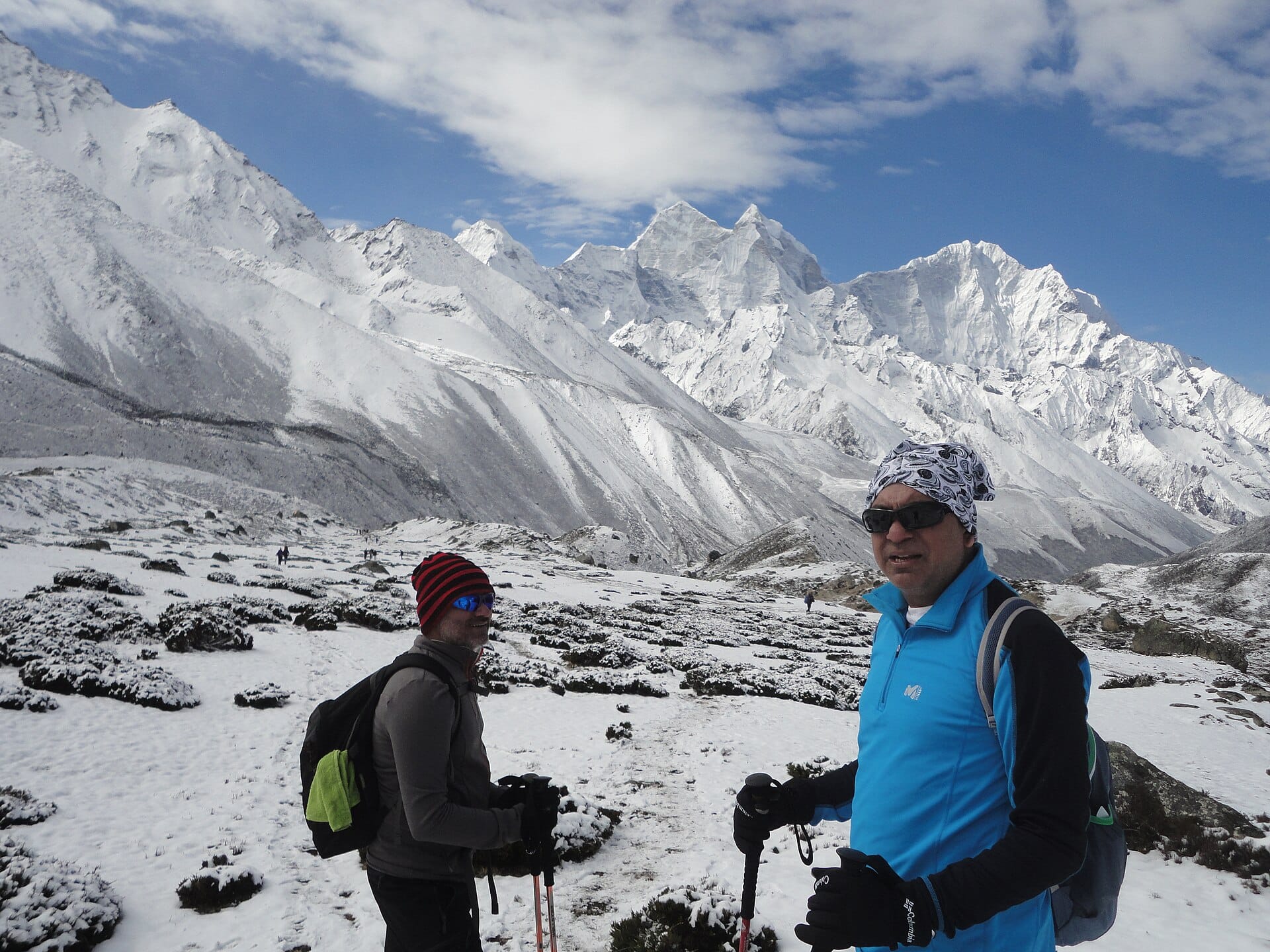
The trek to Everest Base Camp follows the Khumbu valley through Sherpa villages, pine forest and increasingly bare high-altitude terrain, with monasteries, prayer flags and mani walls marking the route throughout. It is a long walk rather than a technical climb, demanding because of both sustained walking and high altitude; good fitness does not guarantee that a person will acclimatise. Teahouses along the way provide beds and simple meals, so there is no need to carry camping equipment for the standard route.
Most itineraries run twelve to fourteen days round trip from Lukla, building in rest days at Namche Bazaar and Dingboche that are essential for acclimatisation rather than optional extras. October and November give the clearest mountain views and stable weather; April and May offer a warmer alternative with slightly more cloud. Confirm current national-park, local permit and guide requirements with your operator. A guide can support decisions and logistics but cannot remove altitude risk.
CDC: high-altitude travel and illness · Photo: Nepal Trek Adventures · CC BY 2.0 photo licence
- Ideal stay
- 12-14 days
- The vibe
- Demanding, spiritual, spectacular
Featured in Ten mountain treks, from Ben Nevis to Everest Base Camp
Things to do near Everest Base Camp
-
Namche Bazaar
The Khumbu's main trading town and a key acclimatisation stop, with mountain views from its amphitheatre setting and a busy Saturday market.
-
Tengboche Monastery
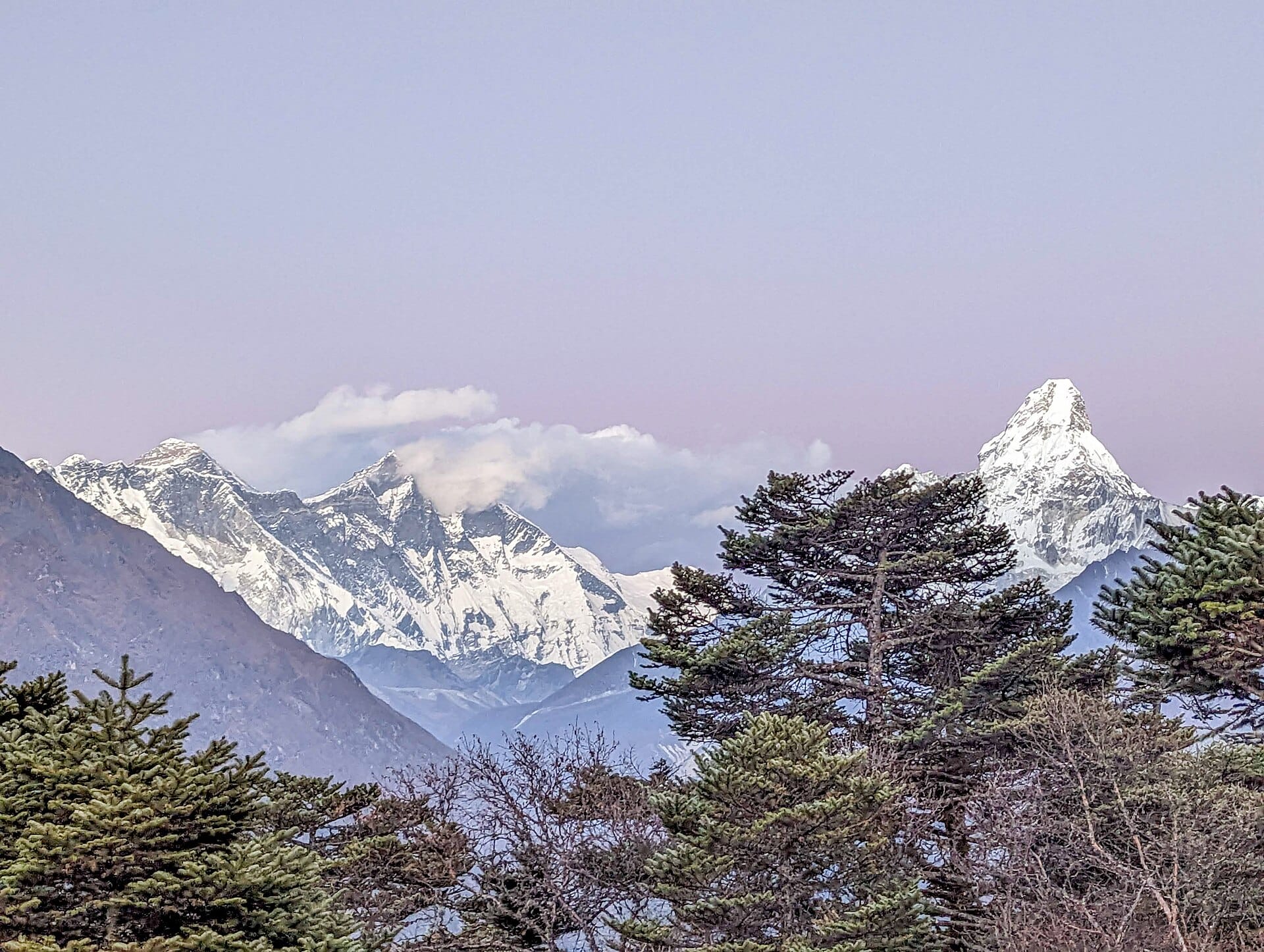
A Buddhist monastery with one of the best direct views of Everest and Ama Dablam, often visited for its evening prayers.
-
Kala Patthar
A high viewpoint above base camp, climbed for the closest unobstructed view of Everest's summit, usually before dawn.
-
Everest Base Camp
The trek's endpoint at the foot of the Khumbu Icefall, busiest during the spring climbing season when expeditions are underway.
-
Sagarmatha National Park
The protected area covering the whole route, home to pheasants, musk deer and, rarely, snow leopards in its higher reaches.
-
Lukla airstrip
A short, steep runway marking the start and end of the trek, one of the more dramatic flights in the Himalaya.
How to get to Everest Base Camp
-
Fly to
Lukla (LUA)
Nearest airport to Everest Base Camp, about 37km away as the crow flies.
-
Then
To Namche Bazaar
International arrivals normally use Kathmandu. Confirm whether the booked Lukla flight departs there or from Ramechhap/Manthali, which requires a substantial road transfer. Allow disruption buffers.
-
On the ground
Getting around
Walk the planned teahouse itinerary with acclimatisation stops and appropriate support. Confirm permits, guide arrangements and what happens if weather or altitude prevents continuing.
Public transport: None above Lukla. Flights and helicopters are the only alternative to walking.
Flights to Everest Base Camp
Your airport Everest Base Camp, Nepal
Fly from anywhere — search 4,000+ airports worldwide.
Choose where you're flying from to see a rough flight time. Pick a month to see every available flight with live prices.
Check dates and prices
Pick your departure date, then your return.
Search flightsNot sure when? Compare fares across a whole month.
Flight times are estimates; prices open on Google Flights.
Best time to visit Everest Base Camp
Daytime highs run from about -10°C in January to 6°C in August. Driest November to February; wettest in July, with rain on about 30 days.
The year at a glance — pick a month for detail
June5° · rain 20 daysCold and often wet.
Monthly figures averaged from daily records for 2020–2024 at this location (ERA5 reanalysis). Live conditions from MET Norway, CC BY 4.0.
Where to stay near Everest Base Camp
Teahouse lodges the whole way: twin rooms with thin walls, a heated dining room and a shared bathroom. A few smarter lodges at Namche and Deboche; no hotels above that.
-
Best base overall
Namche Bazaar
The Sherpa capital and the standard acclimatisation stop, with bakeries, gear shops, hot showers and a doctor. It is a natural amphitheatre of steps, and everything costs more than below.
Find stays in Namche Bazaar -
Closest to the sights
Dingboche
The second rest day, higher and colder, with the walk up to Nangkartshang for the Everest view. Lodges are simple and the nights are properly cold.
Find stays in Dingboche -
Best value
Lukla
The airstrip town at the start and end, with the cheapest lodges on the trail and somewhere to wait out a delayed flight. It is low, busy and not scenic.
Find stays in Lukla -
Best with children
Kathmandu (Thamel)
Where you sort permits and kit, and the sensible base if the family is doing a shorter valley walk instead. Polluted and chaotic, but every service is here.
Find stays in Kathmandu (Thamel)
Worth knowing before you book: October, November and April fill the trail, and Lukla flights are weather-dependent, so build spare days at the end or you risk missing an international connection.
Search everything else in Namche Bazaar by budget. These are indicative budget bands in GBP per night for two people, not live quotes or guarantees of hotel type. Check your dates, guests, taxes and final price on Booking.com.
Good to know
- Getting there
- Lukla flights may depart from Kathmandu or Ramechhap/Manthali according to current arrangements. Confirm the airport and road transfer, and leave buffer days for cancellations.
- Safety
- Altitude sickness is the main risk; the built-in rest days at Namche and Dingboche should not be skipped.
- Timing
- October and November offer the clearest views; April and May are a warmer alternative.
- Pack this
- Layered clothing for a wide temperature range, plus a good sleeping bag for cold teahouse nights.
- Book ahead
- Lukla flights and popular teahouses get busy in peak trekking season, so book guides and permits ahead.
- Photo credit
- Nepal Trek Adventures / Wikimedia Commons, CC BY 2.0. Display copy resized or cropped. The source is linked above.