
Mount Fuji
Japan's sacred volcano is climbed by everyone from schoolchildren to octogenarians during its brief official season — early July to early September — which tells you the terrain is manageable, if relentless.
- Best forAdventure seekers · Walkers & hikers · Photographers
- In June5°C · 20 rainy days
- Ideal stay2–3 nights
- Approx. flying time~11h 05m from Los Angeles
- CurrencyJPYJapanese yen
- LanguageJapanese
- Local time19:168h ahead of the UK
- PlugsType A / BBring an adapter
- Drive on theLeftSame as the UK
- Dialling code+81
Why go
Seen from a distance, Japan's highest mountain is an almost impossibly neat cone, snow-capped for much of the year and visible from Tokyo on clear winter mornings. Up close it is a different animal: a bare volcanic slope of red cinder and lava rock, treeless above the fifth station, with a chain of huts, torii gates and weather-beaten shrines climbing towards the crater rim at 3,776 metres.
Most people give the climb two days and treat the rest of the trip as the reward: hot springs around Hakone, the five lakes on the northern side, or the fast train back to Tokyo. Outside the July to September season the trails are genuinely dangerous and the huts are shut, so winter visitors admire the cone from a lakeside instead. Anyone unsteady on loose ground should think hard about the descent.
- Ideal stay
- 2–3 nights
- The vibe
- Sacred, punishing, oddly communal
From our guides
The classic play is the Yoshida trail: climb to an eighth-station hut in the afternoon, sleep briefly, then finish by head torch to watch goraiko, the sunrise, from the 3,776-metre crater rim. Book huts and the now-required trail reservation well ahead, and take every layer; summit dawn is bitter.
Featured in Ten treks for your first big summit or base camp
Things to do
-
Sunrise from the crater rim
Goraiko, the dawn seen from the summit, is the reason people walk through the night. The light comes up over a floor of cloud with the Japan Alps floating on it.
-
Ohachi-meguri crater circuit
A rough hour-long loop around the crater lip, taking in the true high point at Kengamine. Do it only in settled weather, as the wind up there is serious.
-
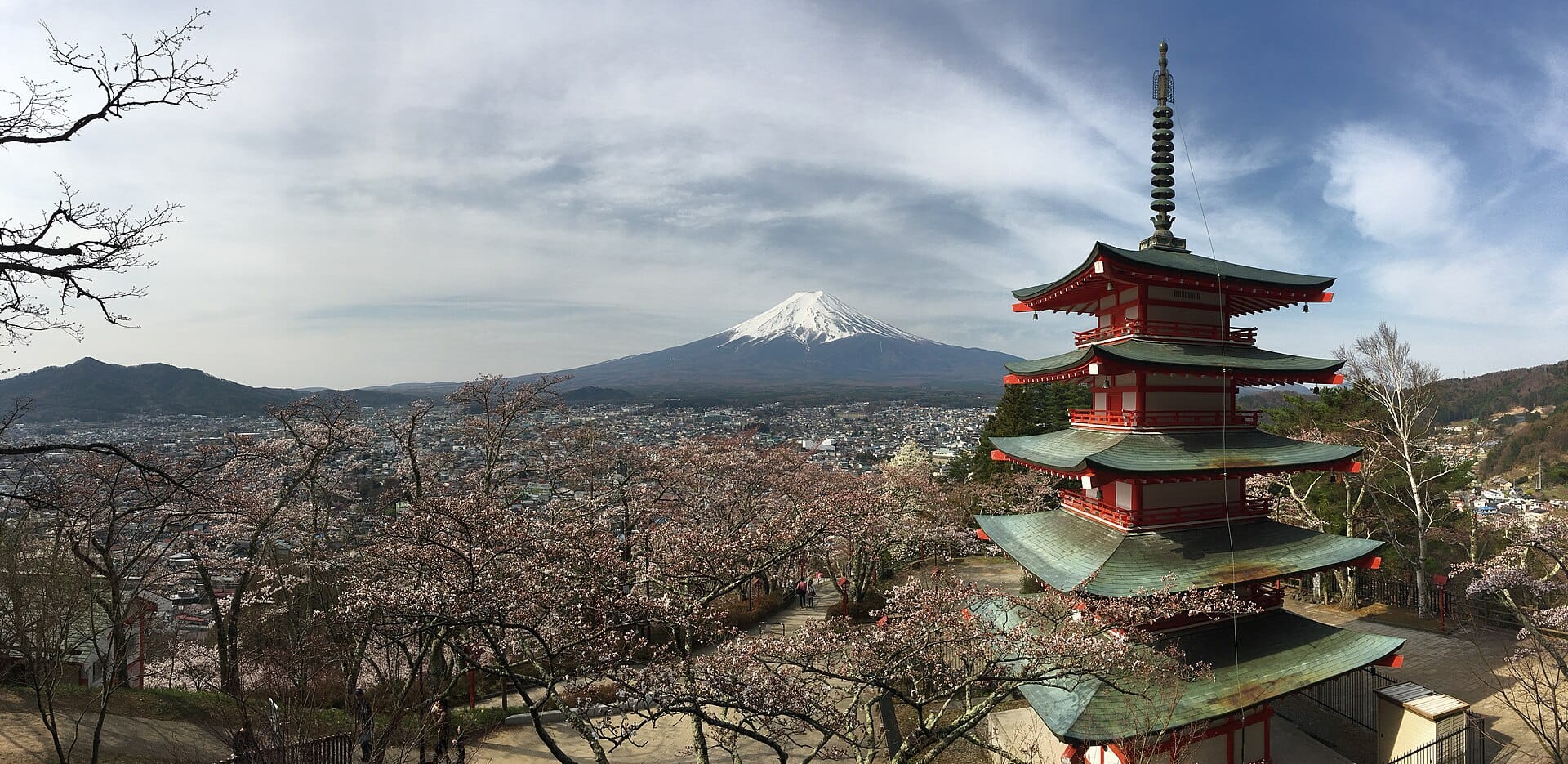
Chureito Pagoda
The five-storey pagoda above Fujiyoshida gives the postcard composition of Fuji, cherry blossom and vermilion roof. Roughly 400 steps up from the car park.
-
Lake Kawaguchiko
The most accessible of the Fuji Five Lakes, with a ropeway, cycle path and reflections of the mountain on still mornings. A comfortable base before or after a climb.
-
Oshino Hakkai springs
A cluster of spring-fed pools filtered through the volcano's lava, startlingly clear and set among thatched houses. Busy at midday, quiet early.
-
Fujisan Hongu Sengen shrine
The head shrine of the Fuji cult, in Fujinomiya on the southern side, with a spring-fed pond and an avenue of cherry trees. Climbers have started here for centuries.
Getting there
-
Fly to
Tokyo (HND)
Nearest airport to Mount Fuji, about 98km away as the crow flies.
-
Then
To Fujiyoshida
About two to two and a half hours by road from Shizuoka (FSZ); from Tokyo it is a straightforward two hours by express bus to the Fuji Five Lakes.
-
On the ground
Getting around
In season a shuttle bus runs from Fujiyoshida up to the Yoshida trail's fifth station, roughly an hour, and private cars are barred from the toll road on busy days; from there it is all on foot.
Public transport: Good: buses and the Fujikyu railway serve the towns around the mountain and connect directly to the fifth station during the climbing season.
Flights
Los Angeles Mount Fuji, Japan
Fly from anywhere — search 4,000+ airports worldwide.
Roughly 11h 05m in the air from Los Angeles (LAX), estimated from the distance — check for a direct route. Pick a month to see every available flight with live prices.
Check dates and prices
Pick your departure date, then your return.
Search flightsNot sure when? Compare fares across a whole month.
Flight times are estimates; prices open on Google Flights.
When to go
Daytime highs run from about -12°C in January to 10°C in August. Driest in December; wettest in August, with rain on about 21 days.
The year at a glance — pick a month for detail
June5° · rain 20 daysCold and often wet.
Monthly figures averaged from daily records for 2020–2024 at this location (ERA5 reanalysis). Live conditions from MET Norway, CC BY 4.0.
Where to stay
Lakeside hotels and ryokan around Kawaguchiko, business hotels and hostels in Fujiyoshida, and simple bunk-space mountain huts on the trail itself.
-
Best base overall
Fujiyoshida and Kawaguchiko
The Yoshida trail's home towns, with buses to the fifth station, gear shops and onsen for afterwards. Kawaguchiko is the touristy half, Fujiyoshida the cheaper and more workaday one.
Find stays in Fujiyoshida and Kawaguchiko -
Closest to the sights
Mountain huts on the Yoshida trail
Sleeping at the seventh or eighth station is how most people reach the sunrise. Accommodation means a shared sleeping shelf, a meal and very little sleep.
Find stays in Mountain huts on the Yoshida trail -
Best value
Gotemba and Fujinomiya
On the southern side, cheaper rooms and access to the shorter Fujinomiya trail. Less to do off the mountain, and transport links are thinner than around Kawaguchiko.
Find stays in Gotemba and Fujinomiya -
Best with children
Hakone
An hour away, with hot springs, lake boats and the classic Fuji view without any climbing. Too far to be a summit base, ideal as the recovery stop afterwards.
Find stays in Hakone
Worth knowing before you book: Huts open only for the short summer season and sell out as soon as reservations open, and the Yoshida trail now requires a paid entry booking with a daily cap.
Search everything else in Fujiyoshida by budget. These are indicative budget bands in GBP per night for two people, not live quotes or guarantees of hotel type. Check your dates, guests, taxes and final price on Booking.com.
Good to know
- Timing
- The official season runs from early July to early September, and the trails, huts and toilets are open only then. Late August has the shortest queues within the window.
- Book ahead
- Mountain huts and the trail entry reservation both need arranging weeks in advance, especially for weekends. Turning up on the day rarely works.
- Altitude
- The fifth station sits above 2,300 metres and headaches are common higher up. Spend an hour acclimatising before you set off and climb slowly.
- Pack this
- A head torch, gloves, a hat and a proper windproof layer. Summit temperatures at dawn can sit near freezing even in August, with wind on top of that.
- Cash
- Huts, summit toilets and the fifth-station shops often want cash, and coins are useful for the toilet donations. Withdraw before you leave the city.
Similar places
Nearby destinations
Related articles
Quick answers
When is the best time to visit Mount Fuji?
Daytime highs run from about -12°C in January to 10°C in August. Driest in December; wettest in August, with rain on about 21 days.
How long should I spend in Mount Fuji?
Our suggestion: 2–3 nights.
How do I get to Mount Fuji?
About two to two and a half hours by road from Shizuoka (FSZ); from Tokyo it is a straightforward two hours by express bus to the Fuji Five Lakes.
Do I need a car in Mount Fuji?
No. Good: buses and the Fujikyu railway serve the towns around the mountain and connect directly to the fifth station during the climbing season.
What currency and language are used in Mount Fuji?
Currency: Japanese yen (JPY). Language: Japanese. Plugs: type A and B.
Who is Mount Fuji best for?
Best for adventure seekers, walkers & hikers and photographers. In a phrase: sacred, punishing, oddly communal.