Ten European beaches for your next summer escape
You don't need a long-haul flight to find water so clear it looks retouched. Europe's coastline hides beaches that rival the Caribbean — you just need to know which cove to aim for and when to arrive. This list rounds up ten of the continent's finest stretches of sand and pebble, from famous showstoppers to bays you'll have almost to yourself in June. Pack the snorkel; several of these are as good below the surface as above it.
Which beach should you choose?
Some of these beaches work as a daily walk from a town; others are a full excursion. Start with the access you are comfortable with, then choose your accommodation. The comparisons below are our planning suggestions, not a promise of calm sea or empty sand.
| Beach | A useful base | Best reason to choose it | Plan around |
|---|---|---|---|
| Praia da Marinha | Carvoeiro or Lagoa | Cliff scenery and a coastal walking day | Steps, limited parking and staying clear of cliff bases |
| Cala Goloritzé | Baunei | A walking trip ending at a protected cove | Advance access arrangements and a steep return walk |
| Voutoumi | Paxos | An island boat day | Boat timetables, weather and the return crossing |
| Zlatni Rat | Bol | Swimming with an active seaside base | Shingle underfoot and afternoon wind |
| Ses Illetes | Formentera | Cycling and shallow-water scenery | Ferry connections and peak-season crowds |
| Myrtos | Kefalonia | Dramatic scenery and deeper-water swimming | A steeply shelving beach; not the easy toddler choice |
| Porthcurno | West Cornwall | A beach day combined with the Minack | Cool water, tides and summer parking |
| Palombaggia | Porto-Vecchio area | A stay built around Corsican beaches | A drive to the beach and busy summer days |
| Elafonissi | South-west Crete | Lagoon scenery and a coastal stay | The journey from your base and an early arrival |
| Spiaggia dei Conigli | Lampedusa town | A protected beach and island boat trips | Reservation slots, walking access and no beach facilities |
1. Praia da Marinha, Algarve, Portugal
Explore destination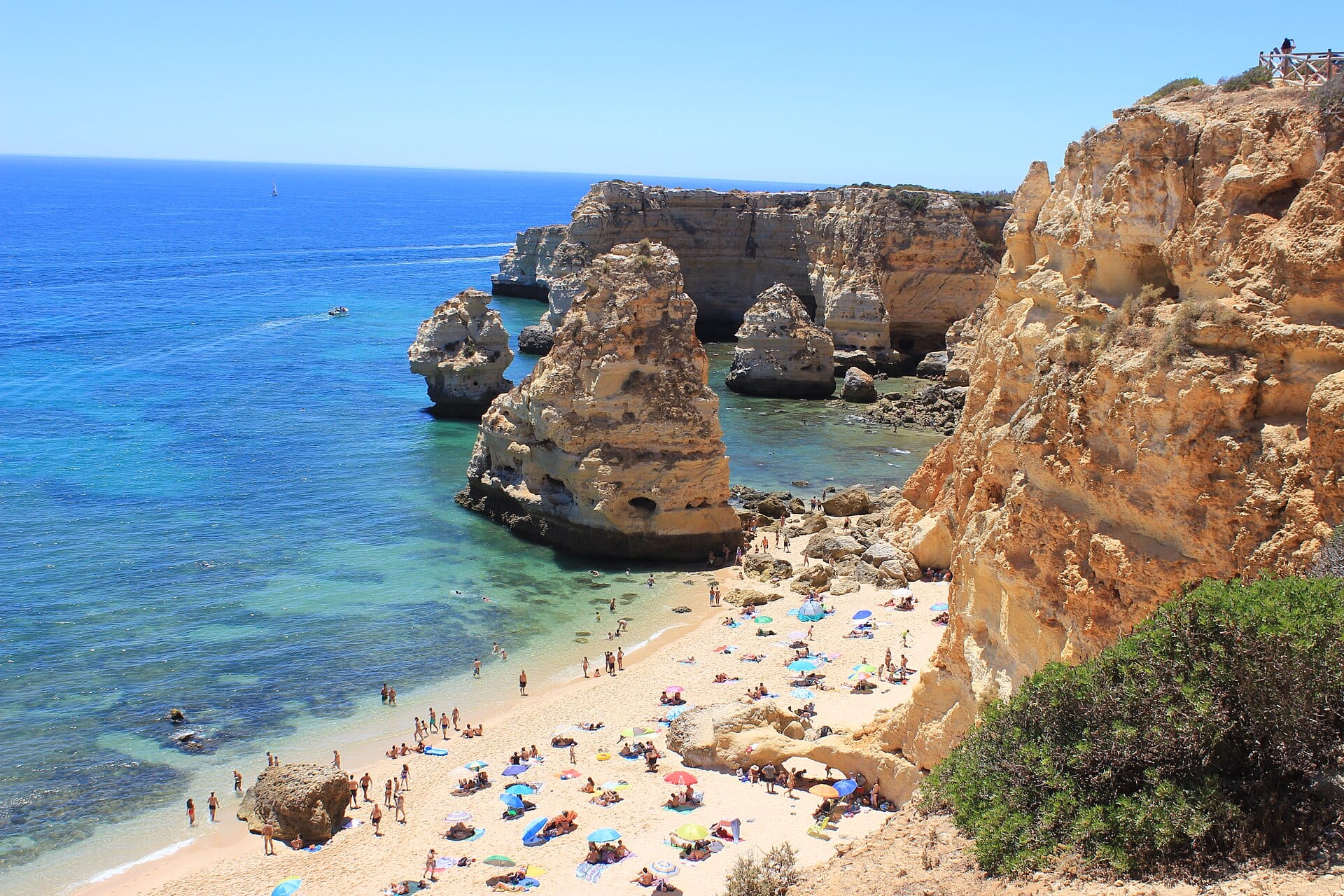
Named by the Michelin Guide among Europe's ten most beautiful beaches, Marinha is the Algarve in one frame: honey-coloured cliffs, sea stacks rising from clear green water and a crescent of soft sand. Come early — the paid car park at the top fills fast, and the descent is a steep wooden staircase of about 150 steps. At low tide you can swim or wander between the rock arches, and the water round the stacks is shallow enough to snorkel with your feet still finding the bottom.
2. Cala Goloritzé, Sardinia, Italy
Explore destination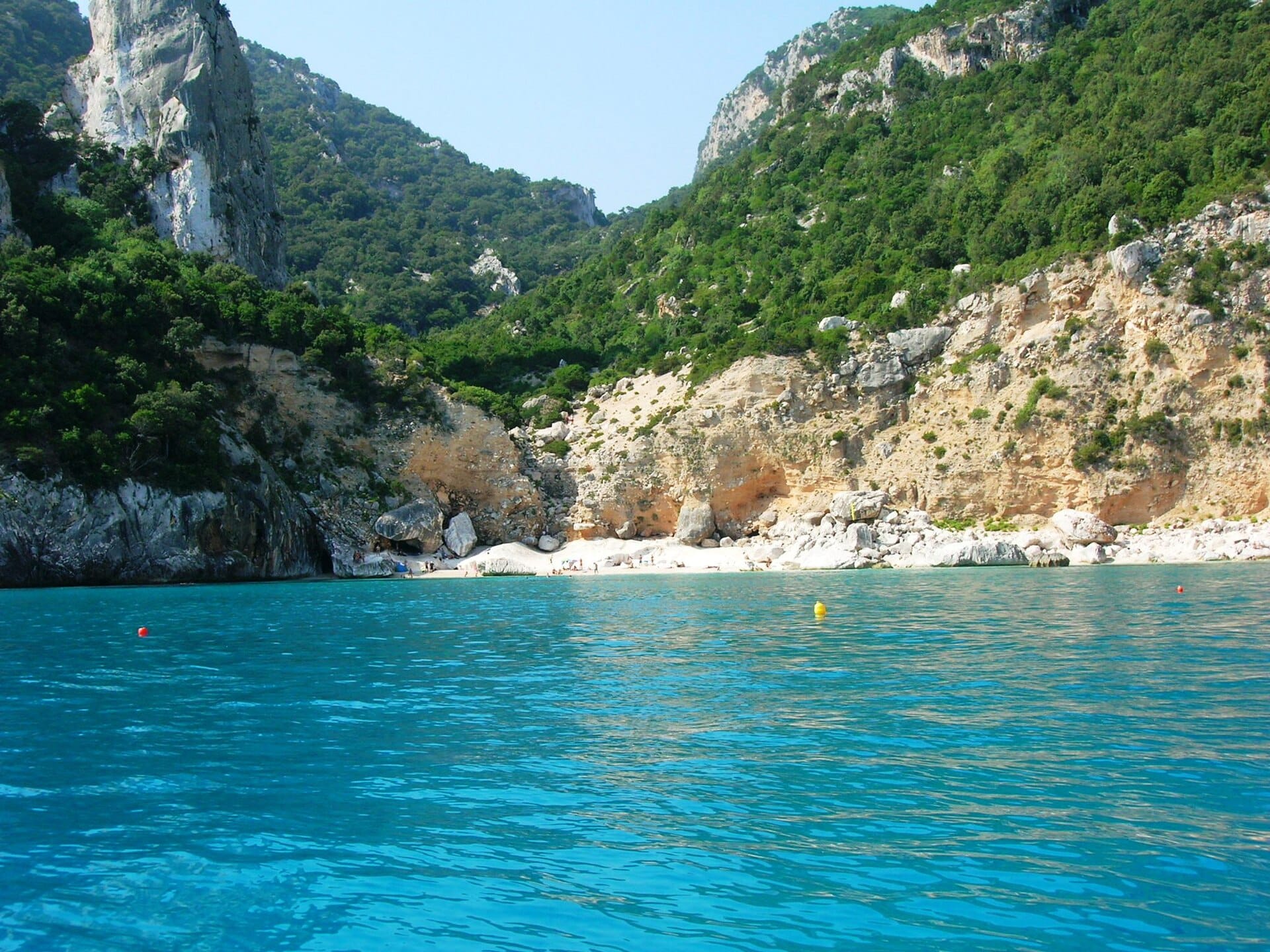
Cala Goloritzé is a small white-pebble cove below a limestone pinnacle on Sardinia's east coast. Reach the beach on foot from Su Porteddu on the Golgo plateau; allow time and energy for the uphill return. Boats can show you the coast from offshore, but they cannot land you on this beach: anchoring is prohibited within 300 metres. Access is capped at 250 people a day and must be booked in advance on the Heart of Sardinia app; entry costs €7 in 2026, free for under-sixes. Bring water, sun protection and proper walking shoes. Check the local tourism authority's access guidance.
3. Voutoumi, Antipaxos, Greece
Explore destination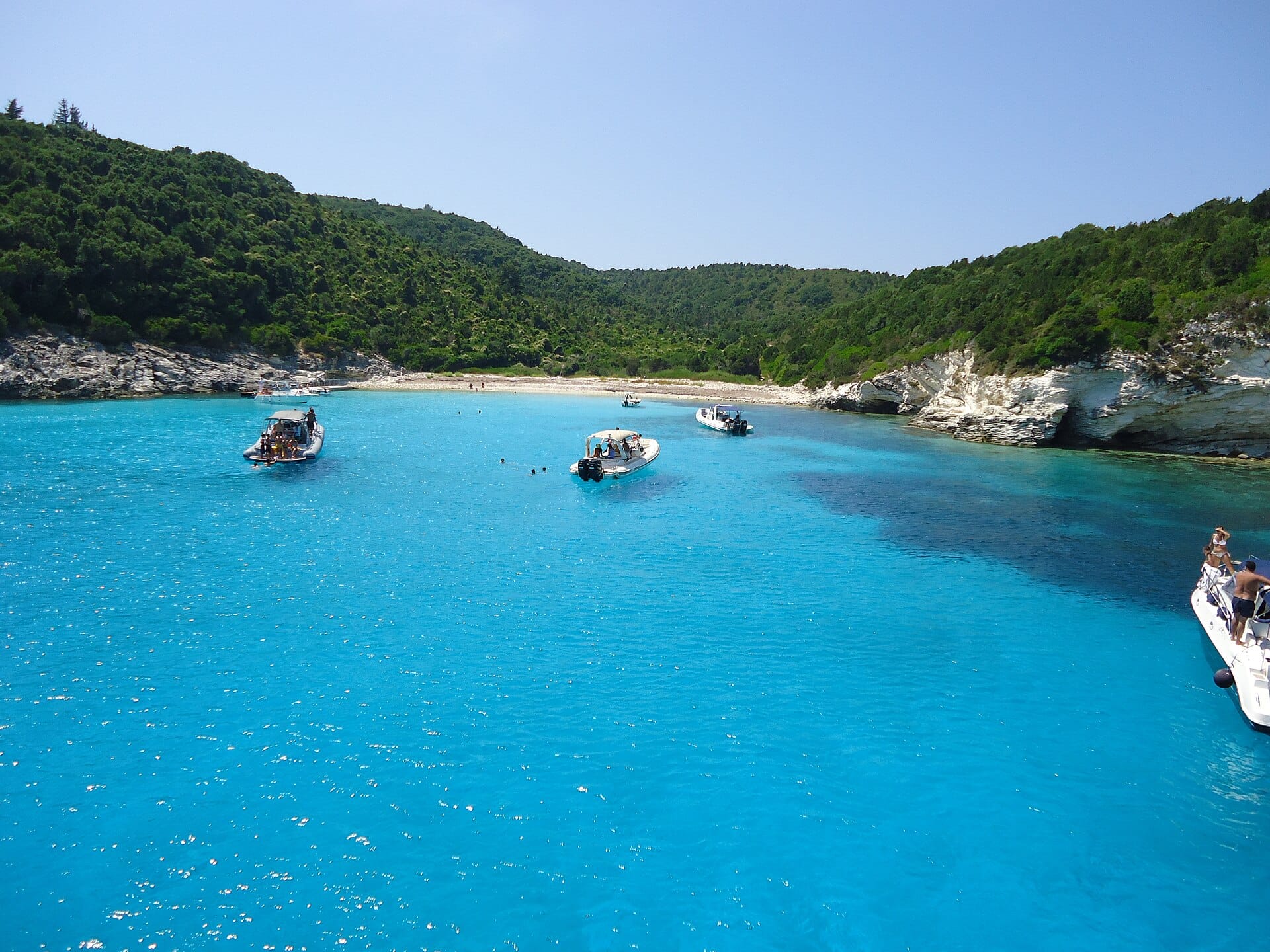
Tiny Antipaxos has no hotels to speak of, a couple of hilltop tavernas and two of the clearest bays in the Ionian. Voutoumi is the prettier: a strip of bone-white pebble backed by green hills, with water that shades from glass to deep sapphire. Day boats hop across from Paxos in fifteen minutes. Arrive on the first one, leave on the last, and swim while everyone else is at lunch.
4. Zlatni Rat, Brač, Croatia
Explore destination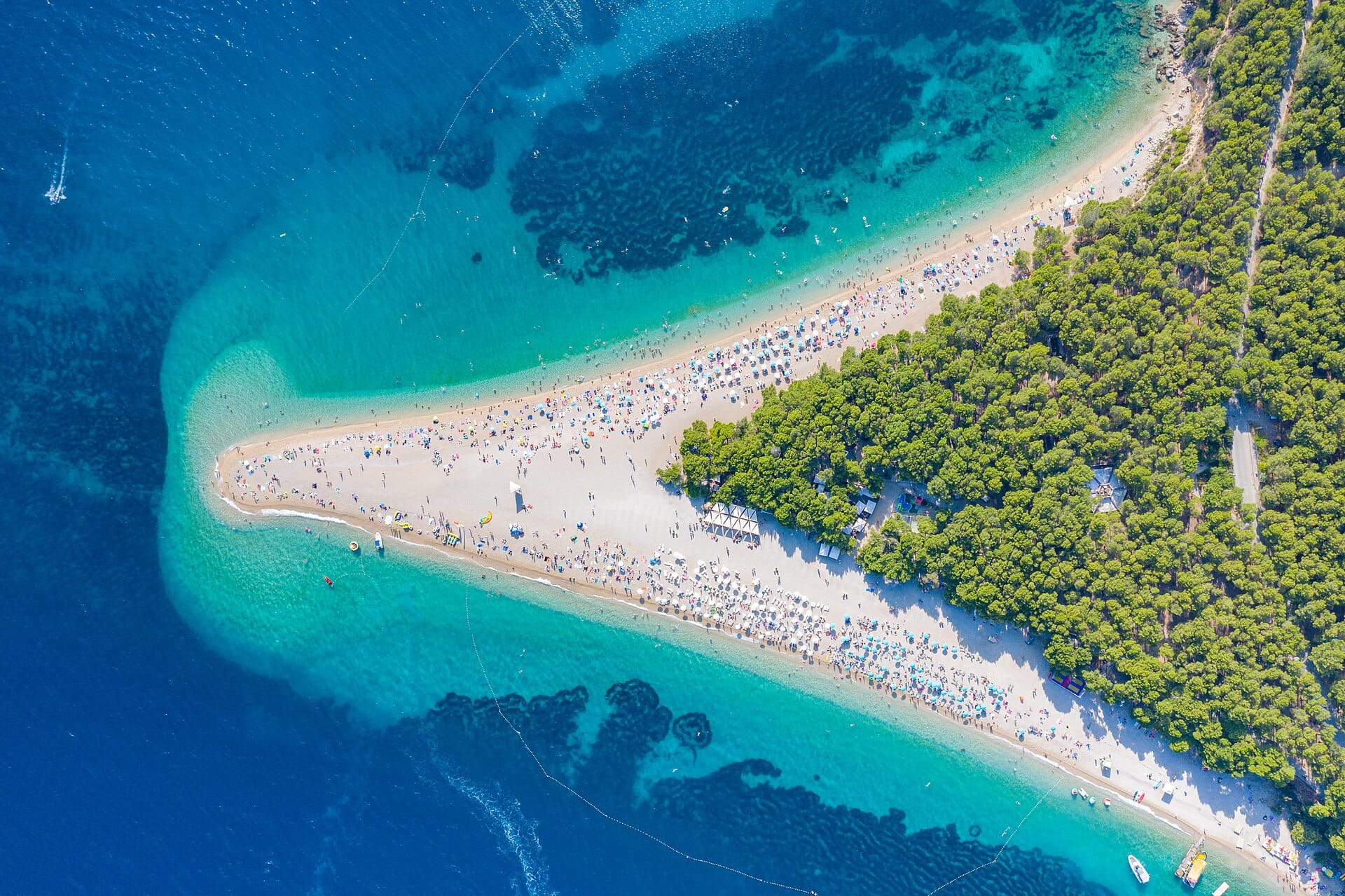
Probably Croatia's most photographed beach, Zlatni Rat is a pale spit that changes shape with the wind and current, jutting into the channel below the town of Bol. The fine shingle is kind to feet, the water is Adriatic-clear, and the maestral that blows most summer afternoons, strongest from about 2pm to 5pm, makes this one of Europe's most reliable windsurfing spots; come in the morning or late afternoon if you just want calm water. Pine trees behind the beach offer real shade — rarer than you'd think on this list.
5. Ses Illetes, Formentera, Spain
Explore destination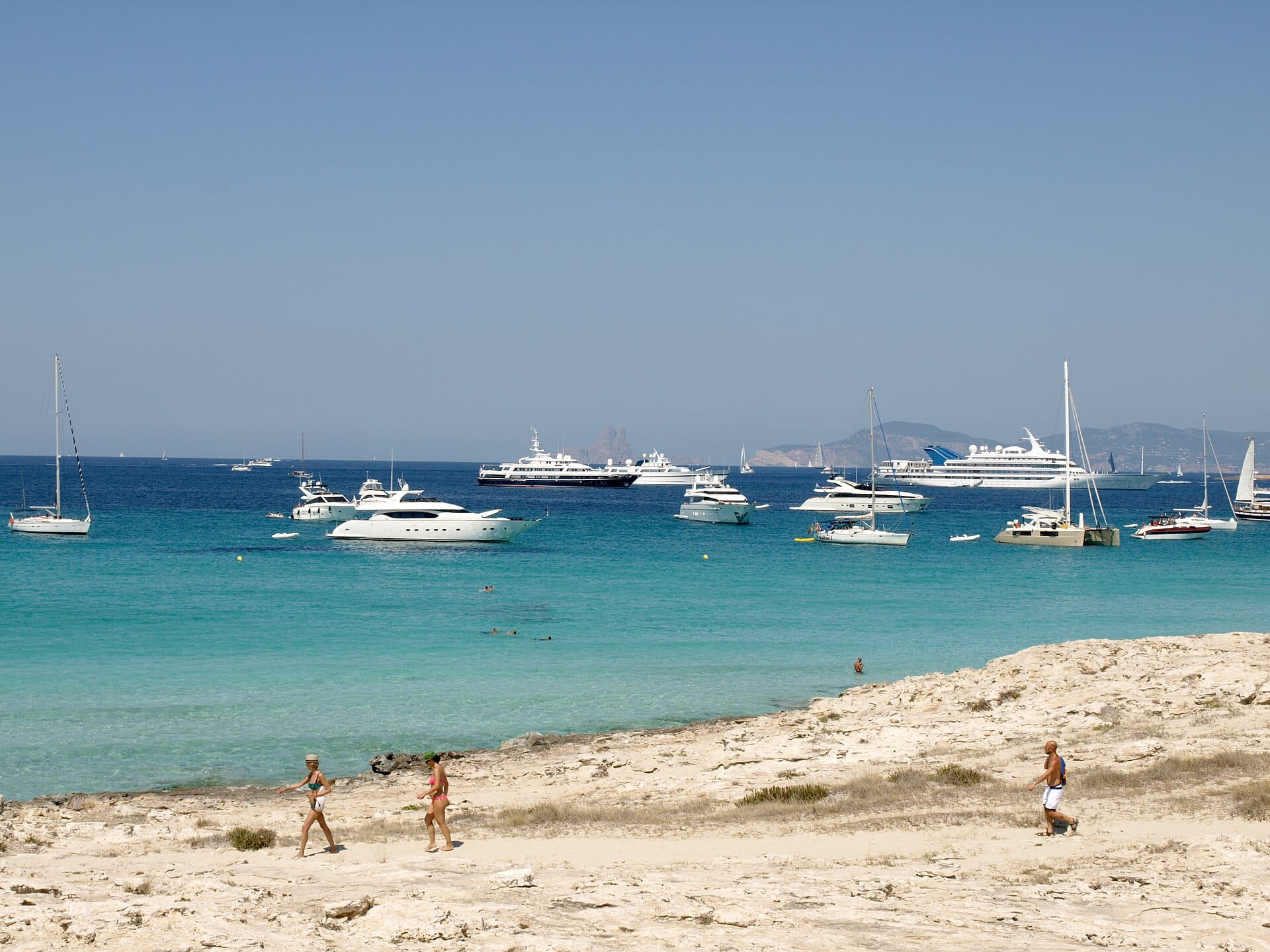
Half an hour by ferry from Ibiza, Formentera moves at bicycle pace, and Ses Illetes is its crown: a Caribbean-flat lagoon of pale turquoise over white sand, with views across to the islet of Espalmador. It gets busy in August, but the water is so shallow and wide that it rarely feels crowded once you're in. Hire a bike at the port and make a day of the whole peninsula: in summer non-resident cars pay €6–7 to enter the natural park and parking is capped, while cyclists and walkers go in free.
6. Myrtos, Kefalonia, Greece
Explore destination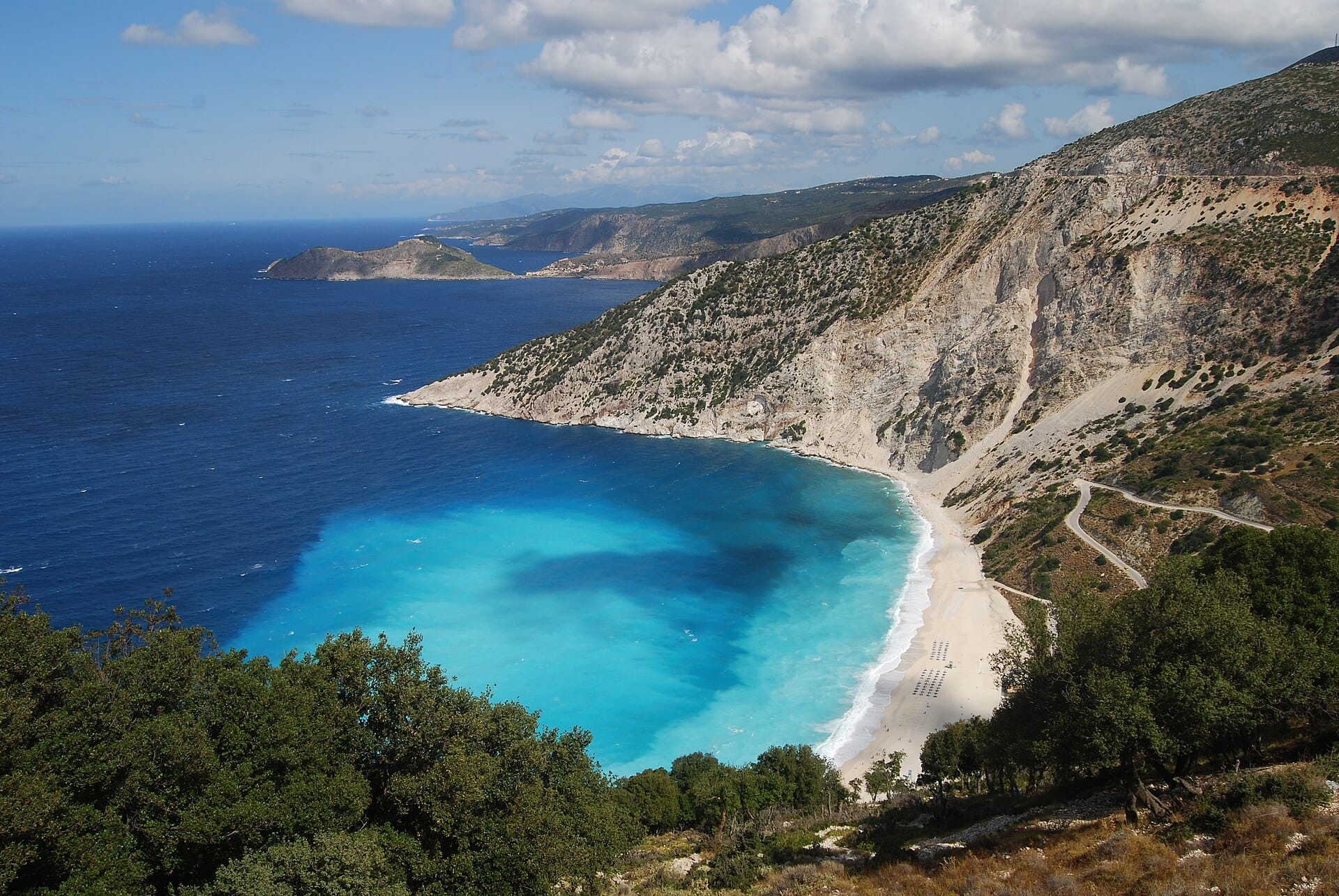
Seen from the cliff road above, Myrtos is pure drama — some 700 to 800 metres of dazzling white pebbles pinched between two mountains, reached by a two-kilometre hairpin road, meeting a sea of electric blue. Down at beach level it's simpler: sunbeds and a canteen at one end, a free stretch at the other, and serious swimming. The pebbles shelve steeply, so it suits confident swimmers more than paddling toddlers. Stay for sunset from the viewpoint; it's one of the great views of Greece.
7. Porthcurno, Cornwall, England
Explore destination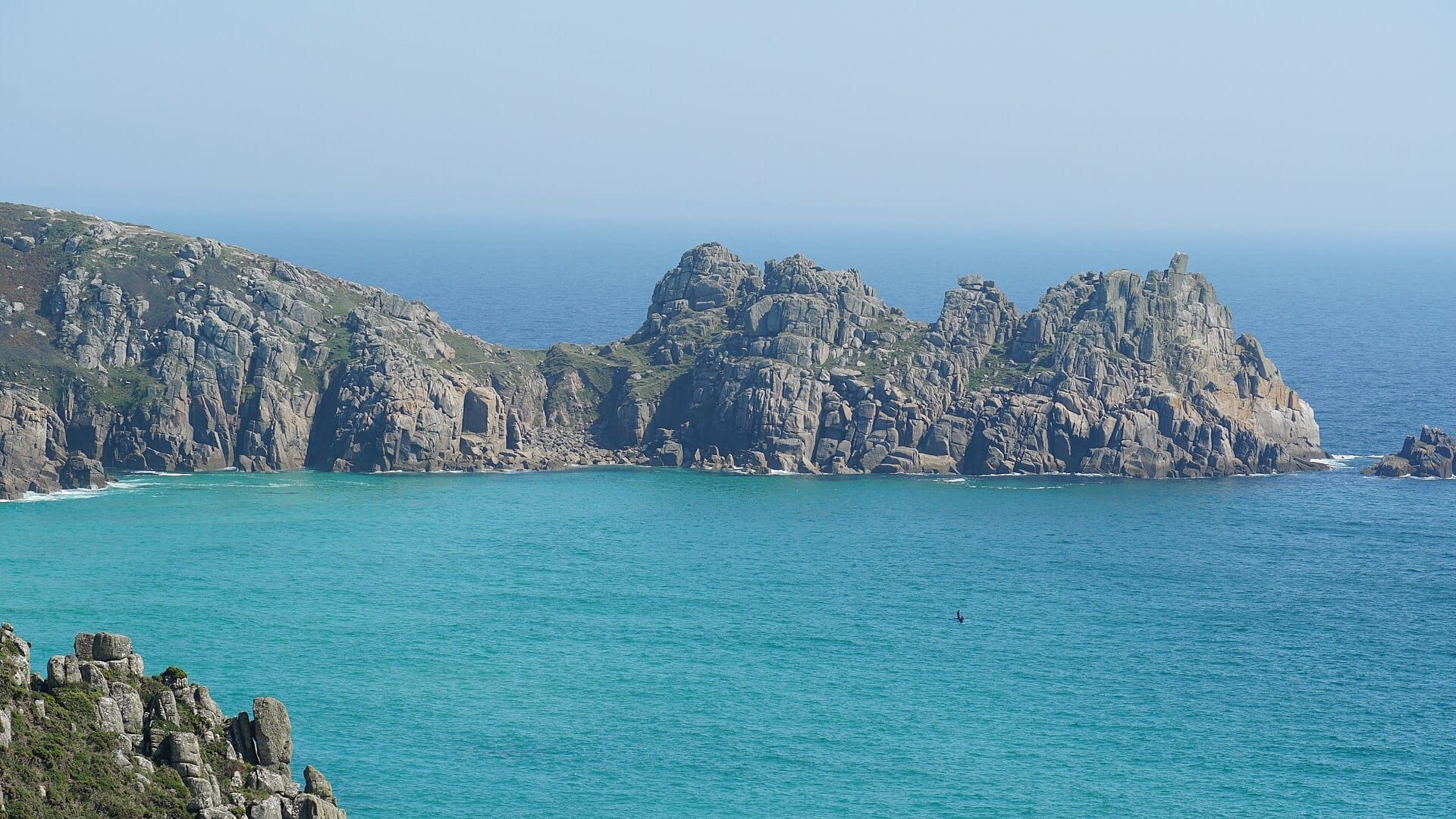
Proof you don't have to leave Britain: on a bright day Porthcurno's shallows glow tropical turquoise against white shell sand, framed by granite headlands near Land's End. The open-air Minack Theatre is carved into the cliff directly above — book an evening performance and watch the sea change colour behind the stage. The water is bracing, obviously, but that's what makes the first plunge memorable, and RNLI lifeguards patrol from mid-May to the end of September.
8. Palombaggia, Corsica, France
Explore destination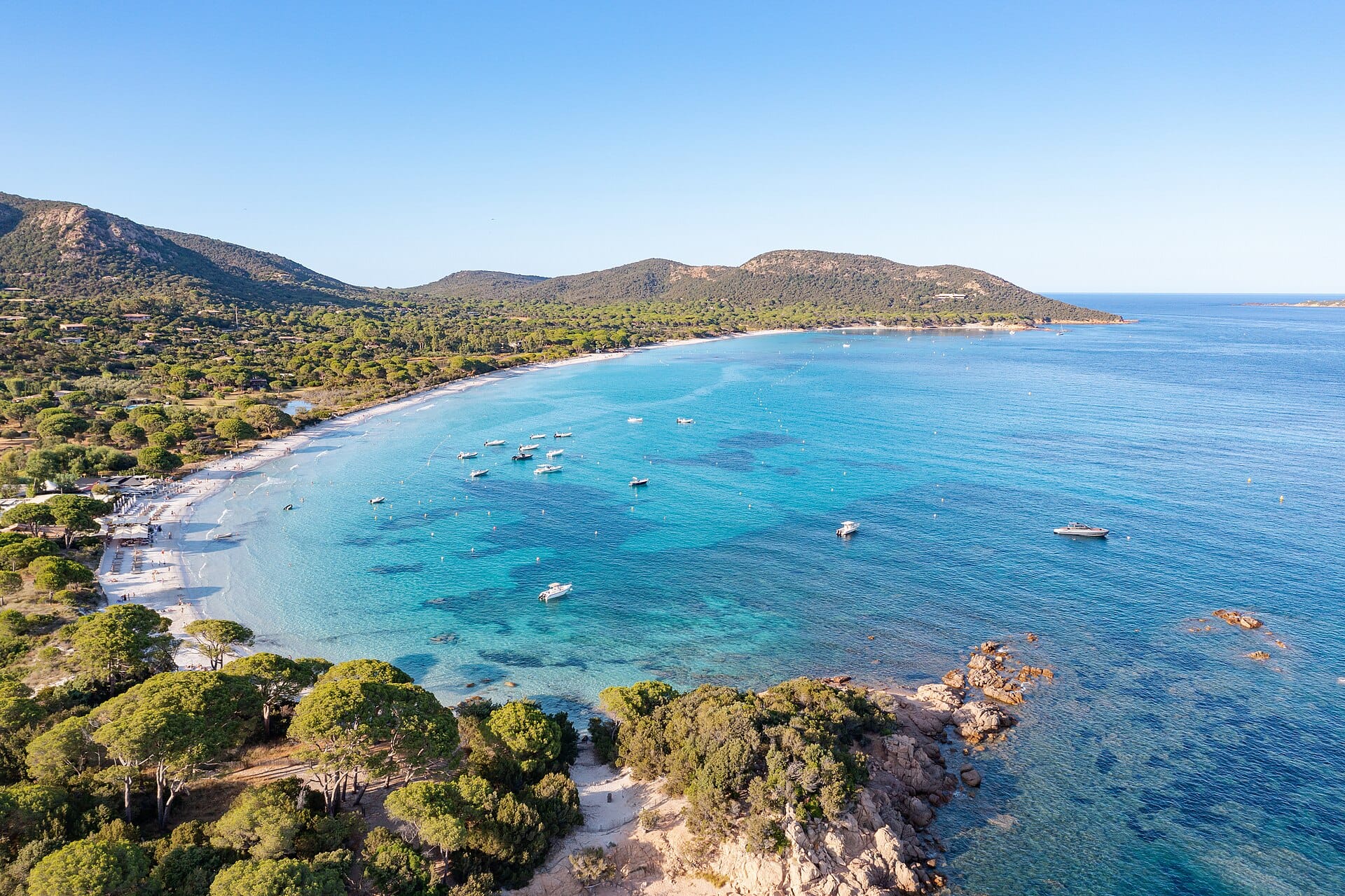
Corsica's south coast does a convincing Indian Ocean impression, and Palombaggia is the pick: red rocks, umbrella pines and long shallows the temperature of bathwater by July. It's family-friendly without being tame, with paddleboards for hire and several beach restaurants; the car parks fill quickly in July and August. June and September are the sweet spots, when the light turns golden and the crowds thin out.
9. Elafonissi, Crete, Greece
Explore destination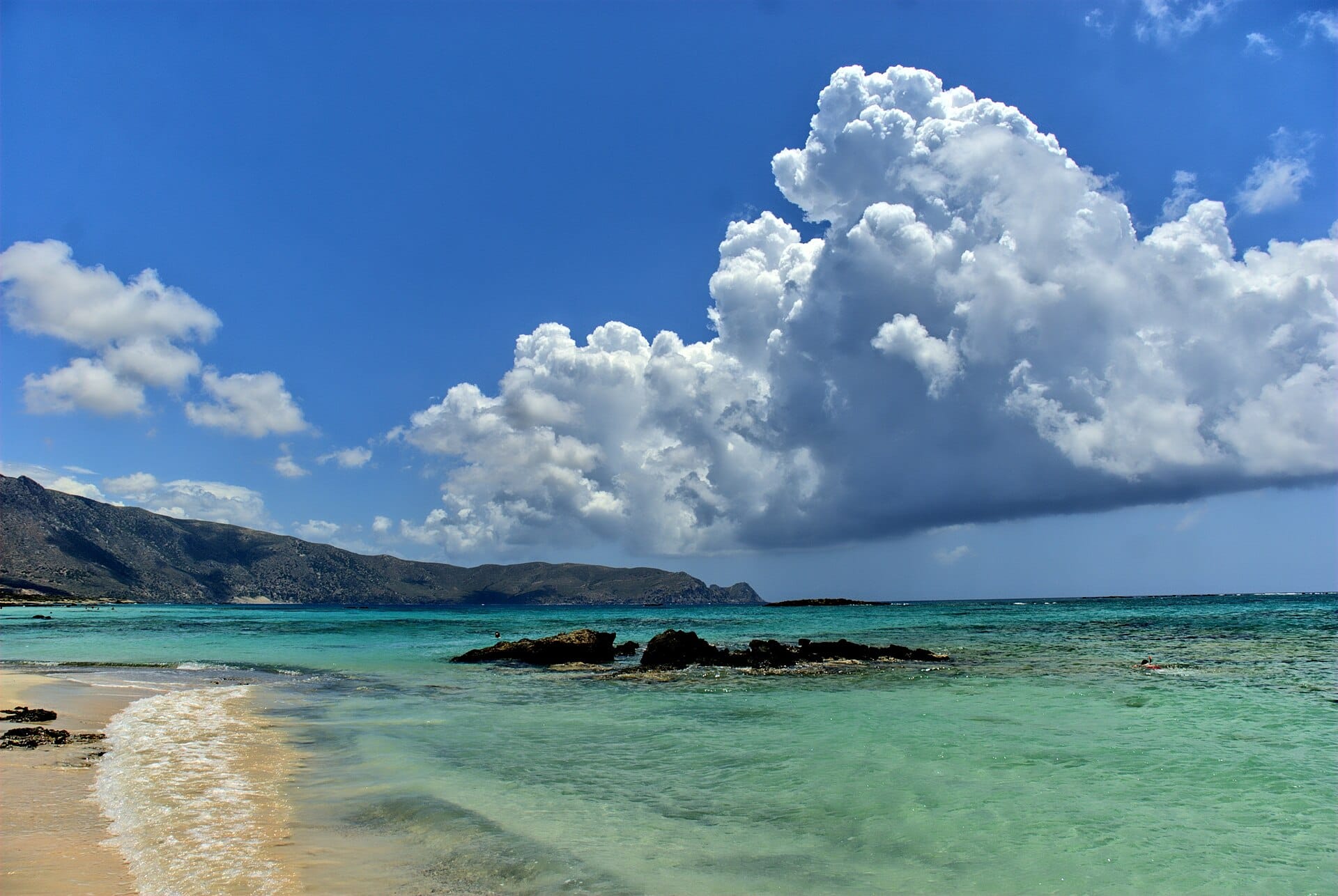
At Crete's remote south-western tip, Elafonissi is famous for sand blushed pink by crushed shells and a lagoon so shallow you can wade to the islet opposite. It's a protected Natura 2000 site, gorgeous and — fair warning — popular, so treat it as a day trip and aim to arrive before 9am in July and August; cars stop at the paid car parks, a short walk from the sand. The drive through the Topolia gorge is part of the pleasure, and nearby Kedrodasos offers an escape if you crave solitude.
10. Spiaggia dei Conigli, Lampedusa, Italy
Explore destination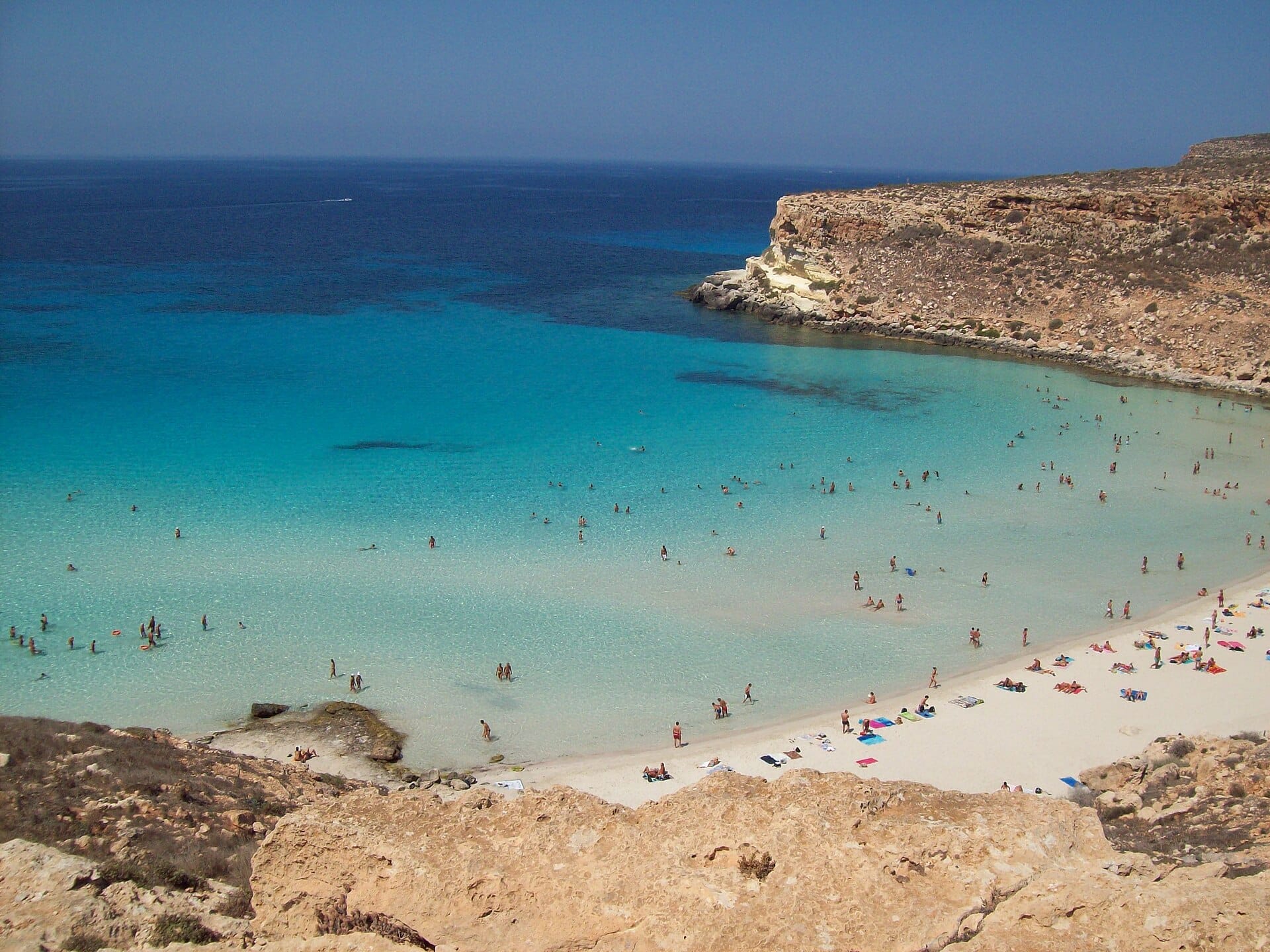
Lampedusa sits closer to Tunisia than to Sicily, and its most famous beach looks it: a white crescent under low limestone cliffs, water that shades from clear to milk-blue, and an islet close enough to wade to when the sandbar is exposed. It is a nature reserve and one of the few Italian beaches where loggerhead turtles still nest, so numbers are rationed: a maximum of 550 people per shift, morning (8.30am–1.30pm) or afternoon (2.30pm–7.30pm), mostly booked online in advance through the official portal, with a few places left for a queue at the gate. Fly in from Palermo or Catania; the ferry from Porto Empedocle takes most of a night.
Turn the beach list into a holiday
Choose one region for a week rather than trying to connect several islands. Use each destination guide to compare bases and places to stay. For a small-child holiday, check the exact beach access, water conditions and distance back to your room; a beautiful cove is not automatically an easy family base.
June and September are useful starting points for a Mediterranean trip, but ferries, lifeguards and beach services run their own seasons. Cornwall needs a more flexible weather plan. Check local conditions and access rules shortly before travel, especially at protected beaches.