
The Maldives
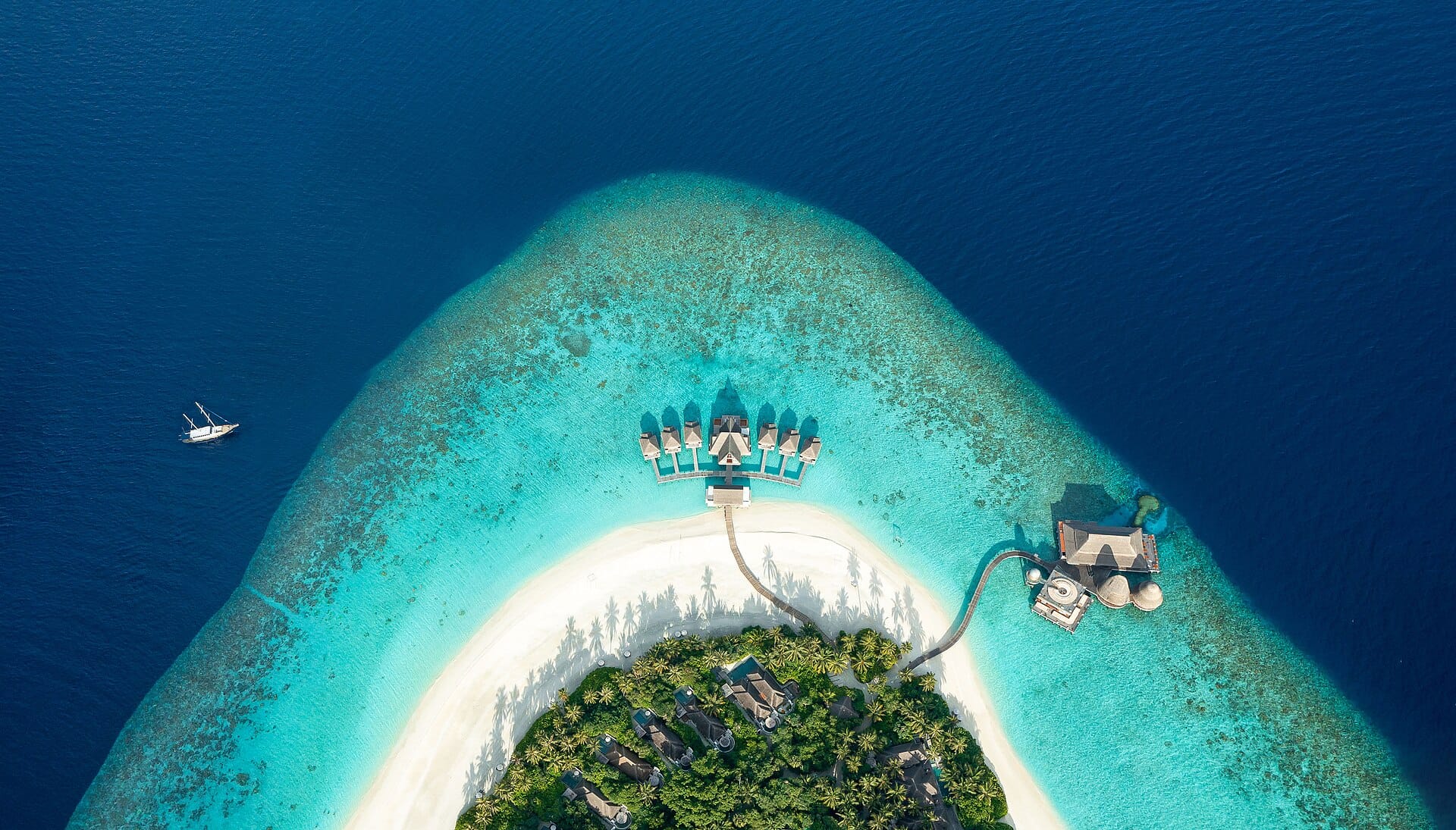
One island, one resort, one ring of sand in a thousand shades of blue — the Maldives remains the purest expression of the tropical fantasy.
- Best forCouples · Honeymooners · Divers & snorkellers
- In February28°C · 8 rainy days · sea 29°C
- Ideal stay7 nights
- Approx. flying time~19h 10m from Los Angeles
- CurrencyMVRMaldivian rufiyaa
- LanguageDhivehi
- Local time09:27same time as the UK
- PlugsType D / GUK plugs fit
- Drive on theLeftSame as the UK
- Dialling code+960
Why go
Nearly 1,200 coral islands sit scattered across 26 atolls, most of them so small you can walk the circumference in ten minutes. The formula rarely changes: a lagoon that shades from milk to ink, a house reef a few strokes offshore, a beach raked before breakfast. Days are structured around water rather than sights, and the flattest country on earth has no hills, no ruins and no traffic to distract you.
Trips split two ways. Private-island resorts handle everything from the seaplane onwards, at a price that reflects it, while guesthouses on inhabited islands cost a fraction and put you among Maldivian life, with modest dress on village beaches and no alcohol. December to April brings the driest, calmest weather; May to November is wetter, cheaper and better for manta and whale shark encounters. Anyone who needs museums or nightlife should look elsewhere.
- Ideal stay
- 7 nights
- The vibe
- Barefoot, slow, sun-bleached and blue
From our guides
Budget travellers now have options too: guesthouses on local islands like Dhigurah put whale sharks and deserted sandbanks within reach of ordinary wallets. Visit December to April for glassy lagoons and guaranteed sun-lounger weather.
Featured in Ten tropical islands that live up to the postcard
Things to do
-
Hanifaru Bay mantas
In Baa Atoll's UNESCO biosphere reserve, dozens of reef manta rays gather to feed on plankton between roughly May and November. Snorkelling only, with a licensed guide and strictly limited numbers in the water.
-
Whale sharks off South Ari
The southern reaches of Ari Atoll hold one of the few year-round whale shark aggregations anywhere. Boats go out from resorts and from guesthouse islands such as Dhigurah and Maamigili.
-
Your own house reef
Most resorts sit on a reef you can reach from the sand, which is the real luxury: fifteen minutes among parrotfish, turtles and reef sharks before dinner, no boat required.
-
A sandbank picnic
Boats drop you on a bare crescent of sand with an umbrella and a cool box, then collect you before the tide reclaims it. Impossibly simple, and the memory that tends to stick.
-
Male's old quarter
The capital packs a fish market, a produce market and the coral stone Hukuru Miskiy, or Old Friday Mosque, into a few dense blocks. Worth a half day if you have a transfer to fill.
-
Diving the atoll channels
Currents funnelling through the channels bring grey reef sharks, eagle rays and schooling jacks. Plenty of sites suit confident open water divers, though drift experience helps a great deal.
Getting there
-
Fly to
Malé (MLE)
The airport is on the doorstep.
-
Then
To Malé
Velana International (MLE) sits on its own island beside Malé and is where every visitor arrives.
-
On the ground
Getting around
Resorts and guesthouses collect you at the airport by speedboat, seaplane or domestic flight, taking anything from 15 minutes to a couple of hours depending on the atoll. Once you are on your island you walk everywhere.
Public transport: Public ferries connect Malé with the inhabited local islands cheaply but slowly and not every day; resorts run their own transfers.
Flights
Los Angeles The Maldives
Fly from anywhere — search 4,000+ airports worldwide.
Roughly 19h 10m in the air from Los Angeles (LAX), estimated from the distance — check for a direct route. Pick a month to see every available flight with live prices.
Check dates and prices
Pick your departure date, then your return.
Search flightsNot sure when? Compare fares across a whole month.
Flight times are estimates; prices open on Google Flights.
When to go
Daytime highs run from about 28°C in January to 29°C in April. Driest in February; wettest in May, with rain on about 25 days. The sea is warmest in April at around 31°C, coolest at 29°C.
The year at a glance — pick a month for detail
February28° · rain 8 days · sea 29°Warm with rain most weeks.
Monthly figures averaged from daily records for 2015–2024 at Malé (ERA5 reanalysis). Live conditions from MET Norway, CC BY 4.0.
Where to stay
One-resort private islands with over-water villas at one end, and simple guesthouses on inhabited local islands at the other. Nothing in between, and no self-catering.
-
Best base overall
Malé and Hulhumalé
Practical rather than idyllic, but the airport island and the capital are where late arrivals and early departures make sense, with the cheapest beds in the country.
Find stays in Malé and Hulhumalé -
Best value
Maafushi
The busiest of the local guesthouse islands, a speedboat from Male, with cheap rooms, excursions and a bikini beach. Basic and built-up by Maldivian standards.
Find stays in Maafushi -
Quietest
Dhigurah or Dhangethi, South Ari Atoll
Local islands close to the whale shark routes, with a long sandbank and a handful of guesthouses. Transfers are longer and alcohol is not sold on inhabited islands.
Find stays in Dhigurah or Dhangethi, South Ari Atoll -
Best with children
A North or South Malé Atoll resort island
Close enough for a speedboat rather than a seaplane, which matters with small children, and most have kids clubs and shallow lagoons. You eat only what the island serves.
Find stays in A North or South Malé Atoll resort island
Worth knowing before you book: Seaplane transfers only fly in daylight and cost a large extra sum, so check them before choosing a far resort. December to April books months ahead.
Search everything else in Malé by budget. These are indicative budget bands in GBP per night for two people, not live quotes or guarantees of hotel type. Check your dates, guests, taxes and final price on Booking.com.
Good to know
- Transfers
- Seaplanes fly in daylight only, so a late arrival at Velana may mean a night in Male or Hulhumale. Check transfer times before booking flights.
- Local islands
- Away from resorts, cover shoulders and knees off the designated bikini beaches and expect no alcohol. Resorts and liveaboards are the exception.
- Money
- Resorts run on cards and settle in dollars. Guesthouses, ferries and Male cafes are easier with cash, and rufiyaa are useful in small amounts.
- Timing
- The northeast monsoon from December to April is the reliable sunshine window. The southwest monsoon brings squalls that pass quickly, plus lower rates and better plankton for big fish.
- Reef care
- Coral bleaching is a live issue here. Use mineral sunscreen, never stand on coral, and keep a respectful distance from turtles and rays.
Similar places
Nearby destinations
Related articles
Quick answers
When is the best time to visit The Maldives?
Daytime highs run from about 28°C in January to 29°C in April. Driest in February; wettest in May, with rain on about 25 days. The sea is warmest in April at around 31°C, coolest at 29°C.
How long should I spend in The Maldives?
Our suggestion: 7 nights.
How do I get to The Maldives?
Velana International (MLE) sits on its own island beside Malé and is where every visitor arrives.
Do I need a car in The Maldives?
No. Public ferries connect Malé with the inhabited local islands cheaply but slowly and not every day; resorts run their own transfers.
What currency and language are used in The Maldives?
Currency: Maldivian rufiyaa (MVR). Language: Dhivehi. Plugs: type D and G.
Who is The Maldives best for?
Best for couples, honeymooners and divers & snorkellers. In a phrase: barefoot, slow, sun-bleached and blue.