
Khongoryn Els
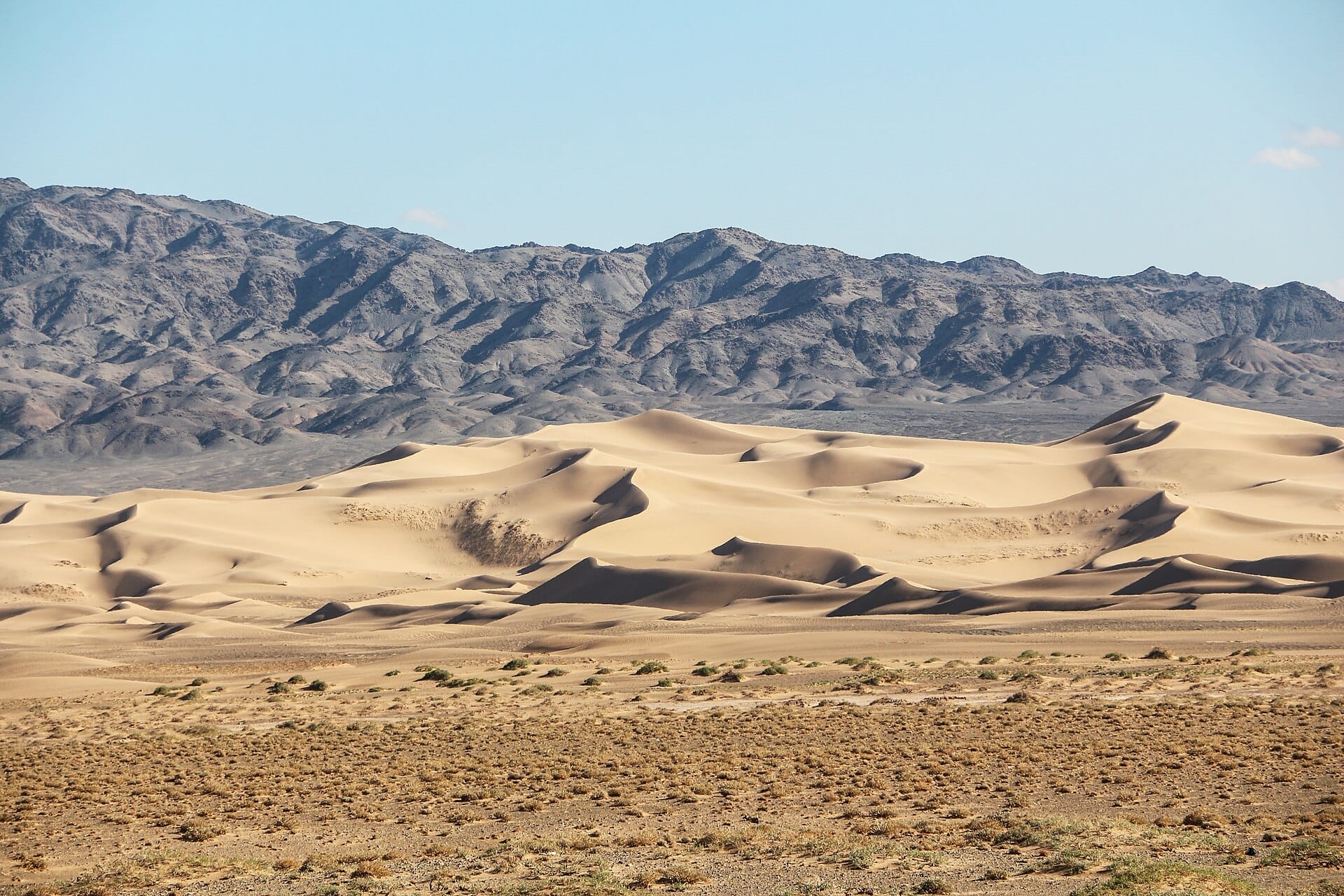
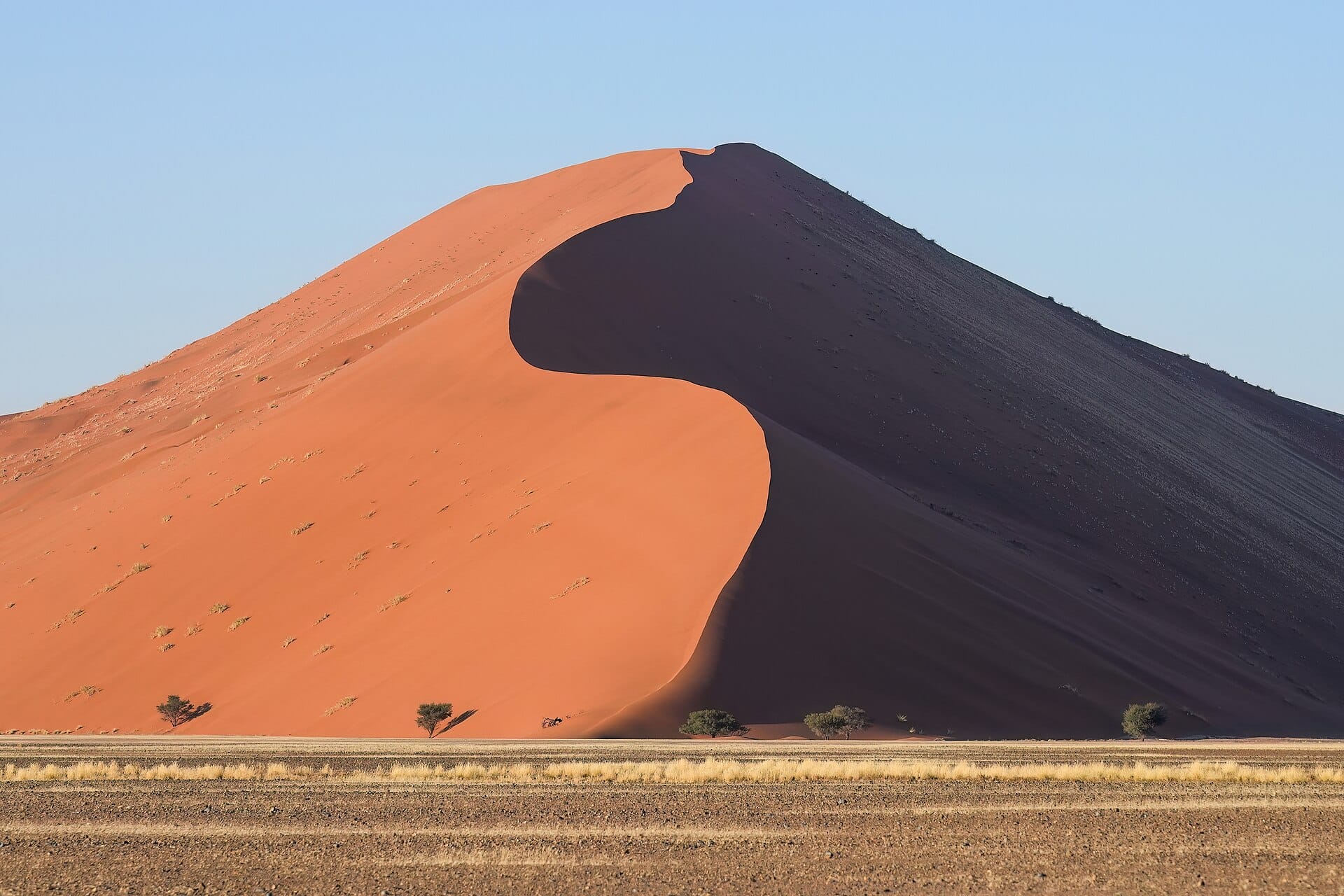
Mongolia's 'Singing Dunes' rise 300 metres from the Gobi's gravel plains and hum — audibly, uncannily — when wind or sliding sand sets them off.
- Best forAdventure seekers · Photographers · Wildlife & nature
- In December-6°C · barely any rain
- Ideal stayTwo nights at the dunes, within a week in the Gobi
- Approx. flying time~12h 55m from Los Angeles
- CurrencyMNTMongolian tögrög
- LanguageMongolian
- Local time20:107h ahead of the UK
- PlugsType C / EBring an adapter
- Drive on theRightOpposite to the UK
- Dialling code+976
Why go
A wall of sand around 100 kilometres long rises out of gravel steppe in the southern Gobi, backed by the bare Altai foothills and fringed with a green strip of river and poplars where camels graze. The scale takes a while to register. From the ridge the dunes run out of sight in one direction, and in the other the desert floor lies as flat as a table all the way to the horizon.
Nobody arrives here alone. This is part of a multi-day loop from Ulaanbaatar, or a flight to Dalanzadgad and then hours of 4x4 across trackless ground, sleeping in ger camps. Allow a week to do the Gobi properly. Summer days pass 35°C and winter nights fall far below freezing, so May, June and September are the sensible months. Expect no plumbing, no signal and enormous skies.
- Ideal stay
- Two nights at the dunes, within a week in the Gobi
- The vibe
- Vast, dusty, humbling, off-grid
From our guides
Getting there is a multi-day 4x4 expedition staying in ger camps with herding families, past ice canyons and the Flaming Cliffs where the first dinosaur eggs were unearthed. The barefoot climb up the ridge at sunset is brutal and non-negotiable. Go in June or September to dodge both extremes of a properly continental climate.
Featured in Ten desert adventures worth the sand in your boots
Things to do
-
The dune ridge at sunset
The climb is short in distance and brutal in soft sand, perhaps 40 minutes to the crest. The reward is the light, and the noise the sand makes on the way down.
-
Camels at the oasis strip
Bactrian camels are the working animals of the herding families here, and a ride along the green belt below the dunes is the standard late afternoon.
-
Yolyn Am ice canyon
A narrow gorge in the Gurvan Saikhan mountains where ice survives well into summer. The walk in is easy and the vultures overhead are not shy.
-
Bayanzag, the Flaming Cliffs
Red sandstone bluffs where fossilised dinosaur eggs were first identified in the 1920s. Best at the end of the day, when the rock lights up.
-
Staying in a ger
Felt tents around a central stove, run as camps or shared with herding families. Enter to the left, never step on the threshold, and accept what you are offered.
-
The night sky
There is no artificial light for hundreds of kilometres. On a clear, moonless night the Milky Way is bright enough to walk by.
Getting there
-
Fly to
Dalanzadgad (DLZ)
Nearest airport to Gobi Desert, about 223km away as the crow flies.
-
Then
To Dalanzadgad
Dalanzadgad (DLZ) has short flights from Ulaanbaatar, then it is roughly four to five hours by 4x4 west across gravel tracks to the dunes. Most visitors instead travel the whole way overland from Ulaanbaatar over several days.
-
On the ground
Getting around
You stay at ger camps near the dune foot and travel by 4x4 with a driver; there are no roads as such, only tracks, and the ridge itself is climbed on foot or reached by camel.
Public transport: Effectively none. Everything is done by organised 4x4 tour with a driver and guide.
Flights
Los Angeles Gobi Desert, Mongolia
Fly from anywhere — search 4,000+ airports worldwide.
Roughly 12h 55m in the air from Los Angeles (LAX), estimated from the distance — check for a direct route. Pick a month to see every available flight with live prices.
Check dates and prices
Pick your departure date, then your return.
Search flightsNot sure when? Compare fares across a whole month.
Flight times are estimates; prices open on Google Flights.
When to go
Daytime highs run from about -6°C in December to 32°C in July. Driest June and October to April; wettest in July, with rain on about 4 days.
The year at a glance — pick a month for detail
December-6° · no rainCold and dry.
Monthly figures averaged from daily records for 2020–2024 at this location (ERA5 reanalysis). Highlighted months are warm and mostly dry — May to September. Live conditions from MET Norway, CC BY 4.0.
Where to stay
Tourist ger camps with shared shower blocks, a few family gers taking guests, and plain hotels in Dalanzadgad only. There is nothing luxurious and no chain anywhere.
-
Best base overall
Dalanzadgad
The provincial capital and the only place with an airport, hotels and cash machines, so most Gobi trips start and finish here. It is functional rather than lovely, and the dunes are still hours away.
Find stays in Dalanzadgad -
Closest to the sights
Khongoryn Els ger camps
A scatter of tourist ger camps at the foot of the dunes themselves, which puts sunrise and sunset climbs on your doorstep. Facilities are simple and the wind is relentless.
Find stays in Khongoryn Els ger camps -
Best with children
Yolyn Am valley camps
Camps near the Vulture Gorge break the long drive with a short, easy walk and an ice field that lingers into summer. Nights are cold even in July, so bring proper layers.
Find stays in Yolyn Am valley camps -
Quietest
Bayanzag, the Flaming Cliffs
Family-run gers among the red sandstone where the first dinosaur eggs were found, with almost no infrastructure and enormous skies. Solar power means limited charging and no reliable signal.
Find stays in Bayanzag, the Flaming Cliffs
Worth knowing before you book: Almost everyone books the ger camps as part of a driver-and-guide package rather than separately, and the good camps fill for July and August by early spring.
Search everything else in Dalanzadgad by budget. These are indicative budget bands in GBP per night for two people, not live quotes or guarantees of hotel type. Check your dates, guests, taxes and final price on Booking.com.
Good to know
- Getting there
- Either a two-day drive from Ulaanbaatar or a short flight to Dalanzadgad and a 4x4 from there. Either way you travel with a driver, usually a guide too.
- Timing
- May, June and September avoid the worst of the heat and the cold. July and August are hot and bring what little rain there is.
- Pack this
- Layers, a windproof jacket, a head torch, wet wipes and a sealed bag for cameras. Sand finds its way into everything.
- Cash
- Draw tugrik in Ulaanbaatar or Dalanzadgad. There are no cash machines in the desert and cards are useless out there.
- Etiquette
- Ger hospitality has rules. Take offered food or drink with the right hand, keep your feet away from the stove, and ask before photographing families.
Further afield


Related articles
Quick answers
When is the best time to visit Khongoryn Els?
For warm, mostly dry days, May to September. That means highs of 20–34°C with rain on six days a month or fewer. Daytime highs run from about -6°C in December to 32°C in July. Driest June and October to April; wettest in July, with rain on about 4 days.
How long should I spend in Khongoryn Els?
Our suggestion: two nights at the dunes, within a week in the Gobi.
How do I get to Khongoryn Els?
Dalanzadgad (DLZ) has short flights from Ulaanbaatar, then it is roughly four to five hours by 4x4 west across gravel tracks to the dunes. Most visitors instead travel the whole way overland from Ulaanbaatar over several days.
Do I need a car in Khongoryn Els?
Yes, a car makes a real difference here. Effectively none. Everything is done by organised 4x4 tour with a driver and guide.
What currency and language are used in Khongoryn Els?
Currency: Mongolian tögrög (MNT). Language: Mongolian. Plugs: type C and E.
Who is Khongoryn Els best for?
Best for adventure seekers, photographers and wildlife & nature. In a phrase: vast, dusty, humbling, off-grid.