
The Blue Eye
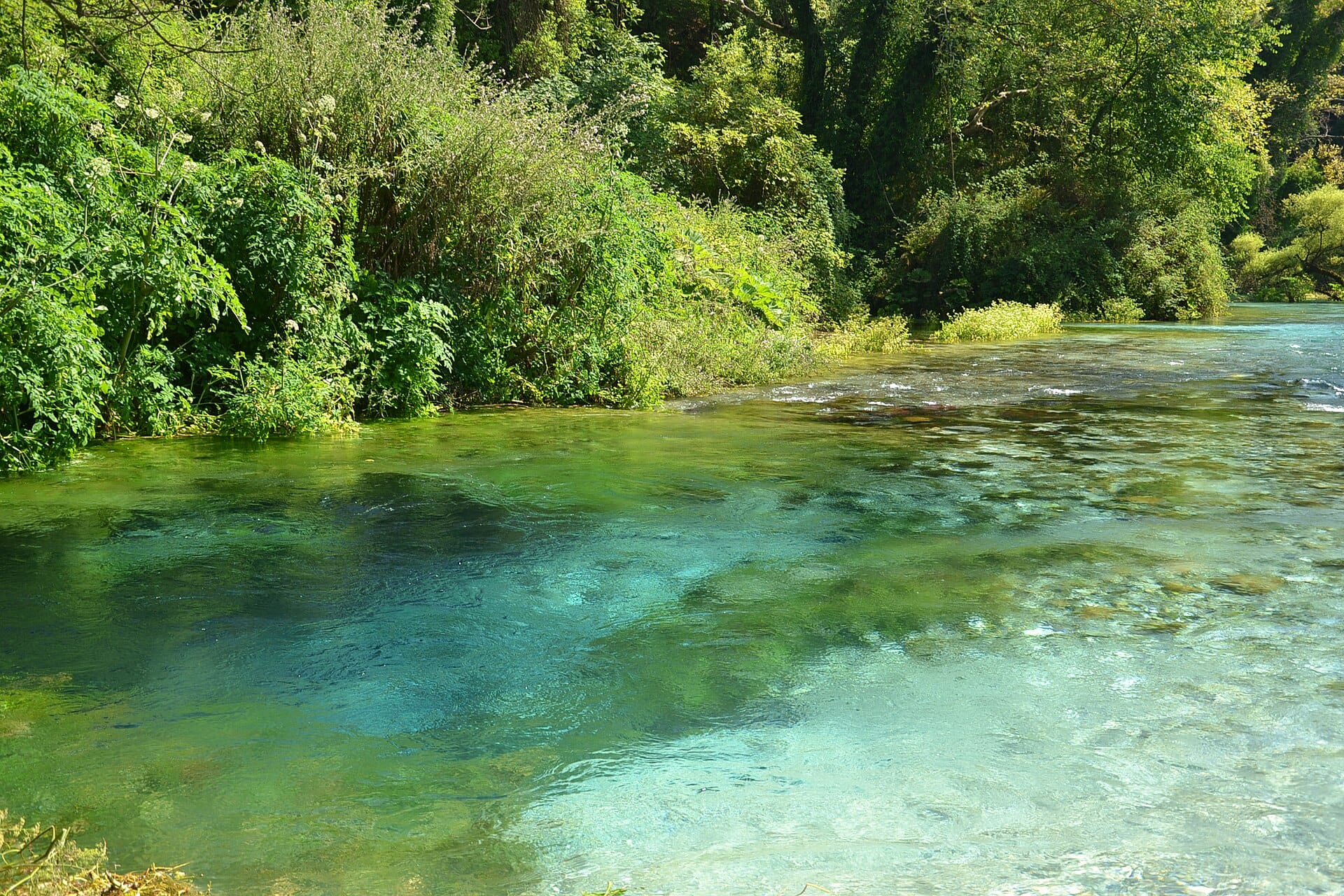
A spring of unknown depth erupts from the earth in a pupil of impossible blue ringed by dense forest — the Syri i Kaltër, or Blue Eye, is southern Albania's natural wonder.
- Best forAdventure seekers · Photographers · Budget travellers
- In November17°C · 13 rainy days
- Ideal stayA day trip from Sarande
- Approx. flying time~13h 15m from Los Angeles
- CurrencyALLAlbanian lek
- LanguageAlbanian
- Local time16:092h ahead of the UK
- PlugsType C / FBring an adapter
- Drive on theRightOpposite to the UK
- Dialling code+355
Why go
Water surges upward out of the ground with enough force to hold a permanent dome above the surface, dark blue at the centre and ringed by pale turquoise. Oak and plane trees crowd the banks, and a short boardwalk leads from the car park to a viewing platform directly above the spring. Divers have descended past fifty metres without finding the source. The setting is small, green and unexpectedly cold.
This is a stop rather than a destination, an hour or two on the road between Sarande and Gjirokaster, and it pairs well with the Ottoman streets of the latter or a few days on the Albanian Riviera. Spring brings the strongest flow, summer the crowds and the appetite for cold water. Access is easy but the site is popular, so arrive early or late.
- Ideal stay
- A day trip from Sarande
- The vibe
- Cold, luminous, briefly astonishing
From our guides
Divers have passed fifty metres without finding bottom. The water is a breath-snatching 10°C, which makes the plunge brief and legendary. Pair it with the Ottoman lanes of nearby Gjirokastër.
Featured in Ten wild swimming and water adventures across Europe
Things to do
-
The spring itself
A viewing platform sits over the pool, where the upwelling shows as a shifting dark circle. The water holds close to 10°C throughout the year.
-
The cold plunge
Swimming in the spring pool is restricted, though the river below has accessible pools. The temperature makes any swim short and memorable.
-
The riverside walk
A shaded path follows the Bistrica downstream through plane trees, with quieter pools and picnic spots away from the main platform.
-
Gjirokaster
Half an hour away, a UNESCO-listed hillside town of stone-roofed Ottoman houses beneath a large castle, and a good overnight base.
-
Butrint
An ancient city near Sarande with Greek, Roman, Byzantine and Venetian layers, set in a lagoon and also listed by UNESCO.
-
The Albanian Riviera
The coast running north from Sarande through Himare and Dhermi, with pebble bays and clear water, about an hour from the spring.
Getting there
-
Fly to
Rinas (TIA)
Nearest airport to The Blue Eye, about 171km away as the crow flies.
-
Then
To Saranda
Corfu (CFU) is close in a straight line but across water: take the passenger ferry to Saranda, around half an hour to an hour and a half depending on the boat. Tirana (TIA) is the mainland alternative, about five hours by road.
-
On the ground
Getting around
The Blue Eye is roughly 40 minutes' drive inland from Saranda on the Gjirokastër road, then a short walk or shuttle from the entrance to the spring. Most people combine it with Gjirokastër or Butrint in one day trip.
Public transport: Buses run between Saranda and Gjirokastër and will drop you at the turn-off, but it is a few kilometres from there to the spring.
Flights
Los Angeles The Blue Eye, Albania
Fly from anywhere — search 4,000+ airports worldwide.
Roughly 13h 15m in the air from Los Angeles (LAX), estimated from the distance — check for a direct route. Pick a month to see every available flight with live prices.
Check dates and prices
Pick your departure date, then your return.
Search flightsNot sure when? Compare fares across a whole month.
Flight times are estimates; prices open on Google Flights.
When to go
Daytime highs run from about 12°C in January to 33°C in July. Driest in July; wettest in December, with rain on about 14 days.
The year at a glance — pick a month for detail
November17° · rain 13 daysCool and often wet.
Monthly figures averaged from daily records for 2020–2024 at this location (ERA5 reanalysis). Highlighted months are warm and mostly dry — July and August. Live conditions from MET Norway, CC BY 4.0.
Where to stay
Family-run guesthouses, small apartment blocks and a swelling number of self-catering flats, with a few big hotels in Saranda. Stone-house boutique stays are the Gjirokastër speciality.
-
Best base overall
Saranda
The nearest town of any size, on the sea and about forty minutes from the spring, with the widest choice of rooms and the Corfu ferry. It is a concrete resort strip, not a beauty.
Find stays in Saranda -
Best for couples
Gjirokastër
An Ottoman hill town of stone roofs and a hulking castle, with characterful guesthouses and proper dinners. Around an hour from the Blue Eye and nowhere near a beach.
Find stays in Gjirokastër -
Best with children
Ksamil
Small islands and shallow turquoise water south of Saranda, with apartments and beach clubs. Absolutely rammed in August, and building work is a constant.
Find stays in Ksamil -
Quietest
Muzinë or the villages along the Bistricë valley
Simple guesthouses in the hills right by the spring, where you can arrive before the coaches. Little choice for meals and a car is essential.
Find stays in Muzinë or the villages along the Bistricë valley
Worth knowing before you book: August is peak for Albanian and Kosovan holidaymakers as well as foreigners, and Saranda fills. Many guesthouses want cash, so do not assume cards.
Search everything else in Saranda by budget. These are indicative budget bands in GBP per night for two people, not live quotes or guarantees of hotel type. Check your dates, guests, taxes and final price on Booking.com.
Good to know
- Getting there
- The site lies off the main Sarande to Gjirokaster road. There is a small entry fee, and the last stretch is a rough track from the car park.
- Crowds
- Coaches and day trips arrive through the middle of the day in summer. Early morning and late afternoon are far quieter.
- Swimming
- Entry to the spring pool is discouraged or restricted, partly for safety and partly for conservation. The cold is genuinely shocking.
- Cash
- Bring Albanian lek in cash for the entrance and the cafés. Cards are not reliably accepted at the site.
- Timing
- Flow is strongest in spring after the winter rains. Summer visits are hotter, busier and the water level lower.
Similar places
Nearby destinations
Related articles
Quick answers
When is the best time to visit The Blue Eye?
For warm, mostly dry days, July and August. That means highs of 20–34°C with rain on six days a month or fewer. Daytime highs run from about 12°C in January to 33°C in July. Driest in July; wettest in December, with rain on about 14 days.
How long should I spend in The Blue Eye?
Our suggestion: a day trip from Sarande.
How do I get to The Blue Eye?
Corfu (CFU) is close in a straight line but across water: take the passenger ferry to Saranda, around half an hour to an hour and a half depending on the boat. Tirana (TIA) is the mainland alternative, about five hours by road.
Do I need a car in The Blue Eye?
Yes, a car makes a real difference here. Buses run between Saranda and Gjirokastër and will drop you at the turn-off, but it is a few kilometres from there to the spring.
What currency and language are used in The Blue Eye?
Currency: Albanian lek (ALL). Language: Albanian. Plugs: type C and F.
Who is The Blue Eye best for?
Best for adventure seekers, photographers and budget travellers. In a phrase: cold, luminous, briefly astonishing.