
The Balearics: Mallorca
Ignore the reputation; the quiet Balearics are hiding in plain sight.
- Best forBeach lovers · Couples · Families
- In April18°C · 7 rainy days · sea 17°C
- Ideal stayA week or more
- Approx. flying time~12h 20m from Los Angeles
- CurrencyEUREuro
- LanguageSpanish
- Local time14:111h ahead of the UK
- PlugsType C / FBring an adapter
- Drive on theRightOpposite to the UK
- Dialling code+34
Why go
Four main islands sit close together off eastern Spain and behave very differently. Mallorca is the big one, with a serrated mountain range along its north-west coast and calm pine-backed coves in the south-east. Menorca is flatter, windier and lined with coves reached on foot. Formentera is a low sandbar of bicycles, salt pans and pale shallow water. All of them empty considerably outside July and August.
Two weeks lets you take in two or three islands with ferries between them, though a single island rewards a week easily. May, June, September and early October bring warm sea and space on the sand. Parts of Mallorca and neighbouring Ibiza run hard through high summer, which is either the appeal or the reason to stay away. Ferries thin out in winter.
- Ideal stay
- A week or more
- The vibe
- Pine-scented, clear-watered, quietly chic
From our guides
Begin in Mallorca's south-east, where pine-backed calas like Mondragó do a fine Caribbean impression, ferry across to Menorca for the wild coves of the Camí de Cavalls, then end on tiny Formentera, all bicycles and bleached-white sand. Three islands, three tempos, one very smug tan.
Featured in Ten island-hopping routes for the perfect beach fortnight
Things to do
-
Cala Mondrago
A pair of pine-backed coves inside a Mallorcan natural park on the south-east coast, with clear shallow water and a coastal path linking them.
-
Serra de Tramuntana
Mallorca's UNESCO-listed mountain range, with terraced olive groves, the wooden Soller railway and the coiling coastal road down to Sa Calobra.
-
Cami de Cavalls
A waymarked path of about 185 kilometres circling Menorca, reaching coves that no road serves. Individual sections make good day walks.
-
Cala Macarella and Macarelleta
Menorca's best-known south-coast coves, white sand between low cliffs, reached on foot or by a summer shuttle bus.
-
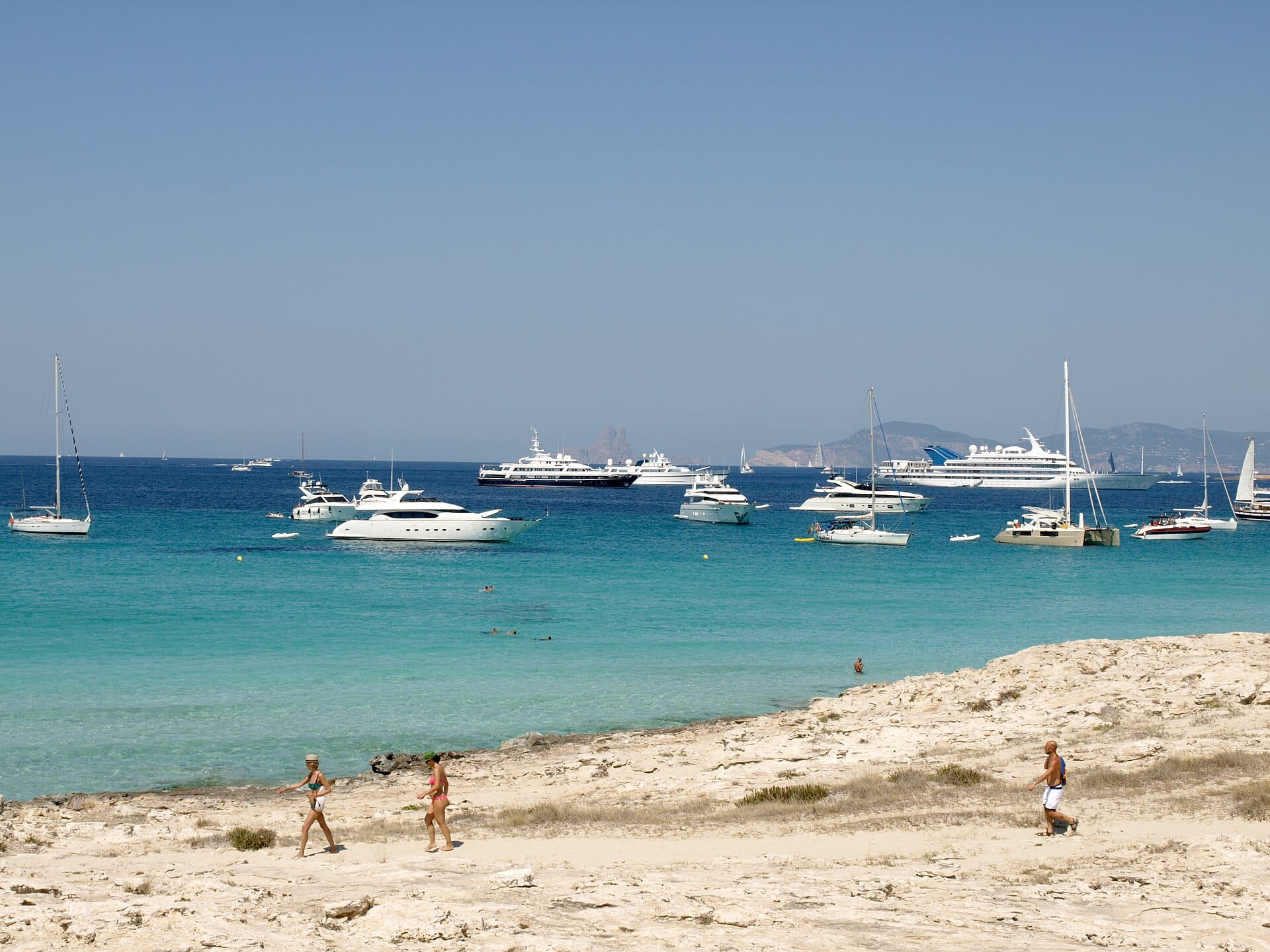
Ses Illetes, Formentera
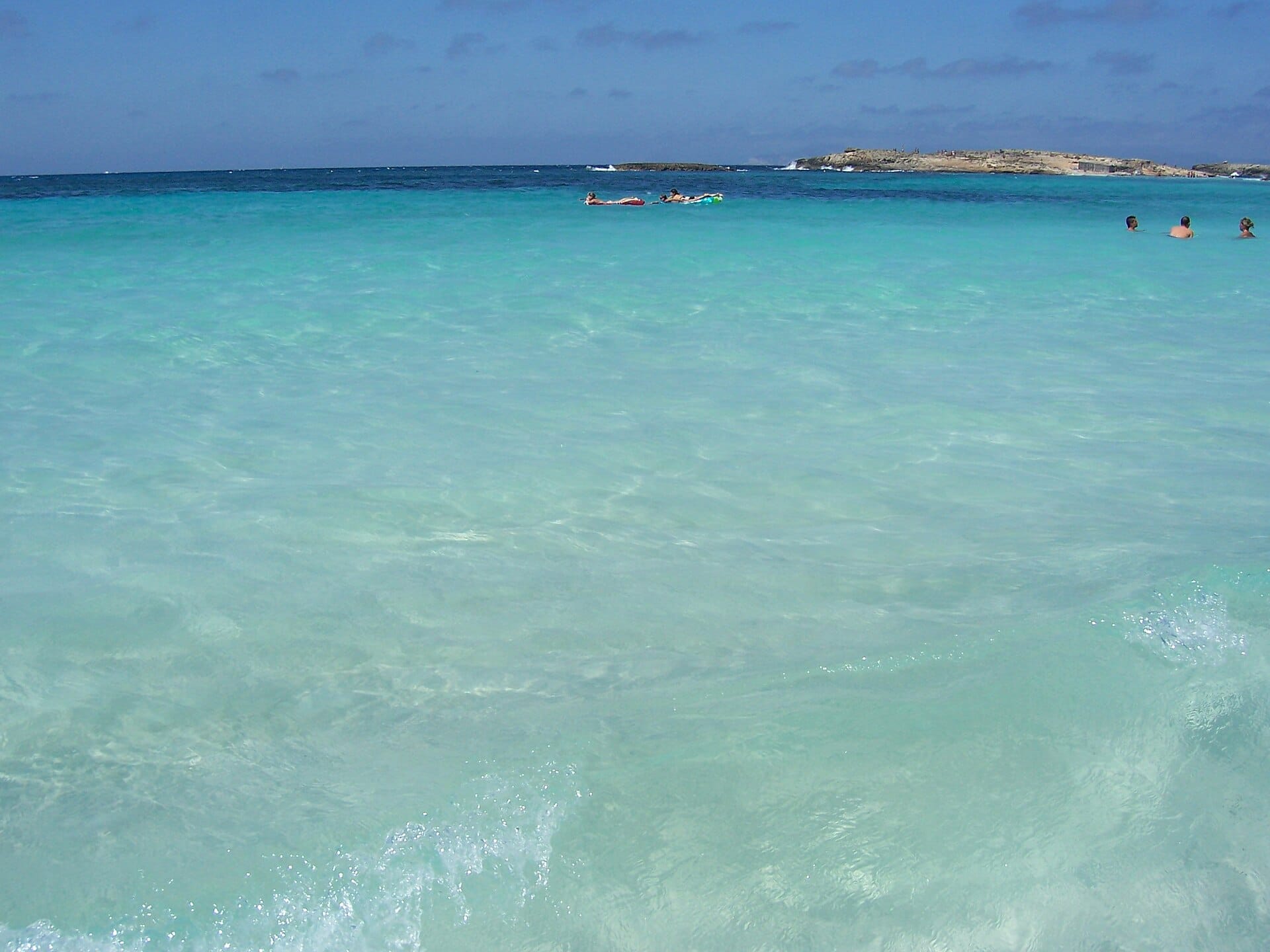
A narrow sandbar at the island's northern tip with water in improbable shades of blue, reached by bike, boat or a short drive.
-
Talayotic Menorca
Bronze and Iron Age stone monuments scattered across the island and listed by UNESCO, including the T-shaped taula enclosures.
Getting there
-
Fly to
Palma de Mallorca (PMI)
Nearest airport to Formentera, about 147km away as the crow flies.
-
Then
To Sant Francesc Xavier
Formentera has no airport: fly into Ibiza (IBZ), take a taxi or bus to Eivissa port, then a passenger ferry across in about half an hour. Mallorca and Menorca have their own airports if you start the trip there instead.
-
On the ground
Getting around
Formentera is tiny and famously done by bicycle or scooter, with hire places at La Savina port and in Sant Francesc. Inter-island ferries link Mallorca to Menorca and Ibiza on longer crossings.
Public transport: Ferries are frequent and reliable in season; on Formentera a bike beats the sparse bus network.
Flights
Los Angeles Formentera, Spain
Fly from anywhere — search 4,000+ airports worldwide.
Roughly 12h 20m in the air from Los Angeles (LAX), estimated from the distance — check for a direct route. Pick a month to see every available flight with live prices.
Check dates and prices
Pick your departure date, then your return.
Search flightsNot sure when? Compare fares across a whole month.
Flight times are estimates; prices open on Google Flights.
When to go
Daytime highs run from about 15°C in January to 29°C in August. Driest June to August; wettest in March, with rain on about 8 days. The sea is warmest in August at around 28°C, coolest at 15°C.
The year at a glance — pick a month for detail
April18° · rain 7 days · sea 17°Mild with the odd shower.
Monthly figures averaged from daily records for 2020–2024 at this location (ERA5 reanalysis). Highlighted months are warm and mostly dry — May to August and October. Live conditions from MET Norway, CC BY 4.0.
Where to stay
Apartments and small hotels rather than mega-resorts on Formentera, agroturismo farmhouses and boutique conversions on Mallorca and Menorca, plus the usual coastal aparthotels.
-
Best base overall
Sant Francesc Xavier, Formentera
The island's small inland capital, central enough to cycle to either coast and with actual shops and restaurants. You are not on the beach, which is the point in August.
Find stays in Sant Francesc Xavier, Formentera -
Best with children
Es Pujols, Formentera
Formentera's main resort village, with shallow water, family apartments and somewhere to walk in the evening. It is the busiest corner of a quiet island.
Find stays in Es Pujols, Formentera -
Best value
Cala d'Or or Portocolom, south-east Mallorca
Pine-backed calas near Mondragó, with far more beds and lower rates than the small islands. The trade-off is the crowds Formentera exists to escape.
Find stays in Cala d'Or or Portocolom, south-east Mallorca -
Best for couples
Ciutadella, Menorca
A honey-coloured port town at the quiet end of Menorca, well placed for the Camí de Cavalls coves. Ferries onward to Mallorca leave from the other side of the island.
Find stays in Ciutadella, Menorca
Worth knowing before you book: Formentera has few beds and July and August sell out by spring, frequently with week-long minimums. Book the Ibiza ferry and any hire car at the same time as the room.
Search everything else in Sant Francesc Xavier by budget. These are indicative budget bands in GBP per night for two people, not live quotes or guarantees of hotel type. Check your dates, guests, taxes and final price on Booking.com.
Good to know
- Ferries
- Regular sailings link Mallorca, Menorca, Ibiza and Formentera, with the Ibiza to Formentera hop taking about half an hour. Winter timetables reduce sharply.
- Timing
- July and August bring the highest prices, full car hire and busy coves. Late spring and September are warmer than most people expect.
- Driving
- Some coves have restricted or paid parking in summer, with shuttle buses instead. Check the arrangements before setting off.
- Beaches
- Many of the best coves have no facilities at all. Carry water, shade and food, and take your rubbish away with you.
- Cycling
- Formentera is small and flat enough to cover entirely by bike, and Mallorca's mountains are a serious road-cycling destination in spring.
Similar places
Nearby destinations
Ses Illetes
Formentera, Spain · 5km away →
Ibiza
Spain · 30km away →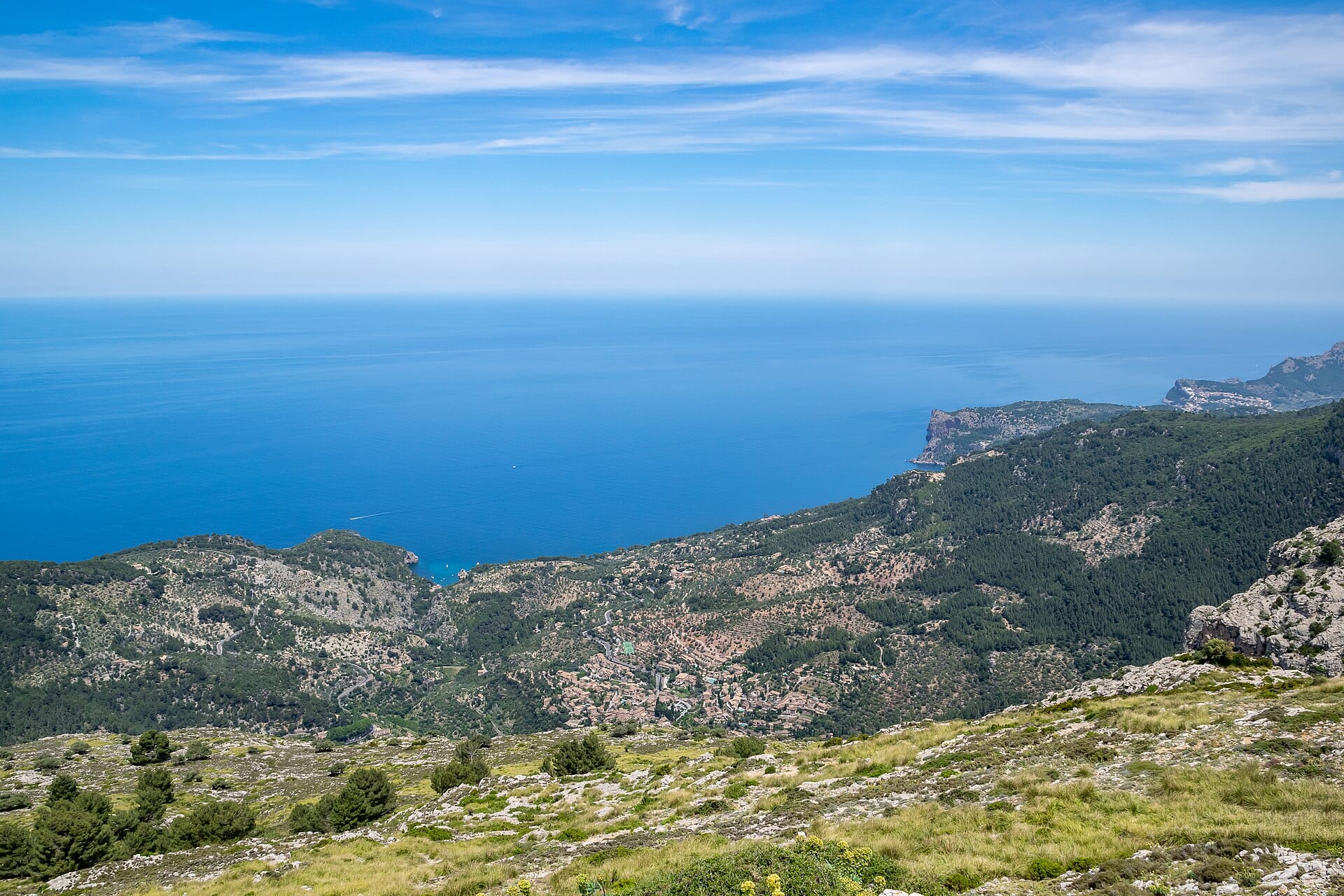
Deià
Mallorca, Spain · 145km away →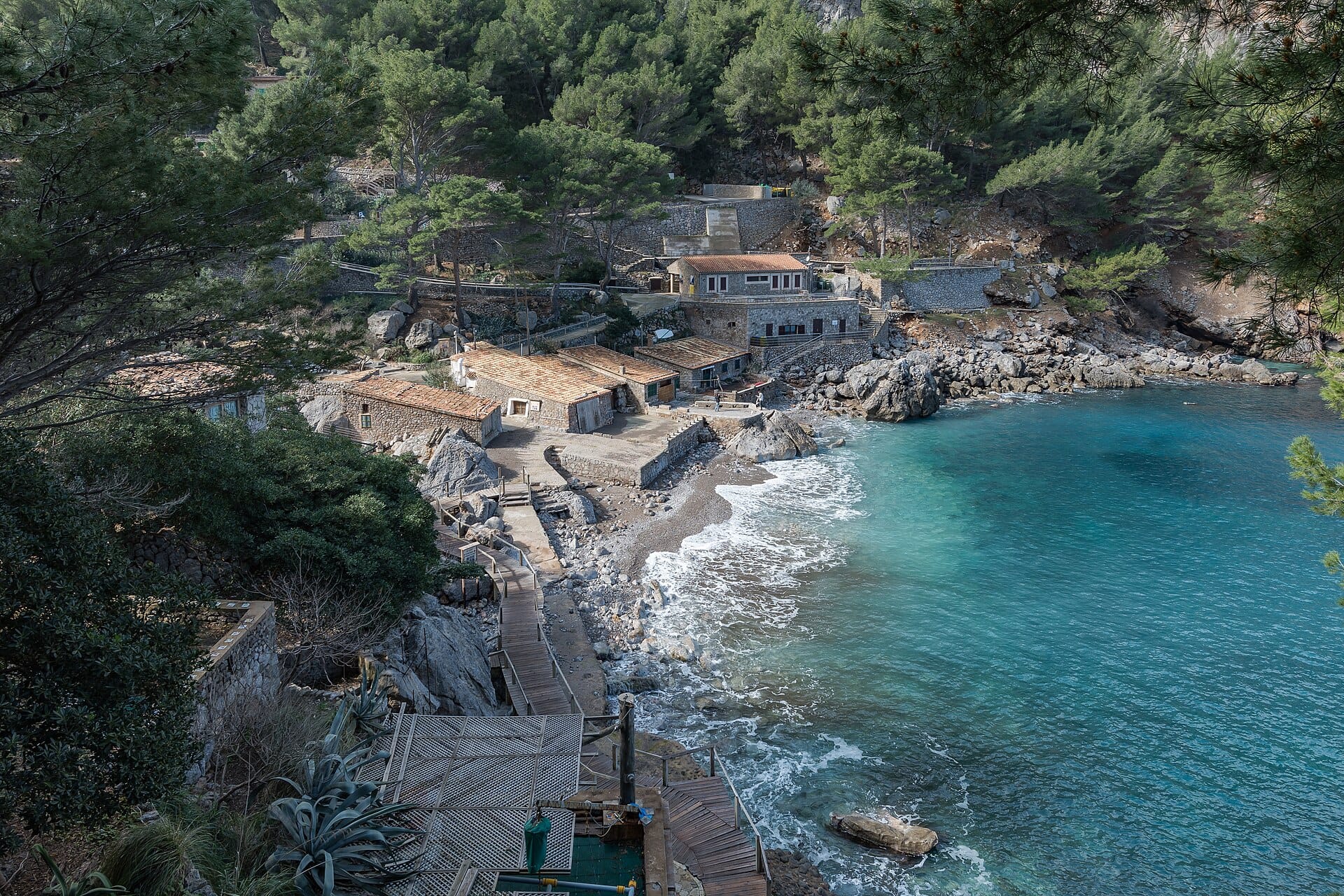
Sa Calobra
Mallorca, Spain · 146km away →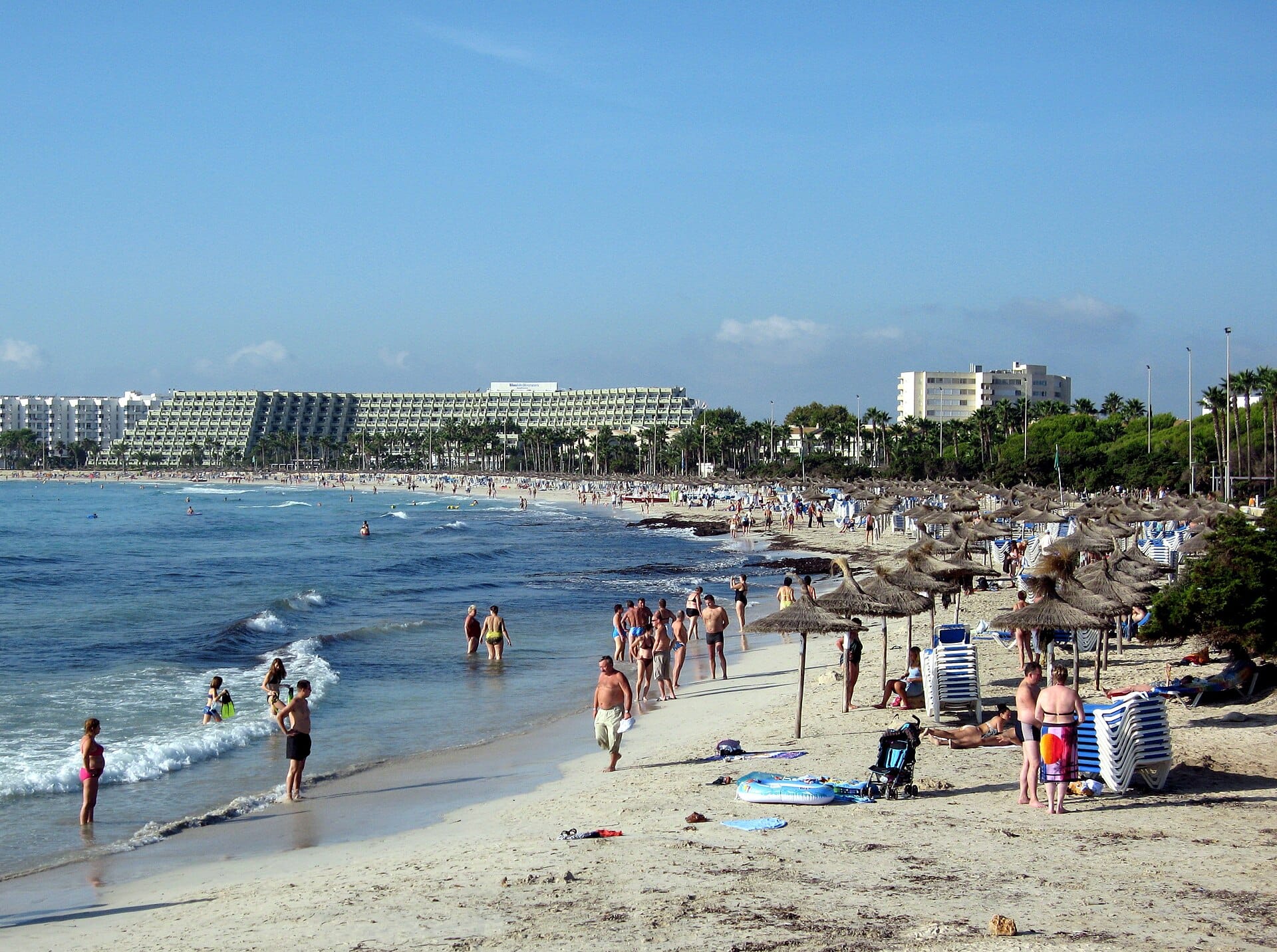
Sa Coma
Mallorca, Spain · 163km away →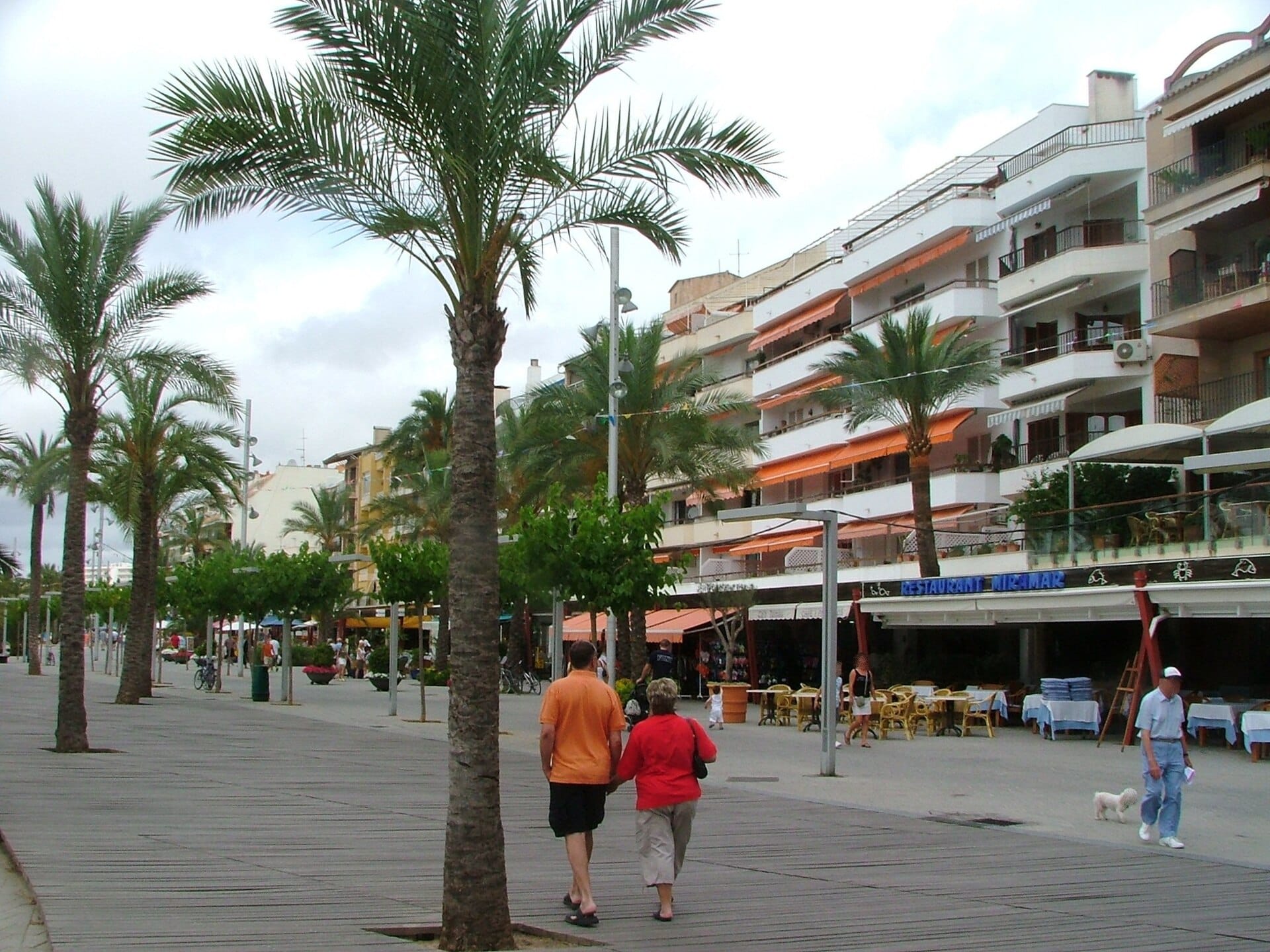
Alcúdia
Majorca, Spain · 193km away →Elsewhere in Spain
Related articles
Quick answers
When is the best time to visit The Balearics: Mallorca?
For warm, mostly dry days, May to August and October. That means highs of 20–34°C with rain on six days a month or fewer. Daytime highs run from about 15°C in January to 29°C in August. Driest June to August; wettest in March, with rain on about 8 days. The sea is warmest in August at around 28°C, coolest at 15°C.
How long should I spend in The Balearics: Mallorca?
Our suggestion: a week or more.
How do I get to The Balearics: Mallorca?
Formentera has no airport: fly into Ibiza (IBZ), take a taxi or bus to Eivissa port, then a passenger ferry across in about half an hour. Mallorca and Menorca have their own airports if you start the trip there instead.
Do I need a car in The Balearics: Mallorca?
No. Ferries are frequent and reliable in season; on Formentera a bike beats the sparse bus network.
What currency and language are used in The Balearics: Mallorca?
Currency: Euro (EUR). Language: Spanish. Plugs: type C and F.
Who is The Balearics: Mallorca best for?
Best for beach lovers, couples and families. In a phrase: pine-scented, clear-watered, quietly chic.