
Osa Peninsula
National Geographic called the Osa the most biologically intense place on Earth, and Corcovado National Park backs the boast: scarlet macaws in pairs overhead, tapirs snoozing behind the beach, all four Costa Rican monkey species arguing in the canopy.
- Best forWildlife & nature · Adventure seekers · Walkers & hikers
- Ideal stay3–5 nights
- Approx. flying time~5h 50m from Los Angeles
- CurrencyCRCCosta Rican colón
- LanguageSpanish
- Local time07:107h behind the UK
- PlugsType A / BBring an adapter
- Drive on theRightOpposite to the UK
- Dialling code+506
Why go
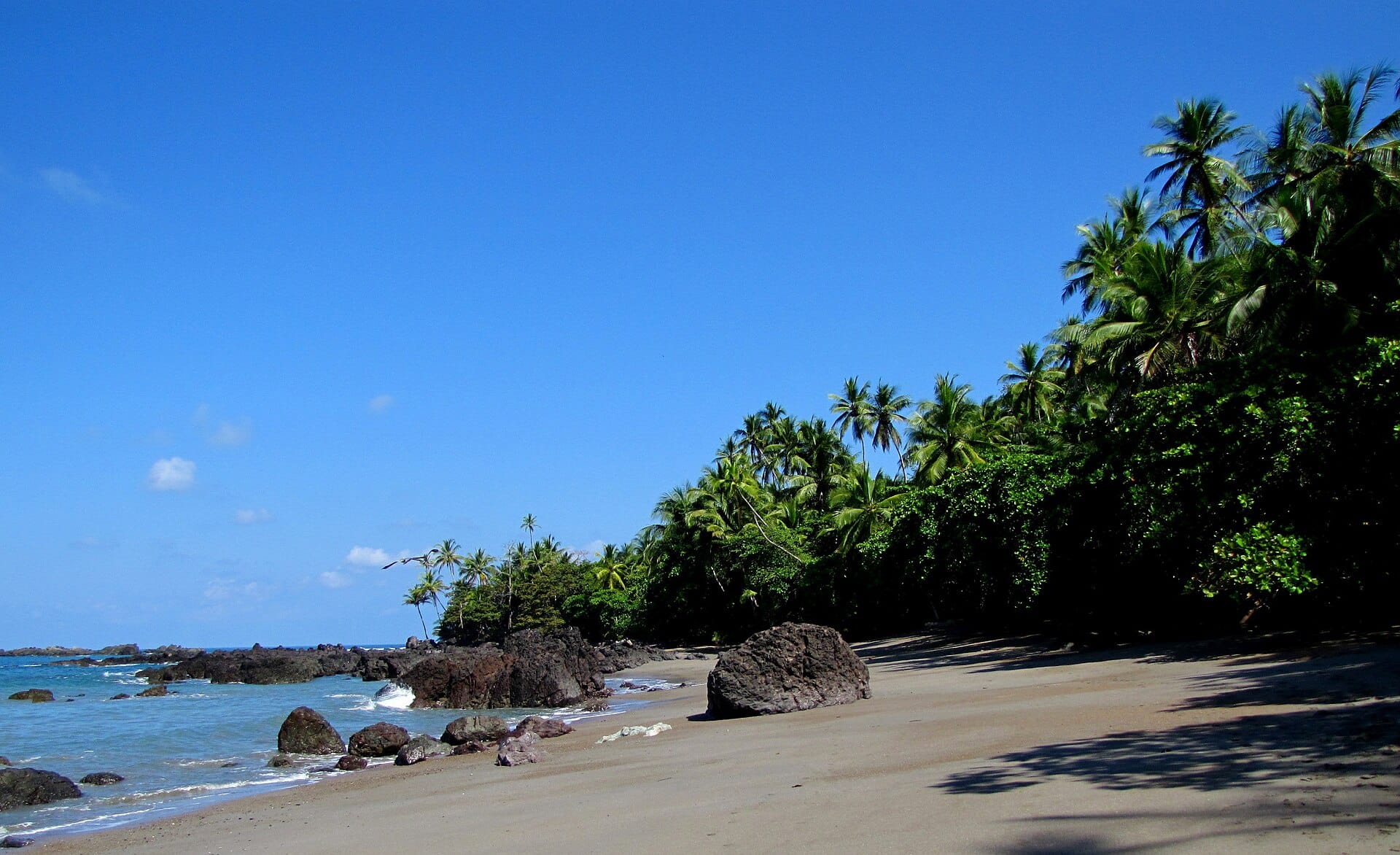
Rainforest comes right down to the sand here, and the noise is the first thing you notice: macaws overhead, howler monkeys at dawn, cicadas that stop all at once. Corcovado covers a large part of the peninsula and holds tapirs, four monkey species and, rarely, jaguars. Outside the park, lodges sit on dirt tracks above empty beaches. There is little to do beyond walking, watching and swimming, which is rather the point.
Drake Bay and Puerto Jimenez are the two bases, the first reached by boat and small plane, the second by a long drive from San Jose or a short flight. Most trips run three or four nights, with a guided day or an overnight in Corcovado at the centre of them. December to April is drier and easier underfoot; the wet months bring turtles and green everything but also closed trails.
- Ideal stay
- 3–5 nights
- The vibe
- Remote, dense, gloriously noisy
From our guides
Access is by boat or on foot with a licensed guide — book one well ahead, since park permits are capped daily. December to April keeps the trails passable.
Featured in Ten wild tropical trips for animal lovers
Things to do
-
Corcovado National Park
Entry requires a permit and a licensed guide, and the Sirena ranger station in the interior gives the highest concentration of large wildlife in the country.
-
Drake Bay
A scattering of lodges along a boat-access coastline north of the park, with a coastal trail linking beaches and river mouths on foot.
-
Cano Island diving
An hour offshore, the reserve's clear water draws divers and snorkellers for reef fish, rays and, in season, migrating humpback whales.
-
Puerto Jimenez and the Golfo Dulce
The peninsula's main town sits on a deep tropical gulf, calm enough for kayaking among dolphins and mangrove channels.
-
Matapalo beaches
The southern tip has surf breaks, tide pools and a long empty strand backed by forest full of scarlet macaws.
-
Guided night walks
Walks after dark with a guide turn up frogs, snakes, kinkajous and insects that the daytime forest keeps entirely hidden from view.
Getting there
-
Fly to
San José (SJO)
Nearest airport to Osa Peninsula, about 166km away as the crow flies.
-
Then
To Puerto Jiménez
Most visitors fly San José (SJO) to the Puerto Jiménez airstrip (PJM) in under an hour, or drive seven to eight hours down the Pacific coast and around the Golfo Dulce.
-
On the ground
Getting around
From Puerto Jiménez, Corcovado is reached by boat, by 4x4 along a rough coastal track to Carate, or on foot with a licensed guide; lodges arrange all of it.
Public transport: A slow local bus runs down the peninsula and a passenger boat crosses from Golfito, but neither reaches the park.
Flights
Los Angeles Osa Peninsula, Costa Rica
Fly from anywhere — search 4,000+ airports worldwide.
Roughly 5h 50m in the air from Los Angeles (LAX), estimated from the distance — check for a direct route. Pick a month to see every available flight with live prices.
Check dates and prices
Pick your departure date, then your return.
Search flightsNot sure when? Compare fares across a whole month.
Flight times are estimates; prices open on Google Flights.
Where to stay
Jungle eco-lodges, tented camps and simple cabinas, most of them full board because there is nowhere else to eat. No chains, and solar power caps the air conditioning.
-
Best base overall
Puerto Jiménez
The peninsula's town, with the bank, guides, supplies and flights, and the easiest place to arrange a Corcovado permit. It is scruffy and hot, and the good wildlife is elsewhere.
Find stays in Puerto Jiménez -
Quietest
Carate and Matapalo
The end of the dirt road at the park's southern edge, where jungle lodges sit above surf beaches. Solar power, no shops, and the drive in needs high clearance in the wet.
Find stays in Carate and Matapalo -
Best for couples
Drake Bay
Reached by boat up the Sierpe river, with lodges on forested headlands and easy access to Caño Island snorkelling. Isolated by design, so full board is usually part of the deal.
Find stays in Drake Bay -
Best value
Dos Brazos and La Palma
Small inland villages a short drive from Puerto Jiménez with family-run cabinas at a fraction of lodge rates, and gold-mining trails full of birds. Basic rooms and limited food.
Find stays in Dos Brazos and La Palma
Worth knowing before you book: Corcovado permits are capped daily and lodges block-book them, so reserve the guide and the room together, several months ahead for the December to April window.
Search everything else in Puerto Jiménez by budget. These are indicative budget bands in GBP per night for two people, not live quotes or guarantees of hotel type. Check your dates, guests, taxes and final price on Booking.com.
Good to know
- Book ahead
- Corcovado caps daily visitor numbers and requires a certified guide. Permits, guides and Sirena bunks are arranged weeks or months in advance.
- Getting there
- Small aircraft from San Jose save a long drive on rough roads. The final stretches to many lodges are by boat or four-wheel drive only.
- Pack this
- Quick-dry clothes, sturdy walking shoes, a torch and repellent. Humidity means nothing dries properly once it is wet.
- Cash
- Card acceptance is patchy outside the main town and mobile signal is unreliable. Carry colones for guides, boats and small lodges.
- Timing
- December to April is the dry season. September and October are wettest, and some trails and boat routes close entirely.
Similar places
Nearby destinations
Related articles
Quick answers
How long should I spend in Osa Peninsula?
Our suggestion: 3–5 nights.
How do I get to Osa Peninsula?
Most visitors fly San José (SJO) to the Puerto Jiménez airstrip (PJM) in under an hour, or drive seven to eight hours down the Pacific coast and around the Golfo Dulce.
Do I need a car in Osa Peninsula?
Yes, a car makes a real difference here. A slow local bus runs down the peninsula and a passenger boat crosses from Golfito, but neither reaches the park.
What currency and language are used in Osa Peninsula?
Currency: Costa Rican colón (CRC). Language: Spanish. Plugs: type A and B.
Who is Osa Peninsula best for?
Best for wildlife & nature, adventure seekers and walkers & hikers. In a phrase: remote, dense, gloriously noisy.