
Manuel Antonio
Costa Rica's smallest national park distils the whole country into a few square kilometres: sloths dozing above the trail, capuchins plotting theft on the beach and toucans yodelling at dawn.
- Best forFamilies · Wildlife & nature · Beach lovers
- In July27°C · 31 rainy days · sea 30°C
- Ideal stay2-3 days, as part of a wider Costa Rica trip
- Approx. flying time~5h 50m from Los Angeles
- CurrencyCRCCosta Rican colón
- LanguageSpanish
- Local time05:137h behind the UK
- PlugsType A / BBring an adapter
- Drive on theRightOpposite to the UK
- Dialling code+506
Why go
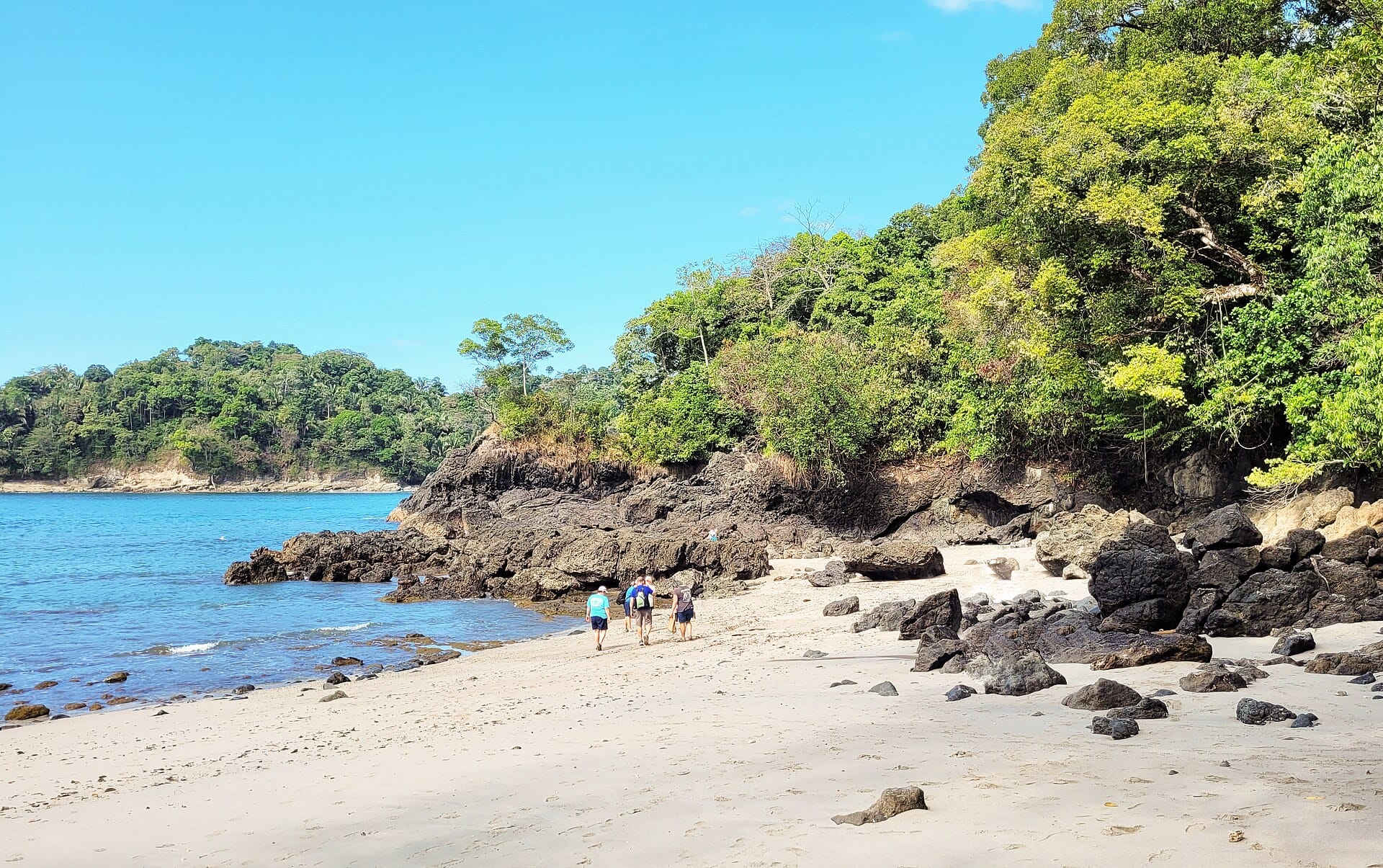
Manuel Antonio packs an outsized amount of wildlife into one of Costa Rica's smallest national parks, a strip of rainforest running straight down to postcard beaches. Sloths doze in the canopy, white-faced capuchins eye up unattended bags, and squirrel monkeys move through the trees in noisy troops. Trails are short and largely flat, which makes it one of the country's easier parks to explore without serious hiking fitness.
The town outside the park runs on a relaxed rhythm of smoothies, surfboards and sunset bars, and works well as a beach stop bolted onto a wider Costa Rica itinerary rather than a destination on its own. December to April is the dry season and the most reliable for wildlife spotting and beach days. Book park entry tickets ahead, since daily visitor numbers are capped.
- Ideal stay
- 2-3 days, as part of a wider Costa Rica trip
- The vibe
- Lush, wildlife-rich, easy-going
From our guides
The beaches inside the park are postcard-ready, and the town runs on smoothie-and-surfboard time. December to April is driest — book park tickets ahead and hire a guide with a spotting scope.
Featured in Ten lush rainforest-and-reef escapes for nature lovers
Things to do
-
Manuel Antonio National Park trails
A network of short, largely flat paths through rainforest, reliably good for spotting sloths, monkeys and iguanas close to the trail.
-
Playa Manuel Antonio
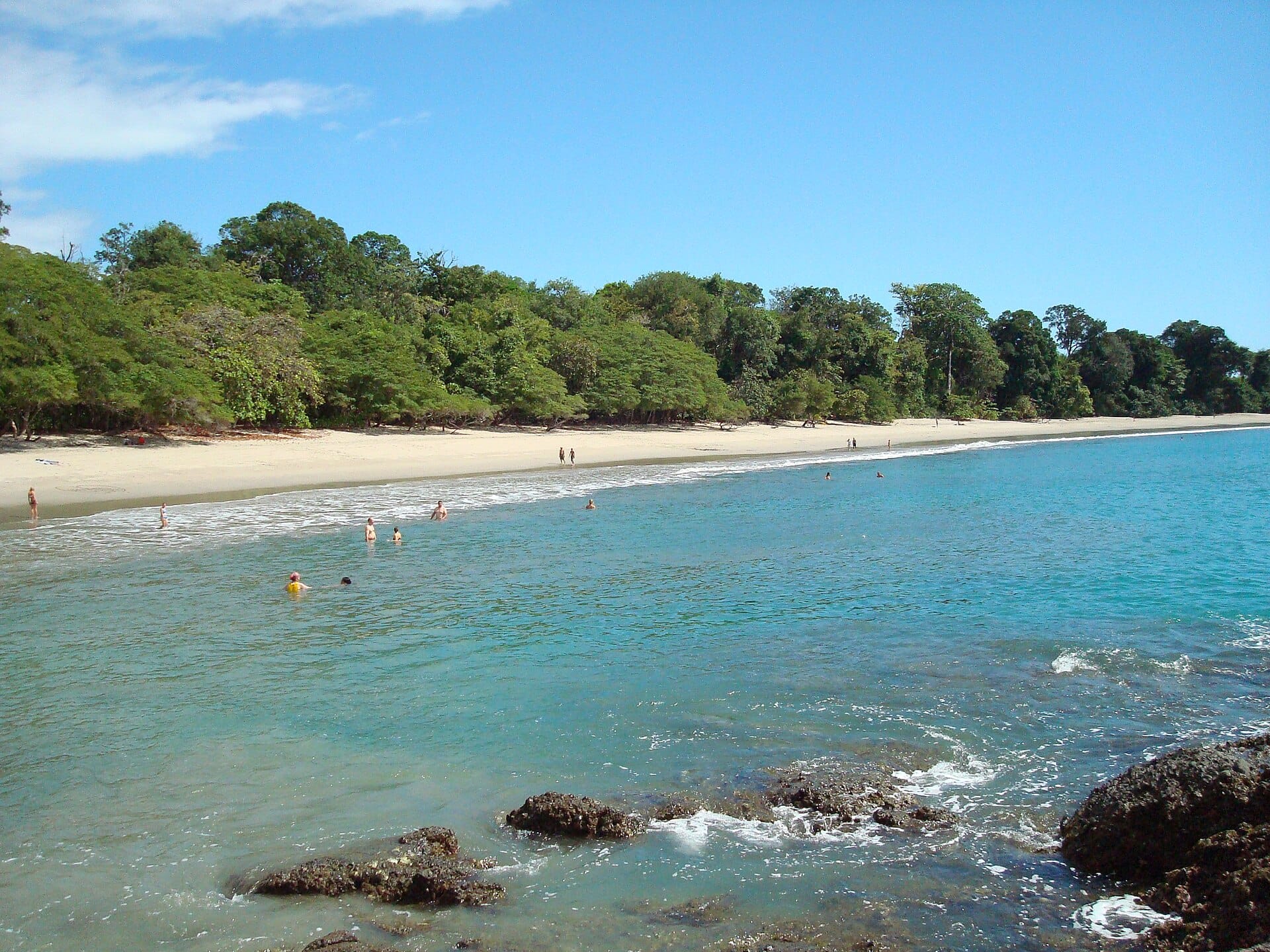
A curved white-sand beach inside the park itself, calm enough for swimming and often patrolled by capuchin monkeys along the treeline.
-
Punta Catedral viewpoint
A short climb to a headland with views along the coastline, reached via a path that loops around a small peninsula.
-
Playa Biesanz
A quieter cove just outside the park boundary, popular with locals and calmer than the main park beaches.
-
Rainmaker Conservation Project
A short drive inland, with suspension bridges strung through the rainforest canopy above a river, pools and a series of waterfalls.
-
Damas Island mangrove tours
Boat trips through nearby mangrove estuaries look for crocodiles, birds and monkeys away from the busier park trails.
Getting there
-
Fly to
San José (SJO)
Nearest airport to Manuel Antonio, about 65km away as the crow flies.
-
Then
To Manuel Antonio
About 15 to 20 minutes by taxi from the little airstrip at Quepos (XQP); from San Jose it is roughly three hours by road or a short domestic flight.
-
On the ground
Getting around
The village strings along one hill road down to the park gate, walkable in stretches, with shared shuttles and taxis running up and down it all day.
Public transport: A frequent local bus runs the Quepos to Manuel Antonio road, and long-distance coaches connect to San Jose.
Flights
Los Angeles Manuel Antonio, Costa Rica
Fly from anywhere — search 4,000+ airports worldwide.
Roughly 5h 50m in the air from Los Angeles (LAX), estimated from the distance — check for a direct route. Pick a month to see every available flight with live prices.
Check dates and prices
Pick your departure date, then your return.
Search flightsNot sure when? Compare fares across a whole month.
Flight times are estimates; prices open on Google Flights.
When to go
Daytime highs run from about 26°C in November to 28°C in March. Driest in February; wettest in July, with rain on about 31 days. The sea is warmest in May at around 31°C, coolest at 29°C.
The year at a glance — pick a month for detail
July27° · rain 31 days · sea 30°Warm and often wet.
Monthly figures averaged from daily records for 2020–2024 at this location (ERA5 reanalysis). Live conditions from MET Norway, CC BY 4.0.
Where to stay
Jungle-view boutique hotels and villas along the ridge, budget hostels and cabinas in Quepos, plus a few larger resorts. Rentals with pools are widespread.
-
Best base overall
Manuel Antonio road, above the park
The ridge road between Quepos and the park entrance has the views, the wildlife in the trees and most of the restaurants. Everything is a hill, and the shuttle bus becomes your friend.
Find stays in Manuel Antonio road, above the park -
Best with children
Playa Espadilla Norte
At the bottom of the hill, walking distance to the park gate and a long swimmable beach with lifeguards. It is the busiest, hottest and least characterful part.
Find stays in Playa Espadilla Norte -
Best value
Quepos
The working town seven kilometres back, with far cheaper rooms, a marina and proper sodas for lunch. You lose the jungle setting and gain a bus ride to the park.
Find stays in Quepos -
Quietest
Playa Biesanz and the Punta Quepos side
Off the ridge on the sheltered western side, with a calm cove and far fewer people. Steep access tracks and no shops mean you will be driving for everything.
Find stays in Playa Biesanz and the Punta Quepos side
Worth knowing before you book: The dry season from December to April books up months ahead, especially over Christmas and Easter week, when many places set minimum stays.
Search everything else in Manuel Antonio by budget. These are indicative budget bands in GBP per night for two people, not live quotes or guarantees of hotel type. Check your dates, guests, taxes and final price on Booking.com.
Good to know
- Book ahead
- Daily entry to the national park is capped and tickets sell out in high season, so book online in advance rather than turning up.
- Timing
- December to April is the dry season and the most reliable for both beach days and wildlife spotting; September and October are the wettest months.
- Guides
- A local guide with a spotting scope will find far more wildlife than an unaided walk through the park, especially for camouflaged sloths.
- With kids
- The flat, short trails and reliable wildlife sightings make this one of the easier national parks in Costa Rica for families.
- Safety
- Do not feed or approach the monkeys, which have learned to open bags and can bite if provoked.
Similar places
Nearby destinations
Related articles
Quick answers
When is the best time to visit Manuel Antonio?
Daytime highs run from about 26°C in November to 28°C in March. Driest in February; wettest in July, with rain on about 31 days. The sea is warmest in May at around 31°C, coolest at 29°C.
How long should I spend in Manuel Antonio?
Our suggestion: 2-3 days, as part of a wider Costa Rica trip.
How do I get to Manuel Antonio?
About 15 to 20 minutes by taxi from the little airstrip at Quepos (XQP); from San Jose it is roughly three hours by road or a short domestic flight.
Do I need a car in Manuel Antonio?
No. A frequent local bus runs the Quepos to Manuel Antonio road, and long-distance coaches connect to San Jose.
What currency and language are used in Manuel Antonio?
Currency: Costa Rican colón (CRC). Language: Spanish. Plugs: type A and B.
Who is Manuel Antonio best for?
Best for families, wildlife & nature and beach lovers. In a phrase: lush, wildlife-rich, easy-going.