
La Digue
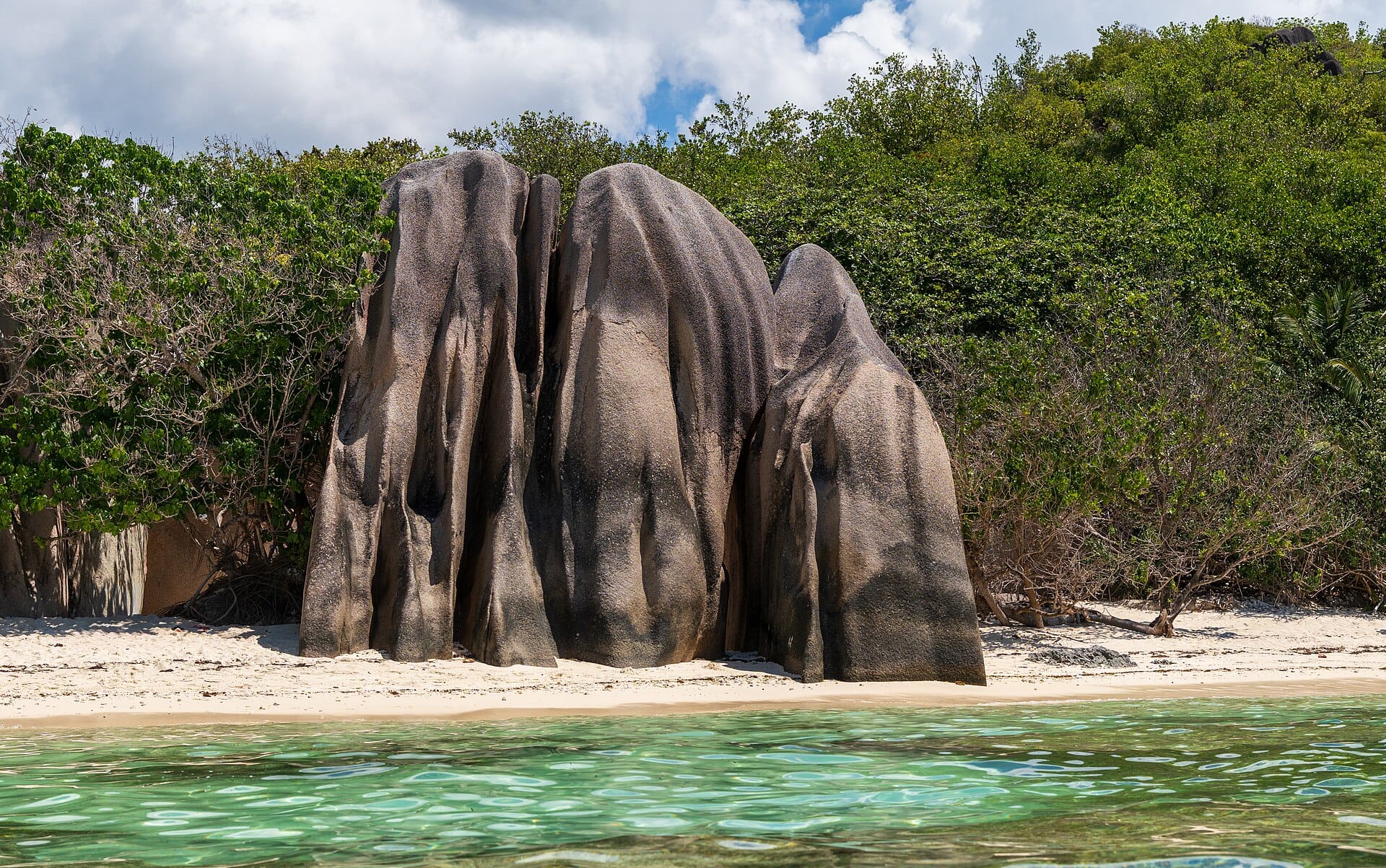
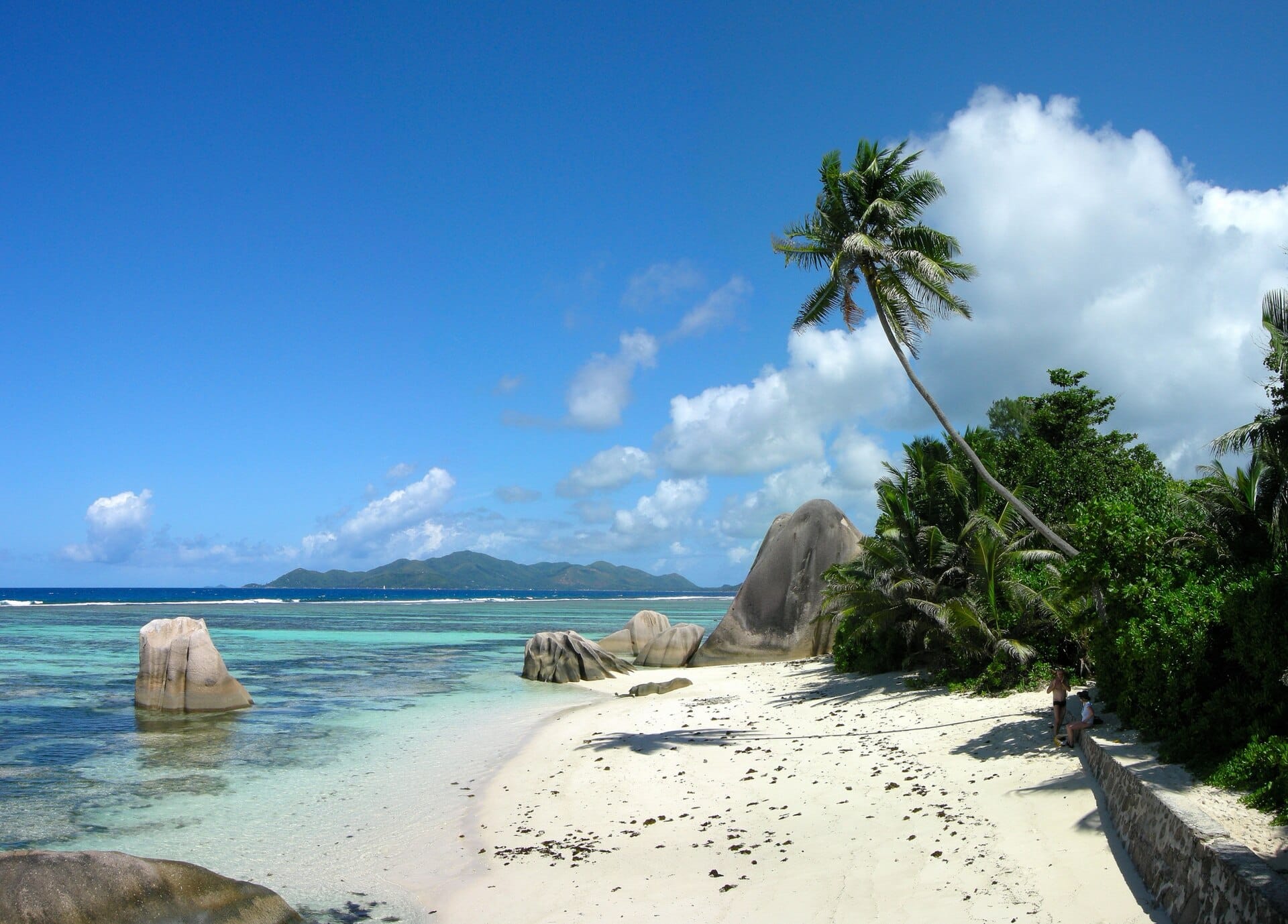
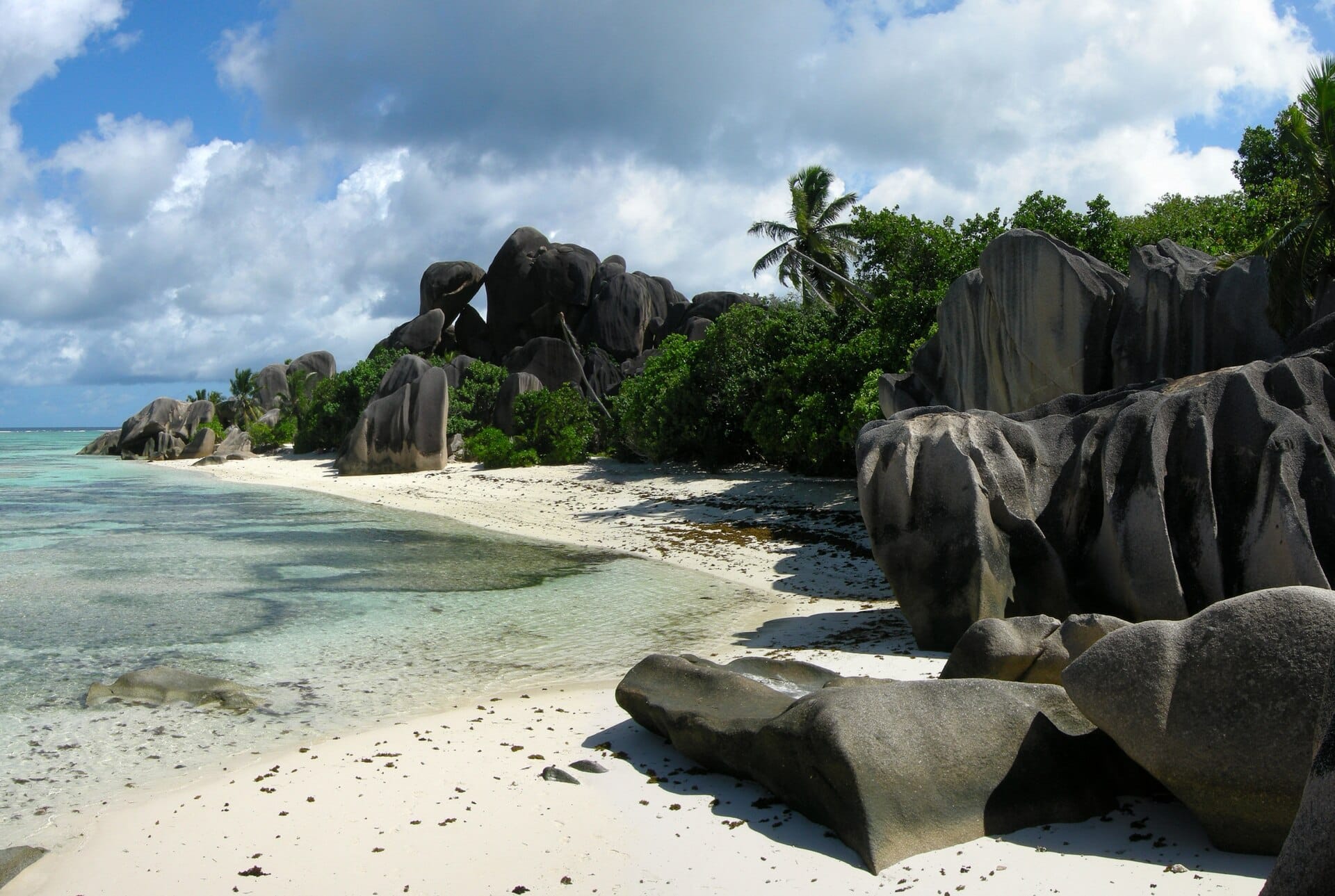
Anse Source d'Argent — pink granite boulders, shallow jade water, palms at exactly the right angle — is among the most photographed beaches anywhere, and the rest of La Digue keeps pace.
- Best forCouples · Beach lovers · Photographers
- In February27°C · 13 rainy days · sea 29°C
- Ideal stay3–4 nights
- Approx. flying time~20h 30m from Los Angeles
- CurrencySCRSeychellois rupee
- LanguageSeychellois Creole, English and French
- Local time13:283h ahead of the UK
- PlugsType GUK plugs fit
- Drive on theLeftSame as the UK
- Dialling code+248
Why go
Granite boulders the colour of rose quartz slump into shallow water, and the whole island moves at the speed of a bicycle. La Digue is barely ten square kilometres, with one proper road, a handful of villages and an interior of vanilla, takamaka and steep forest. Days here are simple: swim, pedal somewhere, eat grilled fish, then do it again. Nothing is far, and nothing is in a hurry.
Most visitors arrive by fast ferry from Praslin, which makes a two or three island Seychelles trip the natural shape, splitting nights between here and Mahé. The dry, breezy months from May to September suit walking; December to March is hotter and stiller, better for snorkelling. Accommodation skews towards small guesthouses rather than resorts, so anyone wanting nightlife or big hotel facilities should look elsewhere.
- Ideal stay
- 3–4 nights
- The vibe
- Barefoot, slow, sun-bleached
From our guides
The island runs on bicycles: pedal past vanilla plantations at L'Union Estate to reach the beach, then continue to Grand Anse for surf-pounded drama. Time the famous beach for late afternoon, when day-trippers sail back to Praslin and the light turns golden.
Featured in Ten tropical islands that live up to the postcard
Things to do
-
Nid d'Aigle summit
A steep climb to the island's high point at about 330 metres, where the whole of La Digue and its neighbours lie below. Go early, before the heat builds.
-
Anse Cocos and Petite Anse
A rough coastal path north from Grand Anse links two wilder, usually empty beaches. Currents are strong, so swim only in the sheltered natural pool at Anse Cocos.
-
Veuve Nature Reserve
A small patch of forest protecting the black flycatcher known locally as the veuve, a bird found almost nowhere else. Twenty quiet minutes and a decent chance of a sighting.
-
L'Union Estate
The old plantation still turns copra by ox power and keeps giant tortoises in a paddock, and it guards the path through to the famous beach.
-
Cycling the east coast
The flat road from La Passe to Anse Fourmis runs past creole houses, jetties and shade. Bikes are the default transport and every guesthouse has them.
-
Snorkelling at Coco Island
Boats cross to the granite islets of the marine park north of Praslin, where fish life is far busier than off the main beaches.
Getting there
-
Fly to
Victoria (SEZ)
Nearest airport to La Digue, about 49km away as the crow flies.
-
Then
To La Digue
From Praslin (PRI) a ferry crosses to La Digue in about fifteen minutes. International arrivals land at Mahé and connect by a domestic flight or a roughly one-hour catamaran to Praslin first.
-
On the ground
Getting around
Boats dock at La Passe, where bicycle hire is immediate and the island's default. Anse Source d'Argent is reached by pedalling through L'Union Estate, and ox carts and a few taxis handle luggage.
Public transport: Almost no cars on the island. Bicycles cover everything, with a small bus and taxis for the hillier corners.
Flights
Los Angeles La Digue, Seychelles
Fly from anywhere — search 4,000+ airports worldwide.
Roughly 20h 30m in the air from Los Angeles (LAX), estimated from the distance — check for a direct route. Pick a month to see every available flight with live prices.
Check dates and prices
Pick your departure date, then your return.
Search flightsNot sure when? Compare fares across a whole month.
Flight times are estimates; prices open on Google Flights.
When to go
Daytime highs run from about 25°C in August to 28°C in April. Wettest in December, with rain on about 25 days. The sea is warmest in April at around 31°C, coolest at 27°C.
The year at a glance — pick a month for detail
February27° · rain 13 days · sea 29°Warm and often wet.
Monthly figures averaged from daily records for 2020–2024 at this location (ERA5 reanalysis). Live conditions from MET Norway, CC BY 4.0.
Where to stay
Family-run guesthouses and self-catering chalets, a few small boutique hotels and one or two luxury properties. There is no large resort development and no nightlife to speak of.
-
Best base overall
La Passe
The island's only village, by the jetty, where the shops, bike hire, restaurants and most guesthouses are. Everything else on the island is a flat cycle away, which is the whole appeal.
Find stays in La Passe -
Best with children
Anse Reunion
Just south of the village, with calm shallow water inside the reef and a short ride to L'Union Estate. It is not the island's prettiest beach, but it is the most usable one.
Find stays in Anse Reunion -
Quietest
Anse Severe and the north
A scatter of small guesthouses along the northern coast road with sunset swimming and almost no traffic. You cycle back into the village for dinner, in the dark.
Find stays in Anse Severe and the north -
Best value
Cote d'Or, Praslin
A short ferry away, with more rooms, more restaurants and lower rates than La Digue's small stock. You are then paying and timing a boat for the famous beach.
Find stays in Cote d'Or, Praslin
Worth knowing before you book: The island has very few beds, so book months ahead for July, August and Christmas. Ferries from Praslin must be booked in advance and the last crossing is early evening.
Search everything else in La Digue by budget. These are indicative budget bands in GBP per night for two people, not live quotes or guarantees of hotel type. Check your dates, guests, taxes and final price on Booking.com.
Good to know
- Getting there
- There is no airport. Fast catamarans link Mahé and Praslin to the jetty at La Passe several times a day, and the crossing can be choppy.
- Cash or card
- Cards work in hotels and larger restaurants, but small cafés, bike hire and market stalls often want rupees in cash. Banking on the island is limited.
- Pack this
- Reef shoes and strong sun protection. Shade is patchy on the beaches and the granite gets fiercely hot underfoot.
- Swimming
- Grand Anse and its neighbours face open ocean with serious currents, especially from May to September. The sheltered west coast is where you actually swim.
- Crowds
- Day trippers arrive mid-morning and sail back by late afternoon, so the beaches are quietest before ten and after four.
Similar places
Nearby destinations
Related articles
Quick answers
When is the best time to visit La Digue?
Daytime highs run from about 25°C in August to 28°C in April. Wettest in December, with rain on about 25 days. The sea is warmest in April at around 31°C, coolest at 27°C.
How long should I spend in La Digue?
Our suggestion: 3–4 nights.
How do I get to La Digue?
From Praslin (PRI) a ferry crosses to La Digue in about fifteen minutes. International arrivals land at Mahé and connect by a domestic flight or a roughly one-hour catamaran to Praslin first.
Do I need a car in La Digue?
No. Almost no cars on the island. Bicycles cover everything, with a small bus and taxis for the hillier corners.
What currency and language are used in La Digue?
Currency: Seychellois rupee (SCR). Language: Seychellois Creole, English and French. Plugs: type G.
Who is La Digue best for?
Best for couples, beach lovers and photographers. In a phrase: barefoot, slow, sun-bleached.