
Cluj-Napoca
A hundred thousand students keep Cluj humming in a way most capitals would envy.
- Best forBudget travellers · Nightlife · Groups of friends
- In April14°C · 13 rainy days
- Ideal stay2–3 nights
- Approx. flying time~12h 50m from Los Angeles
- CurrencyRONRomanian leu
- LanguageRomanian
- Local time14:112h ahead of the UK
- PlugsType C / FBring an adapter
- Drive on theRightOpposite to the UK
- Dialling code+40
Why go
Transylvania's largest city is young, cheap and considerably livelier than its size suggests, thanks to a student population that fills the courtyards, bars and lecture halls of a very old university. The centre is Habsburg and Gothic, arranged around two big squares, with the tech industry and the festival circuit paying for the renovation. It is a city for evenings rather than sights, and it does them exceptionally well.
Two or three nights covers it, best combined with the painted churches, fortified Saxon villages or the Apuseni mountains that surround it. Summer brings the festivals and outdoor seating; winter is cold, dark and much quieter, though the bars simply move indoors. Prices remain low by western European standards. Anyone hoping for a classic sightseeing itinerary should pair it with Sibiu or Brașov instead.
- Ideal stay
- 2–3 nights
- The vibe
- Studenty, cheap, late, unpolished
From our guides
The bars around Piața Muzeului and Piața Unirii spill onto medieval cobbles, craft beer costs loose change, and each August the Untold festival turns the football stadium into one of Europe's biggest raves. Off-season, hunt down the courtyard bars hidden through unmarked passageways off Strada Piezișă — the student strip — and order a vișinată, the sour-cherry firewater, before the dancing starts.
Featured in Ten European party spots beyond the obvious
Things to do
-
St Michael's Church
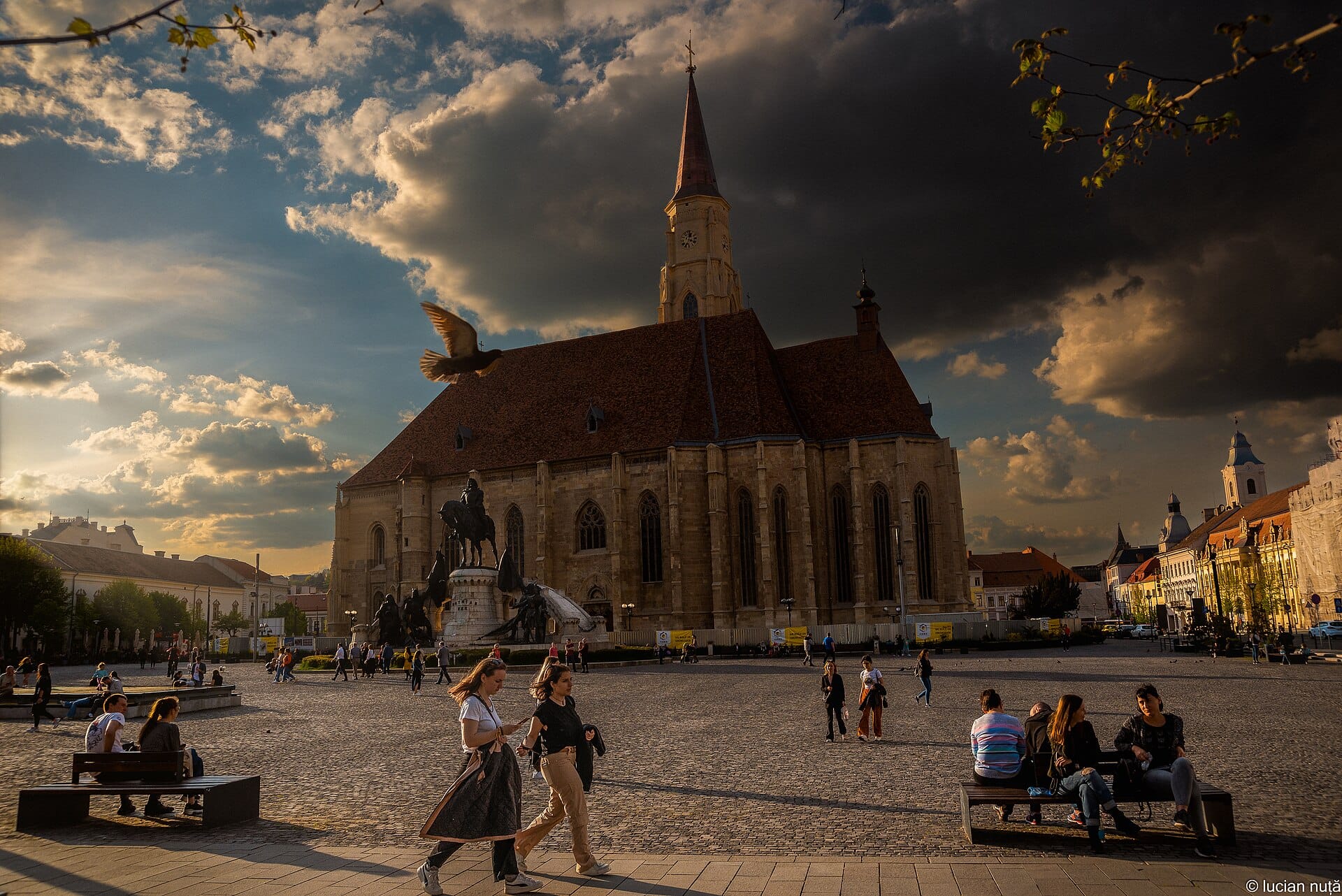
A tall Gothic hall church filling the main square, with the equestrian statue of Matthias Corvinus in front of it. Climb the tower for a view over the roofs.
-
Piața Muzeului
The smaller of the two central squares is ringed with terraces and stays busy from afternoon to late. Good for a first drink before the courtyards open up.
-
Central Park and the lake
A nineteenth-century park with a boating lake, casino building turned art space and enough shade to survive a Transylvanian July afternoon.
-
Botanical Garden
One of the largest in southeastern Europe, with glasshouses, a Japanese garden and a Roman section. Quiet even at weekends and useful in bad weather.
-
Turda salt mine
Half an hour away, a vast worked-out mine turned into a subterranean hall with a lake, boats and a ferris wheel 100 metres underground. Take a jumper.
-
Apuseni mountains
West of the city, karst country of gorges, caves and ice-filled shafts, with walking routes and villages that still work to a pre-industrial calendar.
Getting there
-
Fly to
Cluj-Napoca (CLJ)
Nearest airport to Cluj-Napoca, about 8km away as the crow flies.
-
Then
To Cluj-Napoca
The airport sits on the eastern edge of the city, about 20 minutes by taxi or city bus from the centre.
-
On the ground
Getting around
The old town around Piata Unirii is compact and walkable, with trams and buses for anything further out and cheap taxis late at night.
Public transport: Frequent city buses and trams, plus trains and coaches on to the rest of Transylvania.
Flights
Los Angeles Cluj-Napoca, Romania
Fly from anywhere — search 4,000+ airports worldwide.
Roughly 12h 50m in the air from Los Angeles (LAX), estimated from the distance — check for a direct route. Pick a month to see every available flight with live prices.
Check dates and prices
Pick your departure date, then your return.
Search flightsNot sure when? Compare fares across a whole month.
Flight times are estimates; prices open on Google Flights.
When to go
Daytime highs run from about 4°C in January to 26°C in July. Driest in October; wettest in June, with rain on about 18 days.
The year at a glance — pick a month for detail
April14° · rain 13 daysCool and often wet.
Monthly figures averaged from daily records for 2020–2024 at this location (ERA5 reanalysis). Live conditions from MET Norway, CC BY 4.0.
Where to stay
Modern city hotels, a growing crop of design boutiques in restored townhouses, and a lot of well-priced apartments. Very few historic grand hotels and no resort options.
-
Best base overall
Centru (Piața Unirii)
Everything worth walking to sits within a few streets of the cathedral square, including the bar courtyards. Weekend noise carries up to first-floor windows, so ask for a back room.
Find stays in Centru (Piața Unirii) -
Best for nightlife
Piața Muzeului
The prettiest little square in the city and the densest cluster of terraces, so you can stagger home in two minutes. That works both ways when the terraces are still going at two.
Find stays in Piața Muzeului -
Best value
Grigorescu
A leafy residential district west of the centre with cheap apartment rentals and a twenty-minute walk or short bus ride in. Quiet evenings, little atmosphere of its own.
Find stays in Grigorescu -
Quietest
Cetățuia hill
Just across the Someș river, with the whole skyline laid out below and hardly any traffic. The climb back up after dinner is real, and there is nothing to eat up here.
Find stays in Cetățuia hill
Worth knowing before you book: Untold in early August and the Electric Castle festival empty the city of beds and multiply prices, so book months ahead or pick another week entirely.
Search everything else in Cluj-Napoca by budget. These are indicative budget bands in GBP per night for two people, not live quotes or guarantees of hotel type. Check your dates, guests, taxes and final price on Booking.com.
Good to know
- Cash
- The currency is the leu and cards work almost everywhere in the city. Carry some cash for markets, rural buses and mountain guesthouses.
- Festival dates
- Untold in summer and Electric Castle at nearby Bonțida fill every bed in the region. Book months ahead for those weeks or avoid them entirely.
- Getting there
- The airport is around ten minutes from the centre with budget links across Europe. Trains within Romania are slow; buses and internal flights are quicker.
- Late nights
- Bars run well past midnight and many are hidden through unmarked passages off the main streets. Follow the noise rather than a map.
- Language
- Romanian is the language, Hungarian is widely spoken, and English is near universal among students and in the centre.
Similar places
Nearby destinations
Related articles
Quick answers
When is the best time to visit Cluj-Napoca?
Daytime highs run from about 4°C in January to 26°C in July. Driest in October; wettest in June, with rain on about 18 days.
How long should I spend in Cluj-Napoca?
Our suggestion: 2–3 nights.
How do I get to Cluj-Napoca?
The airport sits on the eastern edge of the city, about 20 minutes by taxi or city bus from the centre.
Do I need a car in Cluj-Napoca?
No. Frequent city buses and trams, plus trains and coaches on to the rest of Transylvania.
What currency and language are used in Cluj-Napoca?
Currency: Romanian leu (RON). Language: Romanian. Plugs: type C and F.
Who is Cluj-Napoca best for?
Best for budget travellers, nightlife and groups of friends. In a phrase: studenty, cheap, late, unpolished.