
Bora Bora
The lagoon here is so extravagantly blue it reads as fiction.
- Best forHoneymooners · Couples · Luxury seekers
- In December26°C · 26 rainy days · sea 28°C
- Ideal stay4–5 nights
- Approx. flying time~8h 30m from Los Angeles
- CurrencyXPFCFP franc
- LanguageFrench and Tahitian
- Local time01:1111h behind the UK
- PlugsType C / EBring an adapter
- Drive on theRightOpposite to the UK
- Dialling code+689
Why go
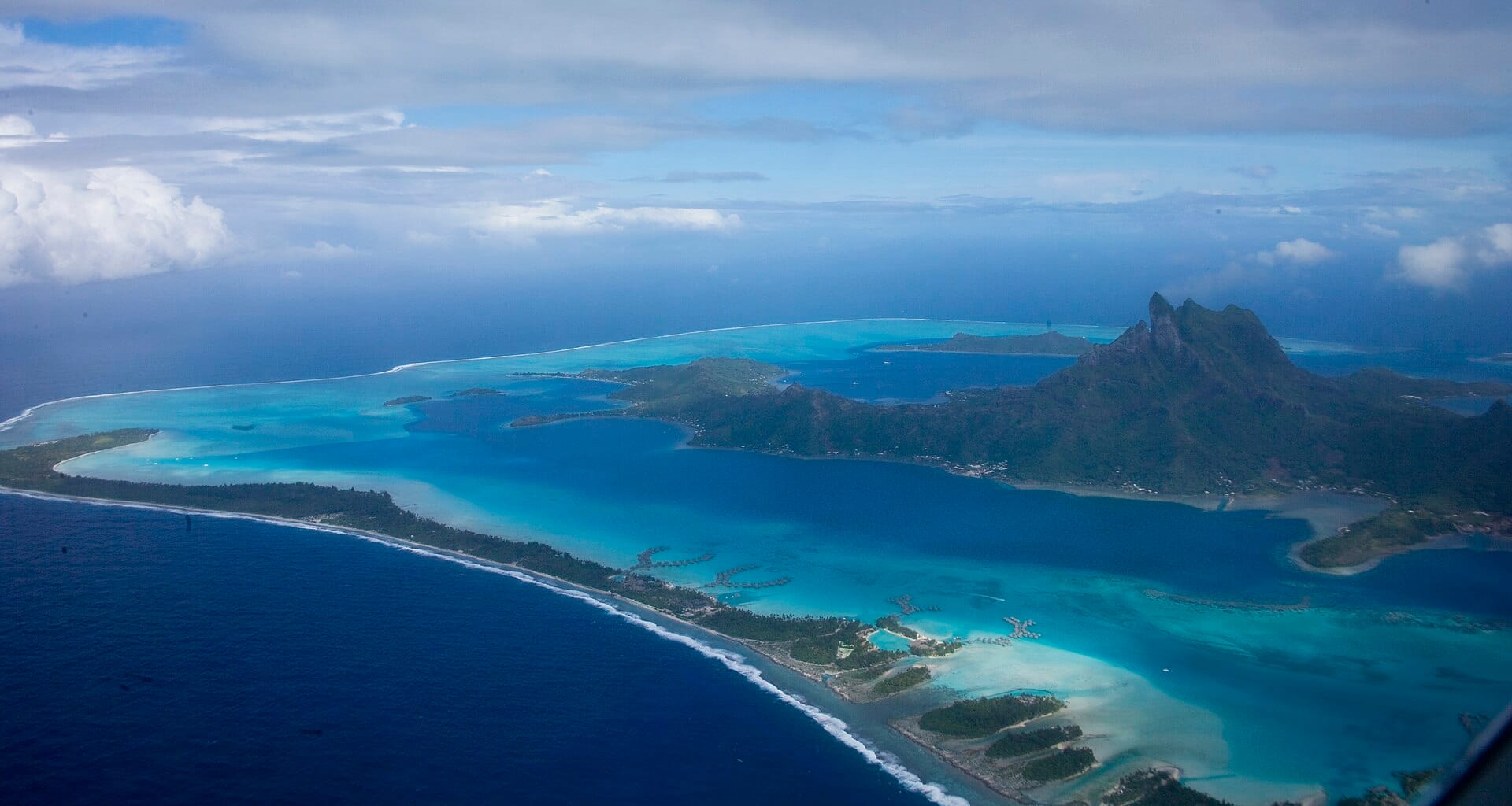
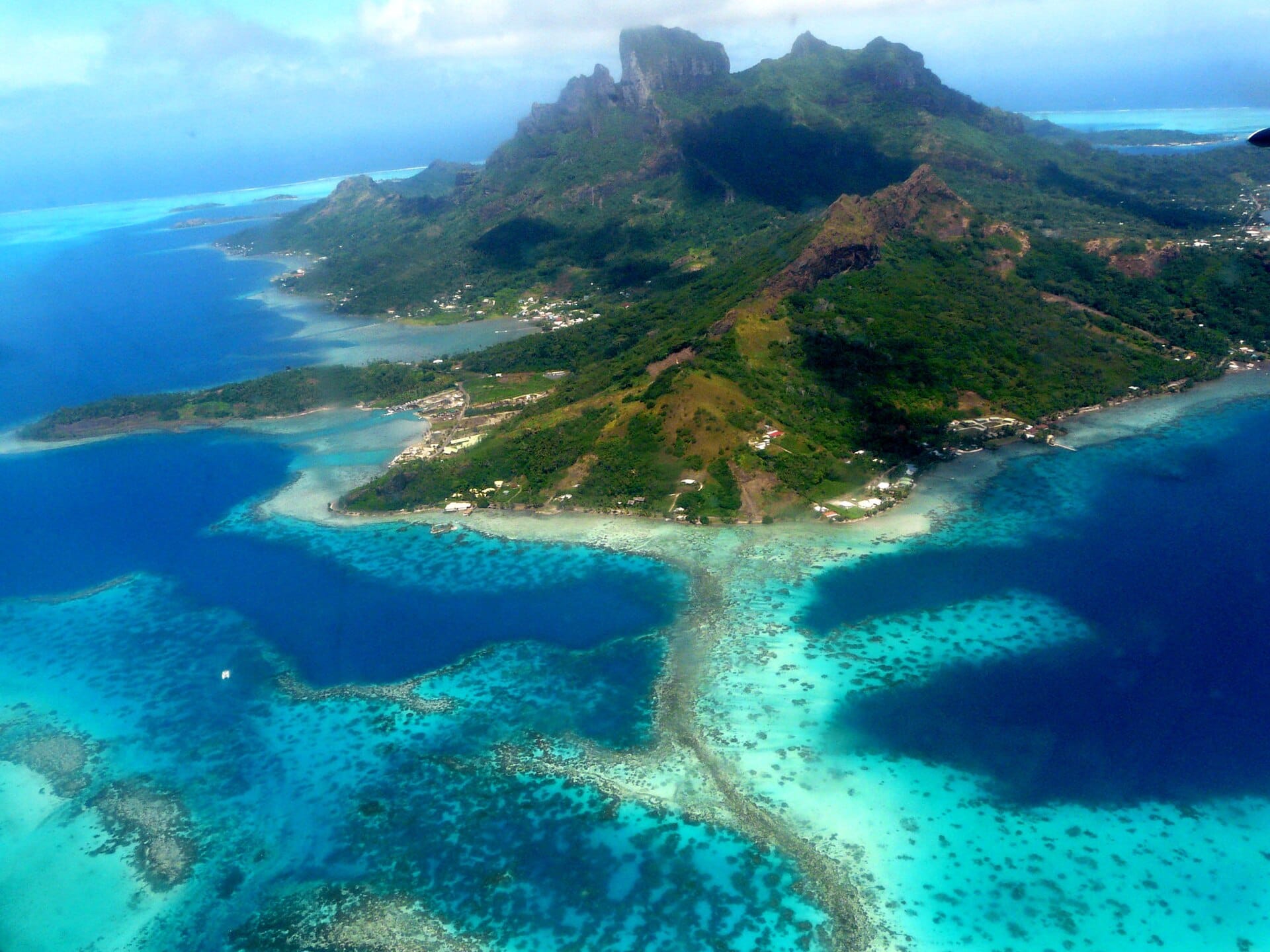
The shape of the place is the whole story: a jagged volcanic remnant standing in the middle of a lagoon, the lagoon itself ringed by a necklace of low sandy islets. Colours in the water shift through half a dozen blues depending on depth and time of day. Most days involve very little, which is rather the point, and what activity there is happens on or in the water.
Resorts occupy the motu around the rim, so a stay means boat transfers and a degree of splendid isolation, while the main island's village of Vaitape handles fuel, groceries and everyday life. Costs are high in every direction. May to October is drier and less humid, and many people pair a few nights here with Mo'orea or Taha'a rather than staying put.
- Ideal stay
- 4–5 nights
- The vibe
- Slow, blue, unapologetically expensive
From our guides
The default screensaver of married life begins here: Mount Otemanu rising from a lagoon so blue it looks retouched, with overwater bungalows fanned out beneath it. Rays and blacktip reef sharks patrol under your deck; breakfast arrives by outrigger canoe if you ask nicely. It is eye-wateringly expensive, so book eight to twelve months out and travel May to October, when the dry season keeps the lagoon glassy.
Featured in Ten tropical islands that live up to the postcard and Ten dreamy honeymoon islands worth the long flight
Things to do
-
Lagoon tour by boat
The standard day out: snorkelling stops over coral gardens, shallow sandbanks to stand on, and usually a grilled lunch on one of the motu.
-
Mount Otemanu
The basalt peak at the island's centre cannot be summited, so boat views, helicopter flights and the lower ridge walks stand in for it.
-
Matira Beach
The main public beach on the southern point, shallow and sandy and free to use, which is rarer on this island than you might expect.
-
Rays and reef sharks
Guided snorkel stops put you in shallow lagoon water with stingrays and blacktip reef sharks. Follow the guide's instructions and keep your hands to yourself.
-
The coast road
A flat 32 kilometre loop around the main island, easy by bike or scooter, passing marae sites and wartime coastal guns on the headlands.
-
Sunset from the water
The lagoon turns metallic in the last hour of light, and the view back towards Otemanu is far better from a boat than from the shore.
Getting there
-
Fly to
Motu Mute (BOB)
Nearest airport to Bora Bora, about 7km away as the crow flies.
-
Then
To Vaitape
Bora Bora (BOB) sits on its own islet at Motu Mute, so arrival is by boat: a free shuttle across the lagoon to Vaitape in about 15 minutes, or a private transfer straight to your resort.
-
On the ground
Getting around
Resorts run their own boats to and from Vaitape. On the main island a single road circles the coast in about 32 kilometres, easily managed by bicycle or hired scooter.
Public transport: Boat transfers arranged by hotels do the work. There is no meaningful bus network.
Flights
Los Angeles Bora Bora, French Polynesia
Fly from anywhere — search 4,000+ airports worldwide.
Roughly 8h 30m in the air from Los Angeles (LAX), estimated from the distance — check for a direct route. Pick a month to see every available flight with live prices.
Check dates and prices
Pick your departure date, then your return.
Search flightsNot sure when? Compare fares across a whole month.
Flight times are estimates; prices open on Google Flights.
When to go
Daytime highs run from about 24°C in August to 26°C in March. Driest in August; wettest in January, with rain on about 27 days. The sea is warmest in March at around 30°C, coolest at 27°C.
The year at a glance — pick a month for detail
December26° · rain 26 days · sea 28°Warm and often wet.
Monthly figures averaged from daily records for 2020–2024 at this location (ERA5 reanalysis). Live conditions from MET Norway, CC BY 4.0.
Where to stay
A handful of famous overwater resorts on the outer motu, plus family-run pensions and guesthouses on the main island. No hostels, and almost nothing in between the two extremes.
-
Best base overall
Vaitape and the main island
The only real town, with the ferry dock, shops, food trucks and pensions, plus the road round the island for cycling. You are looking at the lagoon rather than floating over it.
Find stays in Vaitape and the main island -
Best for couples
Motu Toopua and the outer motu
The overwater bungalow resorts sit on the sand islets, reached by hotel boat, with the Otemanu view from your deck. You are captive for meals, and prices reflect that entirely.
Find stays in Motu Toopua and the outer motu -
Best with children
Matira Point
The island's one great public beach, shallow and calm for a long way out, with hotels and rentals along it. Options here are limited and get reserved far ahead.
Find stays in Matira Point -
Best value
Faanui
A village on the north-west of the main island where family pensions charge a small fraction of resort rates and often include the airport boat. Little to walk to, so hire a scooter or bicycle.
Find stays in Faanui
Worth knowing before you book: Book eight to twelve months ahead for the dry season, and check whether transfers from the airport motu are included, as they are charged separately by many properties.
Search everything else in Vaitape by budget. These are indicative budget bands in GBP per night for two people, not live quotes or guarantees of hotel type. Check your dates, guests, taxes and final price on Booking.com.
Good to know
- Getting there
- Flights arrive from Tahiti at an airport on its own motu, so everyone continues by boat. Transfers are usually arranged by your accommodation.
- Costs
- Almost everything is imported and priced accordingly. Self-catering options are limited, so budget for resort prices at most meals.
- Book ahead
- Overwater accommodation sells out many months in advance, particularly across the drier May to October window.
- Cash or card
- The currency is the Pacific franc. Cards are accepted at resorts and less reliably at small shops and roadside stalls.
- Reef shoes
- Coral and sea urchins make bare feet a poor idea in shallow water anywhere outside the few properly sandy beaches.
Similar places
Nearby destinations
Related articles
Quick answers
When is the best time to visit Bora Bora?
Daytime highs run from about 24°C in August to 26°C in March. Driest in August; wettest in January, with rain on about 27 days. The sea is warmest in March at around 30°C, coolest at 27°C.
How long should I spend in Bora Bora?
Our suggestion: 4–5 nights.
How do I get to Bora Bora?
Bora Bora (BOB) sits on its own islet at Motu Mute, so arrival is by boat: a free shuttle across the lagoon to Vaitape in about 15 minutes, or a private transfer straight to your resort.
Do I need a car in Bora Bora?
No. Boat transfers arranged by hotels do the work. There is no meaningful bus network.
What currency and language are used in Bora Bora?
Currency: CFP franc (XPF). Language: French and Tahitian. Plugs: type C and E.
Who is Bora Bora best for?
Best for honeymooners, couples and luxury seekers. In a phrase: slow, blue, unapologetically expensive.