
Bernina Express
A UNESCO-listed line that spirals from Chur over the 2,253-metre Bernina Pass and down to palm-fringed Tirano in Italy, passing the Morteratsch glacier and curving across the six-arched Landwasser viaduct.
- Best forPhotographers · Couples · Families
- In June26°C · 20 rainy days
- Ideal stayA full day, or 2–3 nights split along the route
- Approx. flying time~11h 55m from Los Angeles
- CurrencyEUREuro
- LanguageItalian
- Local time15:111h ahead of the UK
- PlugsType C / F / LBring an adapter
- Drive on theRightOpposite to the UK
- Dialling code+39
Why go
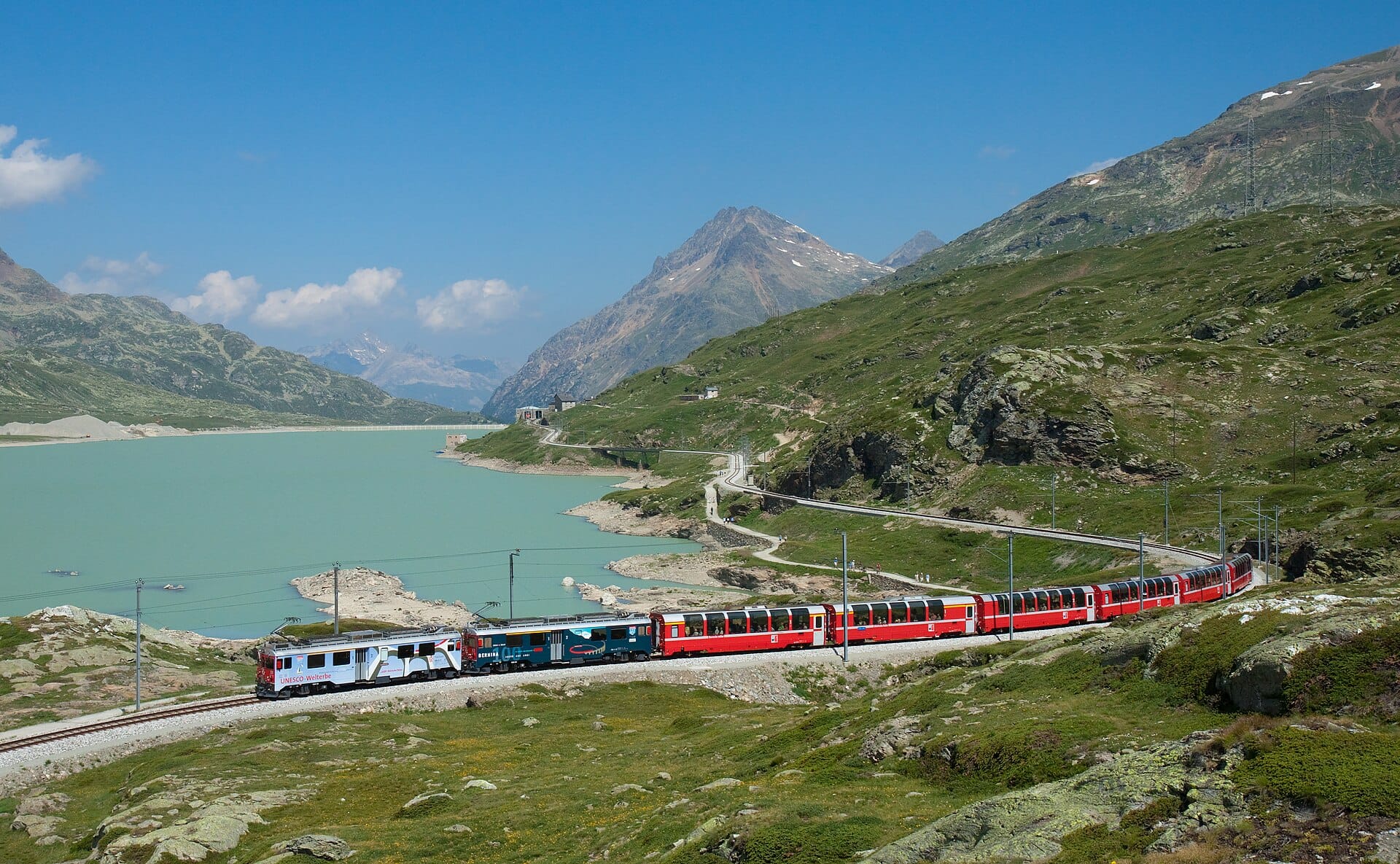
This is one railway journey that fully earns its reputation. A UNESCO-listed narrow-gauge line climbs from Chur through the Albula valley, spirals up to the 2,253-metre Bernina Pass beside glaciers and a milk-white lake, then drops nearly 1,800 metres to palm trees and Italian in Tirano. No rack, no cogs, just extraordinary engineering: spiral tunnels, viaducts and gradients trains are not supposed to manage.
The full run takes around four hours and works either as a long day return or, better, split with a night in the Engadine or Poschiavo. Panoramic carriages need a seat reservation and a supplement; the regular hourly regional trains cover the identical route on a standard ticket with windows that open. Winter turns it white and quiet, summer green and busy. Swiss rail passes cover the fare.
- Ideal stay
- A full day, or 2–3 nights split along the route
- The vibe
- Slow, engineered, absurdly scenic
From our guides
Panoramic carriages need a reservation, but here's the trick: regular regional trains run the identical route for the standard fare, with windows that actually open for photographs. Sit on the right heading south for the glacier.
Featured in Ten mountain railways with views you won't believe
Things to do
-
Landwasser Viaduct
Six arches curving 65 metres above a gorge before the line runs straight into a tunnel in a cliff face. The most photographed structure on Swiss railways.
-
Morteratsch glacier
The line runs within sight of a substantial glacier tongue near Pontresina, with a walking trail from the station marked with the ice's retreat by year.
-
Lago Bianco and the pass
A pale glacial reservoir at the 2,253-metre summit at Ospizio Bernina, sitting on the watershed between the Danube and the Po. Treeless and lunar.
-
Brusio circular viaduct
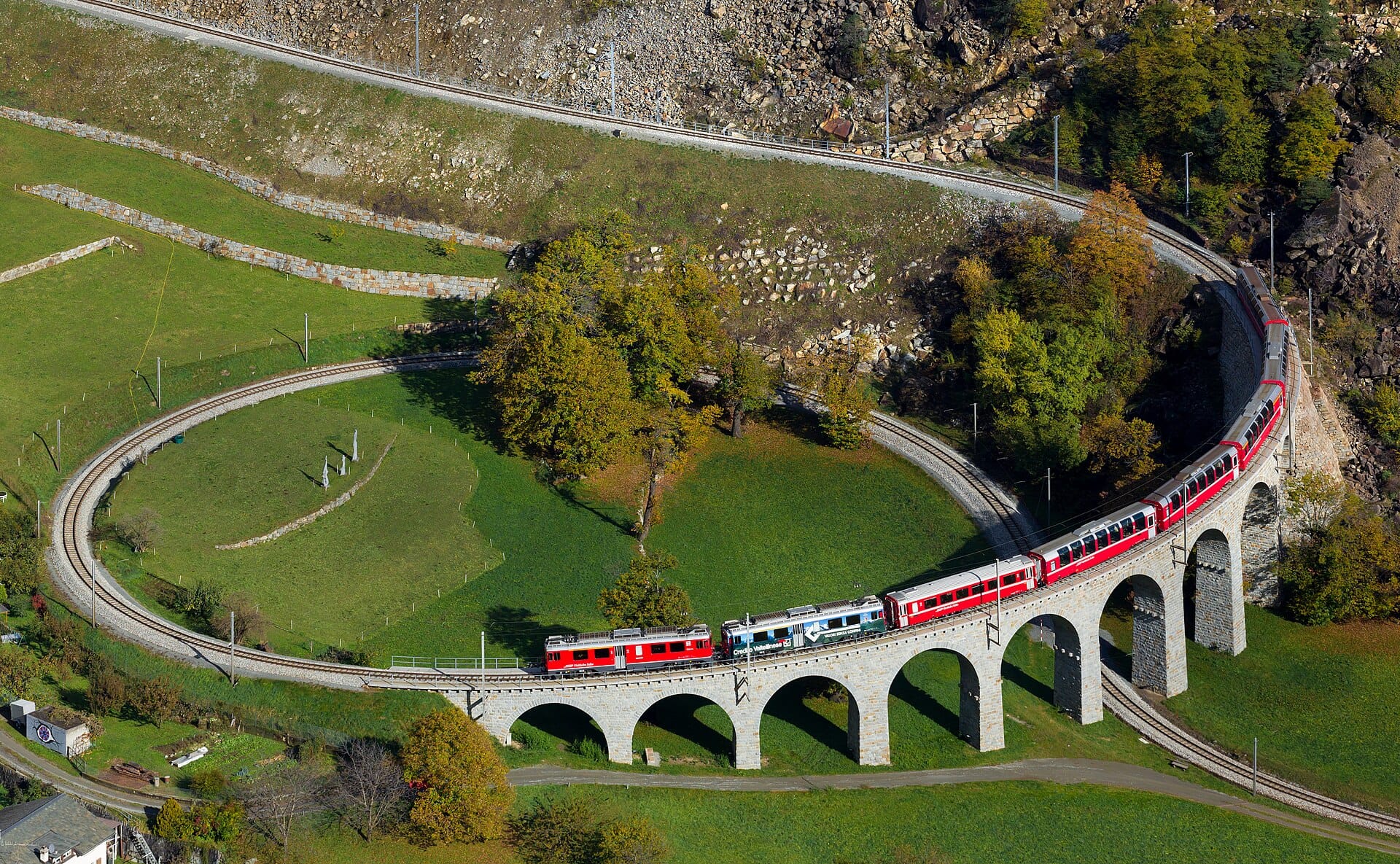
An open spiral viaduct where the train loops back beneath itself to lose height without a tunnel. Sit on the correct side and you watch the carriages curve past.
-
Poschiavo
An Italian-speaking Swiss valley town of arcaded squares and Spanish-style merchants' houses, a good place to break the journey rather than pass through.
-
Tirano
The Italian terminus, where the train runs through the streets past a Renaissance pilgrimage church. The switch from Alpine to Lombard happens in a single station.
Getting there
-
Fly to
Zurich (ZRH)
Nearest airport to Tirano, about 185km away as the crow flies.
-
Then
To Chur
The line is reached by rail rather than by air. From Perugia (PEG) expect the best part of a day by train north via Milan to Tirano at the Italian end, while most travellers instead arrive by Swiss rail at Chur, the northern terminus.
-
On the ground
Getting around
The journey itself is the attraction: about four hours from Chur over the pass to Tirano, with panoramic carriages requiring a reservation and ordinary regional trains covering the same route.
Public transport: Superb. This is a public railway, and connections at both Chur and Tirano are frequent and reliable.
Flights
Los Angeles Tirano, Sondrio, Italy
Fly from anywhere — search 4,000+ airports worldwide.
Roughly 11h 55m in the air from Los Angeles (LAX), estimated from the distance — check for a direct route. Pick a month to see every available flight with live prices.
Check dates and prices
Pick your departure date, then your return.
Search flightsNot sure when? Compare fares across a whole month.
Flight times are estimates; prices open on Google Flights.
When to go
Daytime highs run from about 7°C in January to 28°C in July. Driest December to February; wettest in May, with rain on about 21 days.
The year at a glance — pick a month for detail
June26° · rain 20 daysWarm and often wet.
Monthly figures averaged from daily records for 2015–2024 at Tirano (ERA5 reanalysis). Live conditions from MET Norway, CC BY 4.0.
Where to stay
Swiss town hotels and family-run mountain guesthouses along the line, with cheaper Italian hotels and B&Bs at the Tirano end. Apartments appear mainly in the Engadine.
-
Best base overall
Chur
Switzerland's oldest town and the northern terminus, so you board rested rather than after a connection. The old town is handsome, hotel rates are sane by Swiss standards, and trains run everywhere.
Find stays in Chur -
Best for couples
Pontresina
An Engadine village of painted houses partway along the route, close to the Morteratsch glacier and quieter than neighbouring St Moritz. Restaurants close early and the season has clear gaps in spring and autumn.
Find stays in Pontresina -
Best value
Tirano
The Italian end, where a room costs a fraction of anything over the border and dinner comes with Valtellina wine. It is a small working town rather than a resort, so do not expect much to do.
Find stays in Tirano -
Quietest
Poschiavo
An Italian-speaking Swiss valley town on the line itself, with an arcaded piazza and hardly any coach traffic. Choice of accommodation is narrow, so book early or you will not stay here at all.
Find stays in Poschiavo
Worth knowing before you book: Book the panoramic train seats separately and well ahead in summer. Engadine hotels close for weeks between seasons, so check the property is actually open on your dates.
Search everything else in Chur by budget. These are indicative budget bands in GBP per night for two people, not live quotes or guarantees of hotel type. Check your dates, guests, taxes and final price on Booking.com.
Good to know
- The cheaper route
- Regional trains run the same line hourly on standard tickets with no reservation, and their windows open. The panoramic carriages are more comfortable but sealed.
- Book ahead
- Panoramic Bernina Express seats require a compulsory reservation and sell out in summer and over Christmas. Passes cover the fare, not the reservation.
- Which side
- Heading south from St Moritz, the right-hand side gives the glacier and the better valley views. Move about at quiet moments rather than fixating on one seat.
- Timing
- Winter offers snow and empty carriages; June to September gives green passes and full trains. Clear weather matters more than season on this line.
- Onward travel
- A connecting bus links Tirano with Lugano, and Italian regional trains run down the Valtellina towards Milan. Check the border-crossing paperwork you need.
Nearby destinations
Related articles
Quick answers
When is the best time to visit Bernina Express?
Daytime highs run from about 7°C in January to 28°C in July. Driest December to February; wettest in May, with rain on about 21 days.
How long should I spend in Bernina Express?
Our suggestion: a full day, or 2–3 nights split along the route.
How do I get to Bernina Express?
The line is reached by rail rather than by air. From Perugia (PEG) expect the best part of a day by train north via Milan to Tirano at the Italian end, while most travellers instead arrive by Swiss rail at Chur, the northern terminus.
Do I need a car in Bernina Express?
No. This is a public railway, and connections at both Chur and Tirano are frequent and reliable.
What currency and language are used in Bernina Express?
Currency: Euro (EUR). Language: Italian. Plugs: type C and F and L.
Who is Bernina Express best for?
Best for photographers, couples and families. In a phrase: slow, engineered, absurdly scenic.